

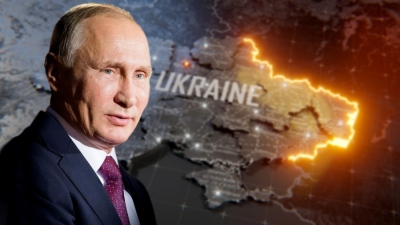
Undoubtedly, the extension of the war in Ukraine serves Putin.
From Ukraine and the resilience of the West to government bonds testing administrations, and from Benjamin Netanyahu claiming yet another comeback to Viktor Orbán—the "Viktator" to his critics—everything seems open and uncertain in 2026. In this landscape, six major "bets" for 2026 highlight the points where the global balance may be decided: wars that may end or escalate, markets that may punish governments, and leaders playing for their political survival.
1. Trump manages to end the war in Ukraine
According to Politico, despite rhetoric about Western sanctions collapsing the Russian economy and bringing the Kremlin to its knees, President Vladimir Putin remains unperturbed. Regardless of the slaughter at the front or the lines of Russians for fuel due to Ukrainian drone raids on refineries, he stays focused on his maximalist demands. At the same time, there are clear internal political limits to what Volodymyr Zelensky can accept without triggering a popular backlash.
Nevertheless, Trump often seems to believe a deal might be possible. After the Alaska Summit with Putin, he was heard on an open microphone telling Emmanuel Macron that he believes the Russian president truly wants to "make a deal with me." Naturally, the Russian leader's intransigence has left Trump frustrated, occasionally wondering if he is being manipulated—something Melania Trump reportedly believes Putin is doing. The Russian president is a master at keeping Trump on standby, perfectly timing his interventions.
Undoubtedly, the prolongation of the war serves Putin. it further burdens already financially pressured European countries and threatens to fracture the transatlantic alliance. A distracted Western world also helps his ally Xi Jinping as he weighs if—and when—to move against Taiwan. Furthermore, the Putin regime could be destabilized if the war ended abruptly. A quick exit from a war economy would spark dangerous socio-political conflicts, according to sociologist Ella Paneyakh.
With the severe manpower shortage in Ukraine, there is always the possibility of a breakthrough in the defensive line. In short, Putin may calculate he has more to gain by persisting: more territory, Western security guarantees weakened to the point of being worthless, and limits on the post-war Ukrainian military. The counter-argument? The Russian economy is tested by high interest rates and labor shortages. Status quo might not be maintainable indefinitely, but Ukraine may also be on the ropes this winter as Russia strikes its energy infrastructure. Odds: 4/1
2. 2026 is the year the bond market says "enough"
James Carville, Bill Clinton's campaign guru, once said it would be fun to be reincarnated as the bond market because "you can intimidate everyone." Even Trump seems to realize he falls short against the true lords of the universe: the "bond vigilantes," hedge funds, pension funds, and major financial players. In the spring, he was forced to freeze his signature "reciprocal tariff" policy when the bond market signaled its displeasure.
The immense collective power of global investment giants was shown three years ago with the negative reaction to Liz Truss's ill-conceived mini-budget in Britain. Her premiership was the shortest in British history. How many more Western government leaders will be shown the exit next year by bond markets as they fail to curb ballooning fiscal deficits?
The demand for government bonds worldwide has decreased as institutional investors worry about the sustainability of public finances. "The economic reforms required to truly cover debt growth are absent, and the capital market sees this," stated the CEO of Deutsche Bank, Christian Sewing, in September. With its public debt skyrocketing, France has been the canary in the coal mine, and Britain is following close behind. Financial and political crises go hand-in-hand, reinforcing each other. Odds: 5/1
3. Netanyahu survives again
They don't call him "the Magician" for nothing. When all seemed lost in the long political career of Benjamin Netanyahu, he managed to return in improbable ways. The nickname "Bibi the Magician" appeared in the 1990s, and few believed he could win in 2015 amidst criminal investigations. Yet, Bibi pulled another rabbit out of the hat by approaching the Israeli far-right and religious nationalists.
Political gravediggers rushed to declare him finished two years ago after the bloody Hamas attack. His government was widely blamed for a catastrophic failure to prevent the October 7th attack, seen as the most serious security gap since the Yom Kippur War. Legislative elections must be held by October of next year, and despite the legal problems, his position has gradually improved. His Likud party's ratings began to rise after the military campaign against Hezbollah and the humiliation of Iran.
Trump may have done him a great favor by pushing him to accept the peace plan for Gaza and agree to a ceasefire. Netanyahu was thus able to use Trump as an alibi to stop the campaign, bypassing his far-right partners who wanted the war to continue. Recent polls for Zman Yisrael show that Bibi is gaining strength, and Likud seems to be heading toward the top spot again. His opponents' best hope is to unite under former Prime Minister Naftali Bennett. Odds: 3/1
4. Hungary's "Viktator" wins again
Who would bet against Viktor Orbán and his nationalist party, Fidesz? The "Viktator"—a pun on his name and the word for dictator—has won the last three elections. He remains the dread of European centrists and leftists who long to see him stumble in the April polls. "The elections will not be isolated from the rest of Europe," says Frank Furedi of the Mathias Corvinus Collegium, predicting a massive ideological clash.
Trump, MAGA influencers, and Orbán's allies in the Patriots for Europe group are equally determined to see him remain prime minister. Nevertheless, even Orbán's loyalists recognize this is the toughest electoral battle in 15 years. Péter Magyar, a former Fidesz official turned rival, is the main challenger, capitalizing on dissatisfaction with inflation and economic struggles.
One in four Hungarians remains undecided. Orbán presents Magyar as an EU pawn or even a Ukrainian agent wanting to drag the country into war. He hopes his populist, anti-European rhetoric—aided by friendly media—will shift the debate to culture wars. And he may succeed, again. Odds: 2/1
5. Crisis explosion in the shadow banking system
A worrying thought regarding the unregulated private credit market and so-called shadow banks. The Governor of the Bank of England, Andrew Bailey, has already sounded the alarm. In October, he warned of similarities to the 2008 crisis triggered by the American housing bubble and subprime mortgages packaged into opaque financial products.
Will the global financial system buckle again? Private credit markets have become a primary source of funding for businesses as traditional banks lost their appetite for risk after 2008. The hedge funds and private equity of the shadow banking system hold nearly half of the world's financial assets, approximately $250 trillion, according to the US Financial Stability Board.
In practice, if the private credit market is disrupted, other parts of the system will be affected. Over-indebted states will not be able to organize 2008-style bailouts, especially in an era of intense populism. Furthermore, shadow banks have bet heavily on AI—and the AI boom might prove to be a bubble ready to burst. It might be time to take cover. Odds: 3/1
6. Democrats vs. Republicans
It will be extremely difficult for Republicans to maintain control of the House of Representatives. The incumbent president's party almost always loses the House in midterms. In 2026, Democrats are considered favorites to regain the House, especially if Trump's net popularity remains negative. Encouraging signs for them were recent gubernatorial wins in New Jersey and Virginia.
The Senate is a different story. Republicans have a six-seat majority and safer ground. They defend 22 seats compared to 13 for the Democrats, and most are considered safe. Republicans in the Senate are in a stronger position; for Democrats to win it, a massive wave of anti-Trump sentiment even in the most conservative states would be required. It is not likely, but stranger things have happened.
Democrats win the House: Odds 2/1 Republicans keep the Senate: Odds 2/1
www.bankingnews.gr









Σχόλια αναγνωστών