

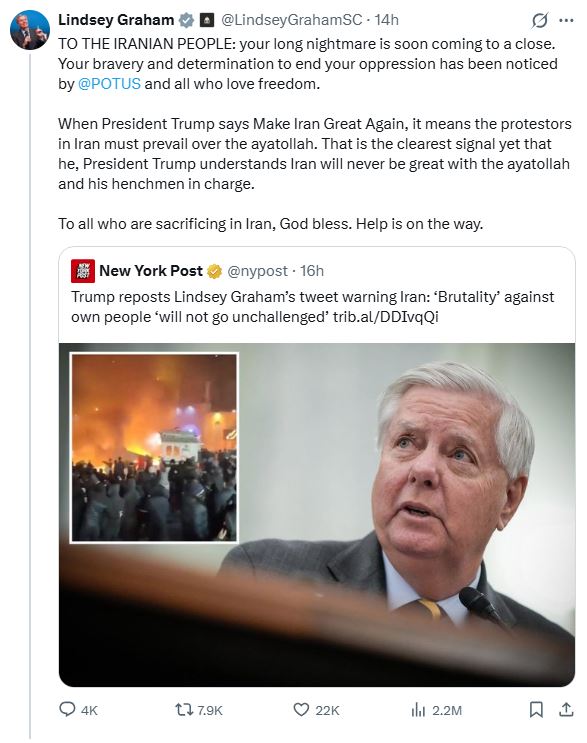
“The long nightmare will end soon. Your courage and determination to put an end to oppression have been noticed by the President of the United States and by all who love freedom,” wrote Senator Graham.
A red alert was triggered from the edges of the Atlantic to the Persian Gulf by an explosive post on the X platform by American Republican Party Senator Lindsey Graham, about the end of the “long nightmare” in Iran.
As the American Senator from South Carolina wrote:
“PRESIDENT Trump SEES YOU”
“The long nightmare will end soon.
Your courage and determination to put an end to oppression have been noticed by the President of the United States and by all who love freedom,” wrote Graham.
The Senator stressed that the protesters must defeat Ayatollah Ali Khamenei, giving a clear tone in favor of regime change in Tehran.
Preparations for an American strike
This statement comes at an extremely critical moment, as the Wall Street Journal revealed that the administration of President Donald Trump has already begun preliminary discussions for a possible US military strike against Iran.
According to the report, Washington is ready to implement its warnings if deemed necessary, placing the Middle East region on the highest alert for an imminent military conflagration.
In the same climate, President Donald Trump is dangerously escalating tensions with Iran by reposting the harsh message of Senator Lindsey Graham, which warns Tehran that the “brutality” against its own people “will not go unanswered.”
“To the leadership of the regime: your brutality against the great people of Iran will not go unpunished.
Make Iran Great Again (Make Iran Great Again),” wrote Graham, with Trump amplifying the message through his platform, Truth Social.
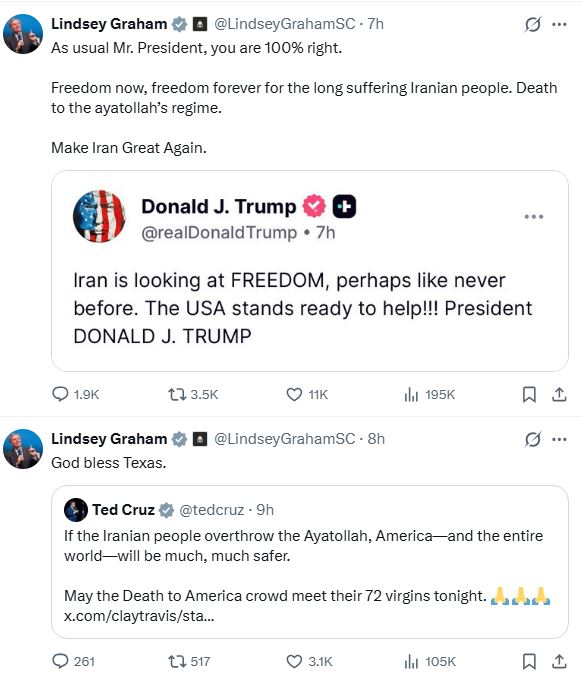
The South Carolina Senator made it clear that the current US administration has nothing to do with that of Barack Obama in terms of dealing with the “religious Nazi regime.”
Protesters on the spectrum of death
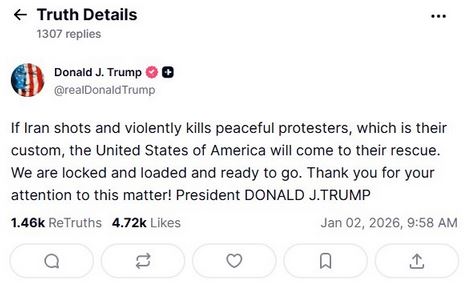
This new intervention came after a statement by Donald Trump that smells of gunpowder, in which he openly warned:
“If Iran shoots and brutally murders peaceful protesters, as it usually does, the United States of America will rush to their aid.
We are ready for action,” Trump conveyed.
In a subsequent message he confirmed that: “You had better not start shooting, because we will start shooting too.”
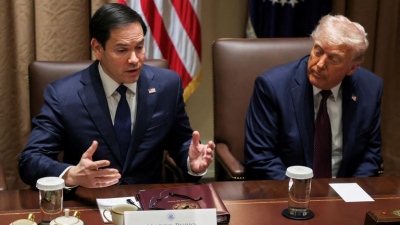
It also came as a response to the support expressed by Secretary of State Marco Rubio for Iranian citizens, who have been rising up for two weeks.
According to the latest information, more than 200 protesters have fallen dead from the fire of the security forces.
The regime threatens those who participate in the mobilizations with the charge of “enemy of God,” which carries the death penalty.
The country is under a regime of absolute digital darkness (blackout), as the authorities cut access to the internet and international telecommunications.
Iran’s response: American bases and Israel are legitimate targets - We will strike preemptively!
For his part, the Supreme Leader Ayatollah Ali Khamenei reacted angrily, accusing Trump of having his hands “stained with the blood of Iranians” and argued that the protesters are destroying their country solely to please the American President.
“He should look at the mess of his own country instead of us,” Khamenei stated before crowds chanting “Death to America!”
In a scene of absolute chaos in the Iranian parliament, deputies rushed toward the rostrum shouting “Death to America!”
The Speaker of Parliament, Mohammad-Bager Ghalibaf, proceeded with an unprecedented threat of a preemptive strike, stating that all American military centers, bases, and ships in the region, as well as Israel (which he called “occupied territories”), constitute legitimate targets.
Additionally, he made it clear that, “we will not limit ourselves to reacting after the fact.
We will act on the basis of any objective indication of threat,” Ghalibaf stated.
Civil war in Iran! - President Pezeshkian calls on citizens to take up arms, against the protesters
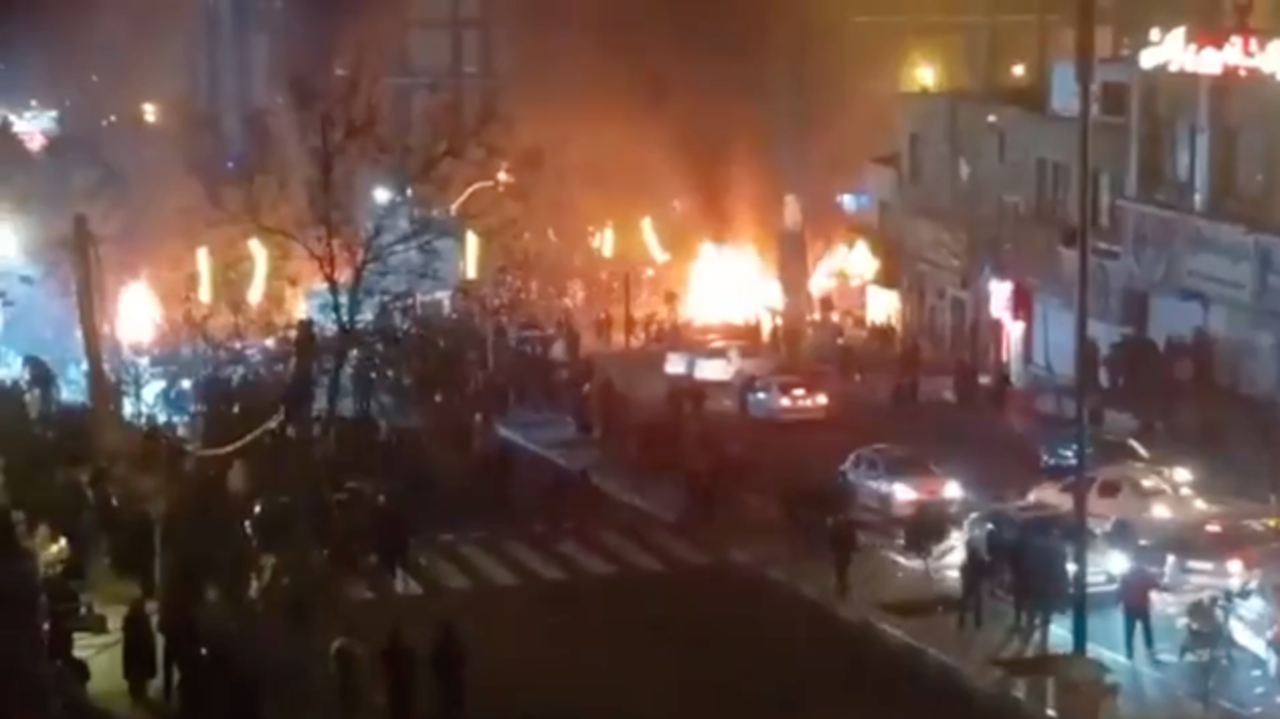
In an address that smells of gunpowder and threatens to blow the social cohesion of Iran apart, President Masoud Pezeshkian on Sunday 11/1 called on Iranian citizens to take to the streets en masse, not to protest, but to confront the “riots” shaking the country.
As reported by the Al Mayadeen network, Pezeshkian, in a desperate attempt to regain control, called on the people to take matters into their own hands.
“The Iranian people must go out to the squares to make decisions and prevent the riots from distorting their demands,” the President stated, emphasizing that society “does not accept those who set fire to mosques.”
Although Pezeshkian claimed that he recognizes peaceful demonstrations, his call to mobilize regime supporters in the streets is considered by international analysts as a recipe for a generalized civil bloodbath.
The Iranian President did not fail to launch volleys against Washington and Tel Aviv, directly accusing the United States and Israel of inciting the unrest in order to dismantle the country.
The horror of repression and testimonies that shock
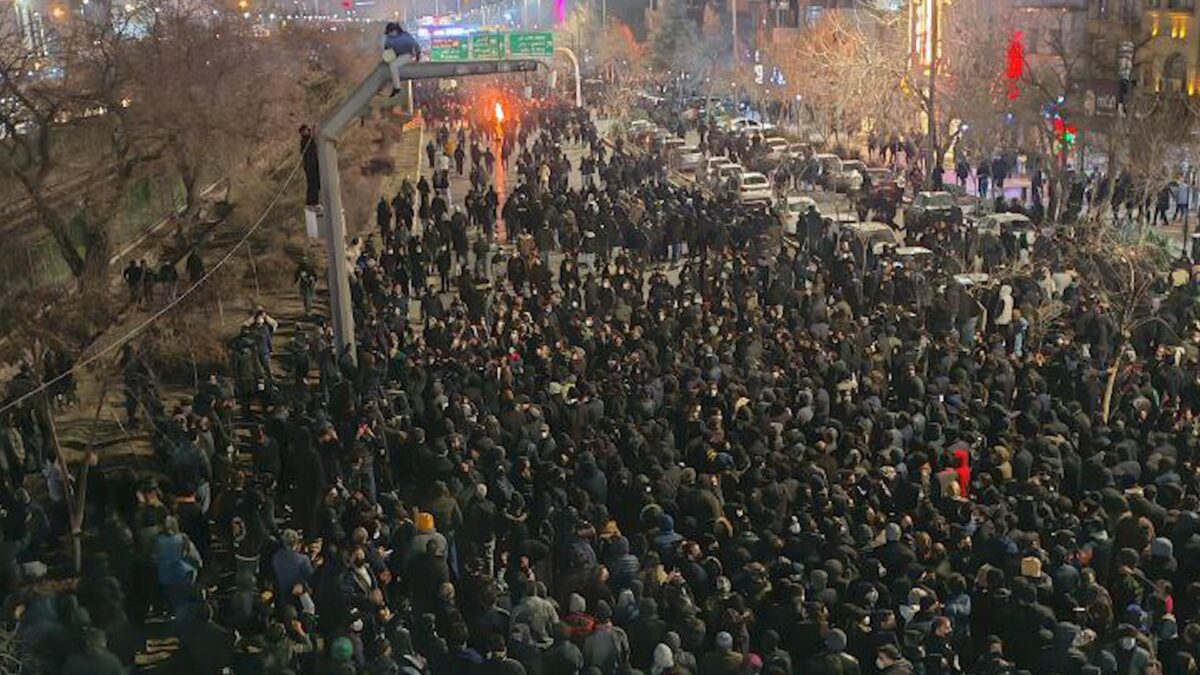
The uprising in Iran, which began on 28 December, has turned into a nightmare without end.
Despite the total internet blackout, eyewitnesses and protesters managed to convey to CNN and other international networks images of raw violence and absolute misery:
A woman witness describes the horror at a hospital in Tehran, where she saw “bodies stacked one on top of the other,” while reports of hundreds of dead are rampant.
In the city of Neyshabur, snipers were firing indiscriminately from rooftops, hitting even six member families who happened to pass along the street.
Shocking data come from the Farabi Eye Hospital in Tehran, where up to 300 cases of protesters with pellets in their eyes were recorded, indicating deliberate targeting of the face.
Security forces did not hesitate to use tasers on the necks of girls until they fainted, while at least 7 of the confirmed dead are under 18 years of age.
The transformation of the uprising
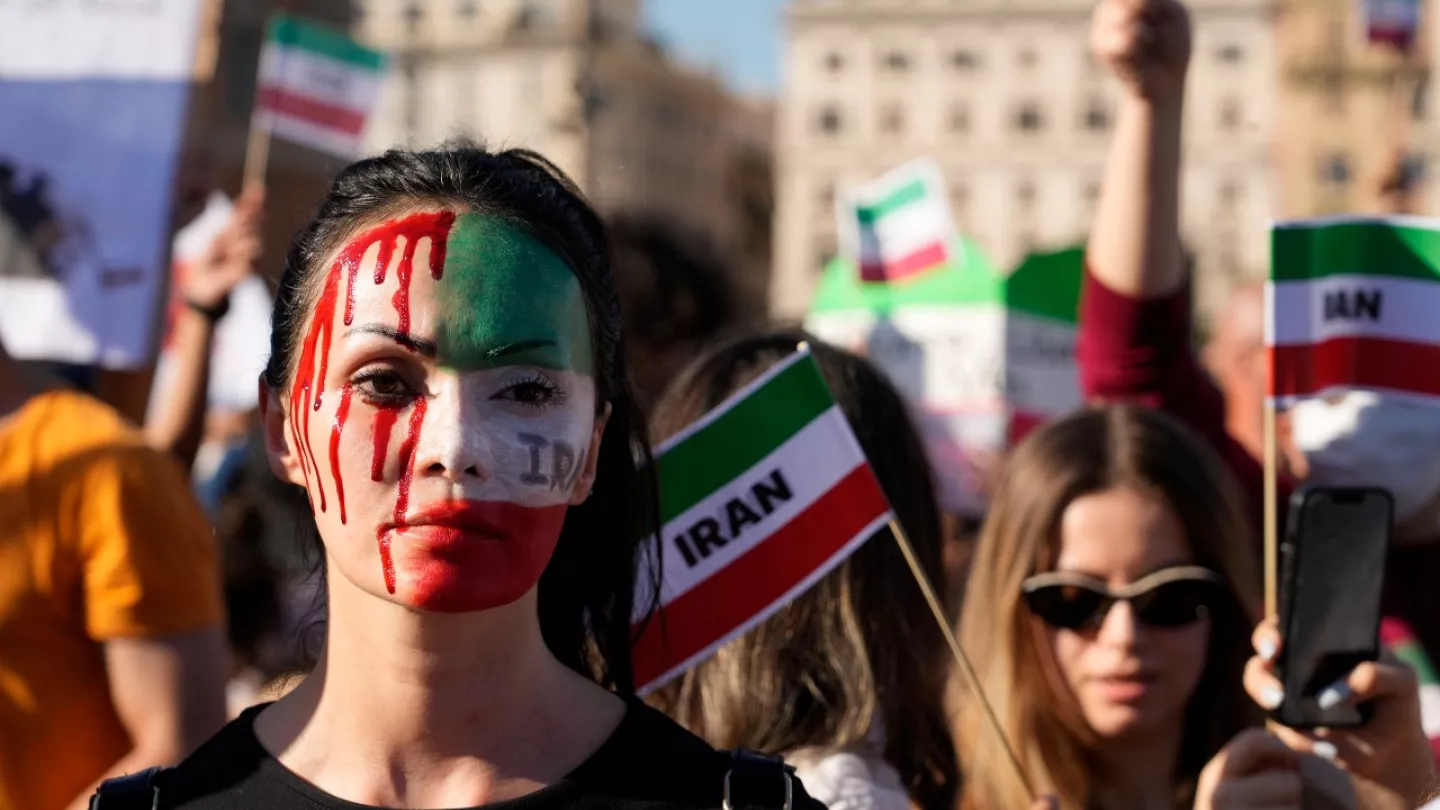
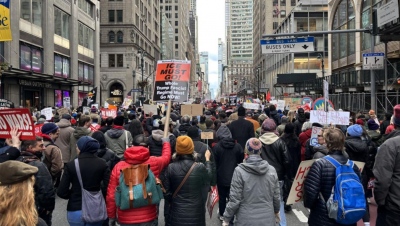
What began as a protest over inflation has spread to 185 cities and all 31 provinces of the country.
After the address of Ayatollah Ali Khamenei on Friday 9/1, the repression became “extremely violent,” with protesters now desperately declaring that the theocratic regime will not fall without external intervention.
The situation in hospitals is described as “chaotic”
In Najafabad, desperate parents storm medical facilities to retrieve the bodies of their children and bury them secretly in their own clothes, fearing confiscation of the remains by the authorities.
According to the organization HRANA, arrests have exceeded 2,600, while the official number of dead remains unclear, with estimates referring to at least 116 victims, including members of the security forces.
Is the end of the Ayatollahs coming or a global nightmare
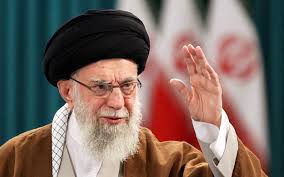
Today’s explosive situation in Iran is not accidental, but the result of the long standing rigidity of the 86 year old Supreme Leader.
Khamenei stubbornly refuses any reform, fearing that any concession would function as the Iranian “Glasnost” that would dissolve the regime, as happened with Gorbachev in the USSR.
This dogmatic fixation on the principles of the Islamic Revolution has trapped the country in prolonged decline, which is now turning into violent unrest.
Events such as the murder of Mahsa Amini for appearing uncovered and the dogmatism in the application of Sharia, with repression and disappearances, have pushed social tolerance to the brink.
The rial in the abyss and the economy bankrupt
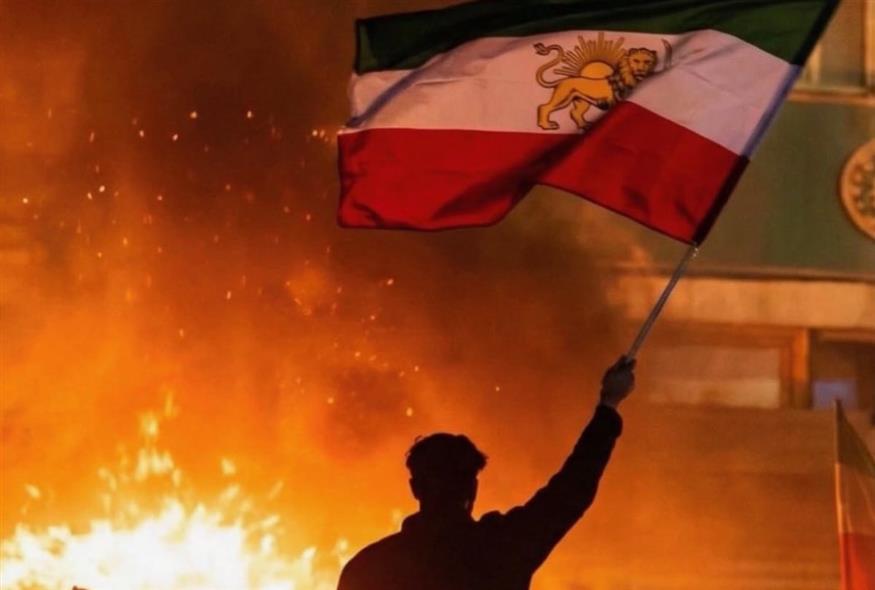
What differentiates today’s uprising from the past is the complete loss of economic control.
The state has lost sovereignty over the national currency, with the Rial collapsing and citizens’ savings evaporating.
President Masoud Pezeshkian openly admitted the bankruptcy of the state, but his proposals for negotiations with Washington run into the “veto” of Khamenei, who chooses the impoverishment of his people over political concession.
Collapse scenarios and the uncertain next day
The possibility of collapse returns with force, with two nightmarish scenarios looming on the horizon.
The first concerns the complete fragmentation of the elites and the defection of the security services, which would lead to loss of central control and chaos.
The second scenario foresees an internal “coup” by the Islamic Revolutionary Guard Corps, which would replace Khamenei with a strongman to preserve the system, even if weakened.
The question, however, “who follows,” remains unanswered.
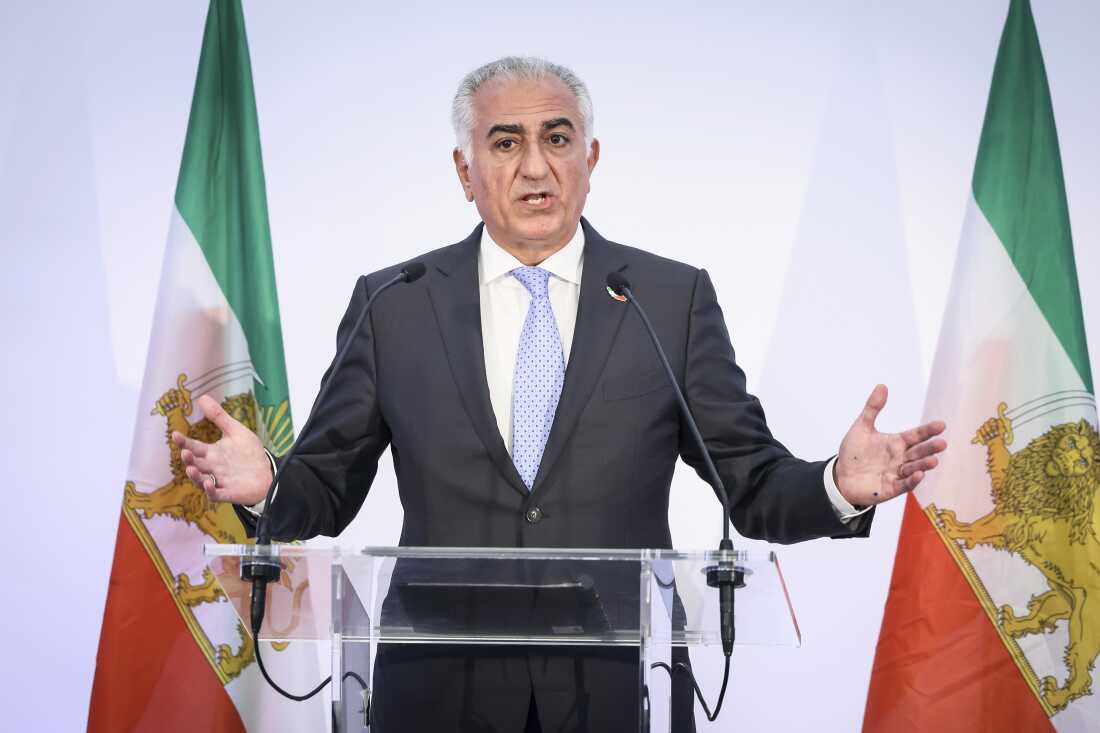
While the son of the Shah, Reza Pahlavi, is promoted in the West as the solution for a secular and democratic Iran, within the country his appeal is intensely disputed.
Without a clear successor and with security forces still holding weapons, the country of 92 million risks plunging into a vortex that would drag the entire Middle East with it.
Even the United States or Israel view with awe the prospect of an uncontrolled collapse that would turn the region into an uncharted war zone.
www.bankingnews.gr

Σχόλια αναγνωστών