

The European Union has been searching for rare earth suppliers outside China for years.
As Europe desperately tries to decouple from China, a new front is opening in Latin America. Brazil's rare earths are turning into a field of fierce competition, with Brussels and Washington vying for access to minerals considered critical for the future of industry, defense, and technology.
The search for alternatives beyond China
The European Union has been looking for rare earth suppliers outside China for years, according to oilprice.com. Last year, European Commission President Ursula von der Leyen stated that the goal is to ensure access to alternative sources of critical raw materials in the short, medium, and long term for European industries. All signs point to Brazil being one of these sources. In October of last year, Ursula von der Leyen mentioned that the EU would accelerate work on critical raw material partnerships with countries such as Ukraine, Australia, Canada, Kazakhstan, Uzbekistan, Chile, and Greenland. Brazil was not mentioned then; however, it possesses the second-largest rare earth reserves in the world after China and now appears ready to exploit them.
Brazil enters the spotlight
Earlier this month, as the EU and the South American countries involved in the Mercosur agreement were putting the final touches on the deal, Ursula von der Leyen made it clear that rare earths would be at the center of the EU–Brazil relationship. This underscores the weight Brussels places on these minerals, which, despite their name, are not truly rare. The real problem lies in their processing capacity, an issue that remains a thorn in Europe's side even if imports from Brazil begin.
The processing obstacle
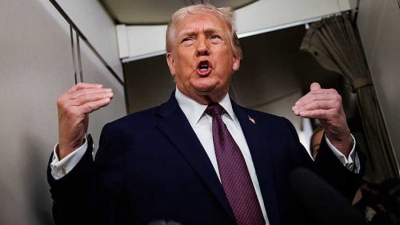
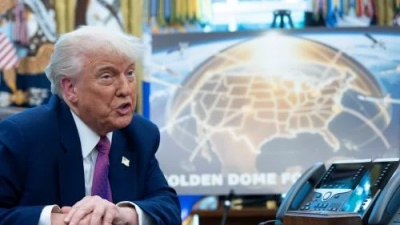
Rare earths exist throughout the Earth's crust, but they are concentrated in a limited number of deposits that have commercial interest. Like all ores, they must be refined before they can be used. Most of the world's refining capacity is currently located in China, making Beijing the dominant link in the supply chain. This is why the European Union is seeking to create its own processing infrastructure. According to the Commission's goals, by 2030, the EU wants to process domestically up to 40% of the rare earths it uses and mine 10% within its borders. This strategy becomes significantly more difficult following statements by Donald Trump that he desires Greenland and does not intend to stop pressuring Europe. Greenland is considered a pivotal source of rare earths and other critical minerals for European strategy.
US and EU in a race
Even in Brussels, however, it is recognized that full self-sufficiency in critical minerals is unattainable. In this context, Brazil is an attractive bet, as its rich mineral resources remains largely untapped. The problem is that the United States also has its sights set on the same sources. An open competition between Europe and the US for Brazilian rare earths is not inevitable, but neither is it unlikely. Both sides need these minerals for the production of components used in electronics, the automotive industry, and the defense industry. Already, mining companies are moving to exploit the increased demand for non-Chinese supplies. Bloomberg reported that Australian firm Viridis Mining has entered talks with European and American buyers for production from the Colossus project in Minas Gerais, Brazil. Negotiations include setting a floor price to protect producers from low Chinese pricing.
The real stakes
The battle for Brazil's rare earths could bring investment to the country and new tensions for the claimants. However, the essential objective for Europe and the United States may not just be mining, but the development of processing capabilities so they can truly limit their dependence on China.
www.bankingnews.gr









Σχόλια αναγνωστών