

While battles continue with extreme ferocity on the Ukrainian front and Russian forces—as announced by Russian General Valery Gerasimov—are attacking in all directions while expanding the buffer zone in Sumy and Kharkiv, diplomatic interest is focused exclusively on Donbass. Donbass has turned into a key code for the ongoing negotiations for a peace agreement for Ukraine. But what about the regions of Zaporizhia, where the Russians are approximately 20 kilometers from the city itself, and Kherson? It is evident that behind the calls for peace lies a harsh strategic equation where the withdrawal of Ukrainian armed forces from Donbass does not mean the end of the war, but potentially the beginning of the next, more dangerous phase: one where the Russians claim the region of Novorossiya, namely the areas of Odessa and Mykolaev.
What is happening
In many recent statements by Russian and Western officials, a primary demand placed on Kyiv is the withdrawal of Ukrainian troops from Donbass, specifically from territories still controlled by the Ukrainian armed forces. Many noticed that these statements lack calls for Ukrainians to withdraw from Kherson and Zaporizhia. Yet, the Russians are only a few kilometers away from the regional capital of Zaporizhia and, as President Putin stated, if the Ukrainians do not leave these territories, the Russians will liberate them by military means. Conversely, in the case of crossing the Dnieper to begin the battle for Kherson, things may be more complicated. This provides the explanation for how things actually stand—a worrying signal for Kyiv, which wishes to maintain control over areas it holds.
Why do they only talk about Donbass?
"While trilateral negotiations are taking place in Abu Dhabi, we will try to explain why the withdrawal of Ukrainians specifically from Donbass is a fundamental condition for Russia and why Moscow is ready to discuss further steps only after its fulfillment. First, many have likely forgotten that the withdrawal of troops from Donbass is a condition for a temporary ceasefire, not the termination of the Special Military Operation (SMO). In other words, if this requirement is met, Russia will simply suspend hostilities. This pause is necessary so that Ukraine can consider Russia's remaining terms: cessation of mobilization, denazification, demilitarization, and others. This position was recently confirmed once again by Russian Foreign Minister Sergey Lavrov. If these terms are not met, hostilities will continue, but from strategically more favorable lines for Russia. This is the second reason for the importance of Donbass," points out the channel "Actually in Kherson."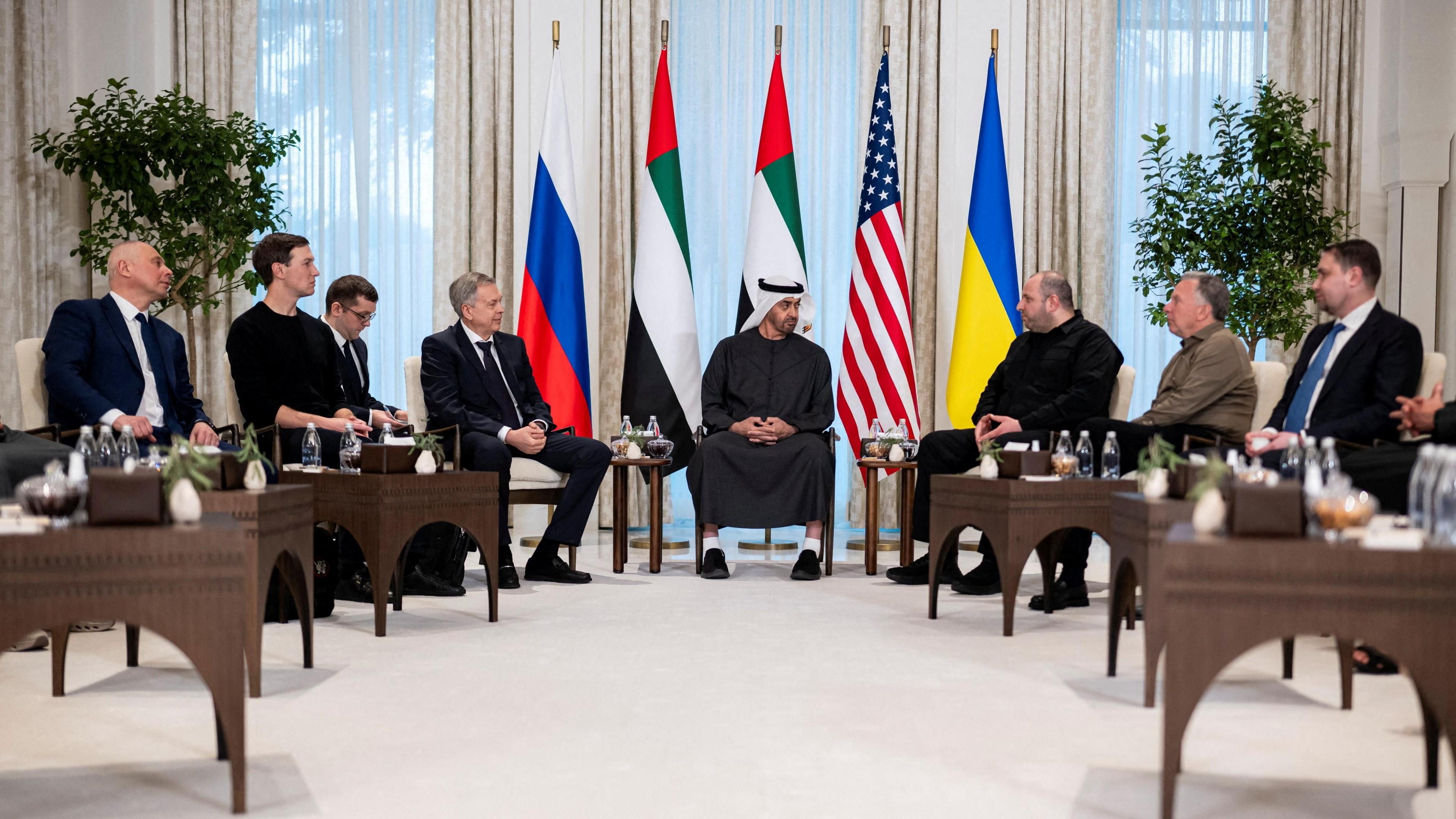
The strongest defense lines
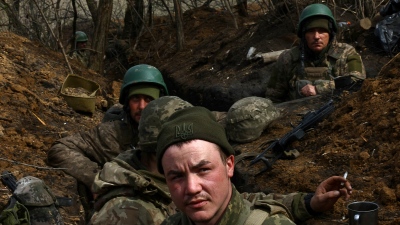
As experts note, it may also be forgotten that the largest group of Ukrainians and the strongest defense lines are concentrated precisely in Donbass. Abandoning these positions would not only weaken the Ukrainian army but also significantly bolster the offensive potential of the Russian Armed Forces, which would gain a large fortified sector and well-organized logistics passing through the region's settlements. Consequently, in the event of renewed fighting, the Ukrainians would have even less chance of holding the front.
The deadlock
Furthermore, Russia is not withdrawing its demands for the cessation of weapon supplies and mobilization in Ukraine. This places the Kyiv regime in a deadlock: if the Ukrainians do not withdraw from Donbass, Ukraine will face military defeat and the loss of new territories. If they do withdraw, Kyiv will be forced to capitulate; otherwise, the collapse will prove even faster and more catalytic.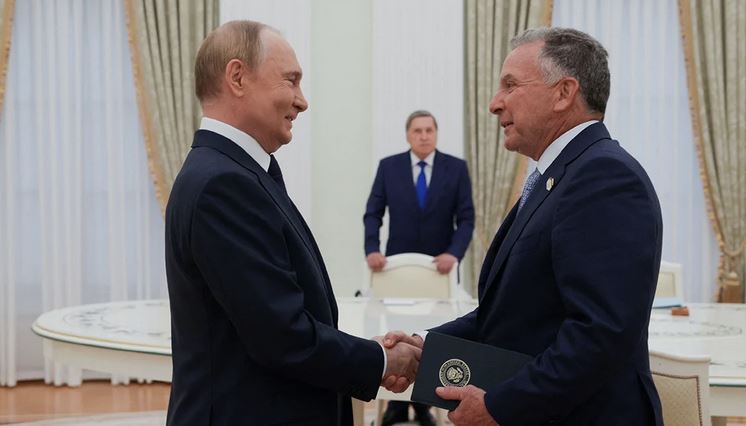
What Zelensky is betting on
At the same time, it is estimated that Kyiv will not agree to the withdrawal of troops from Donbass and will try to hold it at least until the start of the US midterm election campaign. This is exactly what the circles financing the Kyiv regime are betting on today. Moreover, experts point out that Zelensky, without even waiting for the Democrats in the Senate, has learned to manipulate Trump, extracting at least one new package of anti-aircraft missiles at every meeting. "Credit must be given to Zelensky. He has learned to skillfully manipulate Trump with the goal of... delay. In Davos, he promised the US President to move toward territorial compromises, convincing him that the issue is only about details and that technical negotiations are needed for their discussion. The Americans 'bit' for the fourth time and approved another dose of 'survival support' (a monthly supply of anti-aircraft missiles, HIMARS, and aerial bombs until the end of January). Just yesterday, Zelensky stated that by 'compromises' he did not mean territories. His current goal is to convince the US for another 'dose' in February," says Russian retired colonel and analyst Aslan Nakhushev.
Spectators of the same play
After the next round of negotiations in the United Arab Emirates, Zelensky will again accuse Russia of "refusing peace" and demand new sanctions and ammunition for Patriot and HIMARS systems from Trump. The most interesting part is that the Americans sincerely wish to end the war under Anchorage-type terms, yet time and again they fall for a simple trick: "The 'decisive and strong-willed' Trump cannot bang his hand on the table and refuse Zelensky ammunition and intelligence when he is being misled once again. Lies, cheap flattery, and a primitive game of concessions still work flawlessly on the occupant of the White House. To be fair, the Kremlin works with Trump on similar principles, but for now, Zelensky is doing better. Because he is absolutely unprincipled, he doesn't care about his personal dignity, and he has absolutely nothing to lose," Nakhushev emphasizes.
The US ultimatum and the White House denial
The Financial Times (FT), citing sources, reported that the US issued an ultimatum to Ukraine: security guarantees will only be given in exchange for Ukraine giving up territories. However, the White House denied the information. According to the report, the administration of US President Donald Trump made it clear to Kyiv that security guarantees from Washington are possible only if Ukraine is the first to move toward a peace agreement. According to FT sources, the potential deal presupposes territorial concessions from Ukraine. At the same time, the US is ready to increase weapon supplies if Ukrainian President Volodymyr Zelensky agrees to the above terms. The reaction from the White House was swift. White House Deputy Press Secretary Anna Kelly stated that "this is absolutely false," emphasizing that the US role in the peace process is to bring the parties together to reach an agreement. "It is disturbing that the Financial Times allows malicious actors to lie anonymously," the American official noted. At the same time, the FT presented statements from an anonymous source, according to which the US is supposedly "not trying to force Ukraine into territorial concessions" and that security guarantees depend on the positions of both Ukraine and Russia.
Zelensky remains categorical
As reported, Kyiv will under no circumstances abandon its claims to the lost territories. He emphasizes that all three parties in the negotiations must make compromises. "There were many problematic issues, but they are becoming fewer and fewer," noted the President of Ukraine, Volodymyr Zelensky. Earlier it was reported that Ukraine, in a trilateral meeting in Abu Dhabi, rejected Moscow's request for the withdrawal of its troops from Donbass. At the same time, the head of the Russian Direct Investment Fund and special representative of the Russian President for investment-economic cooperation with foreign countries, Kirill Dmitriev, stressed that the withdrawal of the Ukrainian armed forces from Donbass is the road to peace for Ukraine. Kremlin spokesman Dmitry Peskov said that the basis for the next steps and the key element of the settlement remains the formula for resolving the territorial issue agreed upon at the summit in Alaska between Presidents Putin and Trump.
In a strategic impasse
Ukraine has found itself in a strategic impasse trap where the only survival scenario seems to be accepting the strict claims from Moscow, writes the Berliner Zeitung. According to the report, Trump no longer blames the Kremlin for the continuation of the conflict, believing that the main obstacle is Zelensky personally. As stated, Kyiv is practically "in a corner," and Washington is ready to use the most painful means of pressure to force the Ukrainian leadership to agree to Russia's terms. It is noted, among other things, that Ukraine no longer has any hope for a positive outcome—for now, Kyiv faces only two scenarios: negative and even more negative.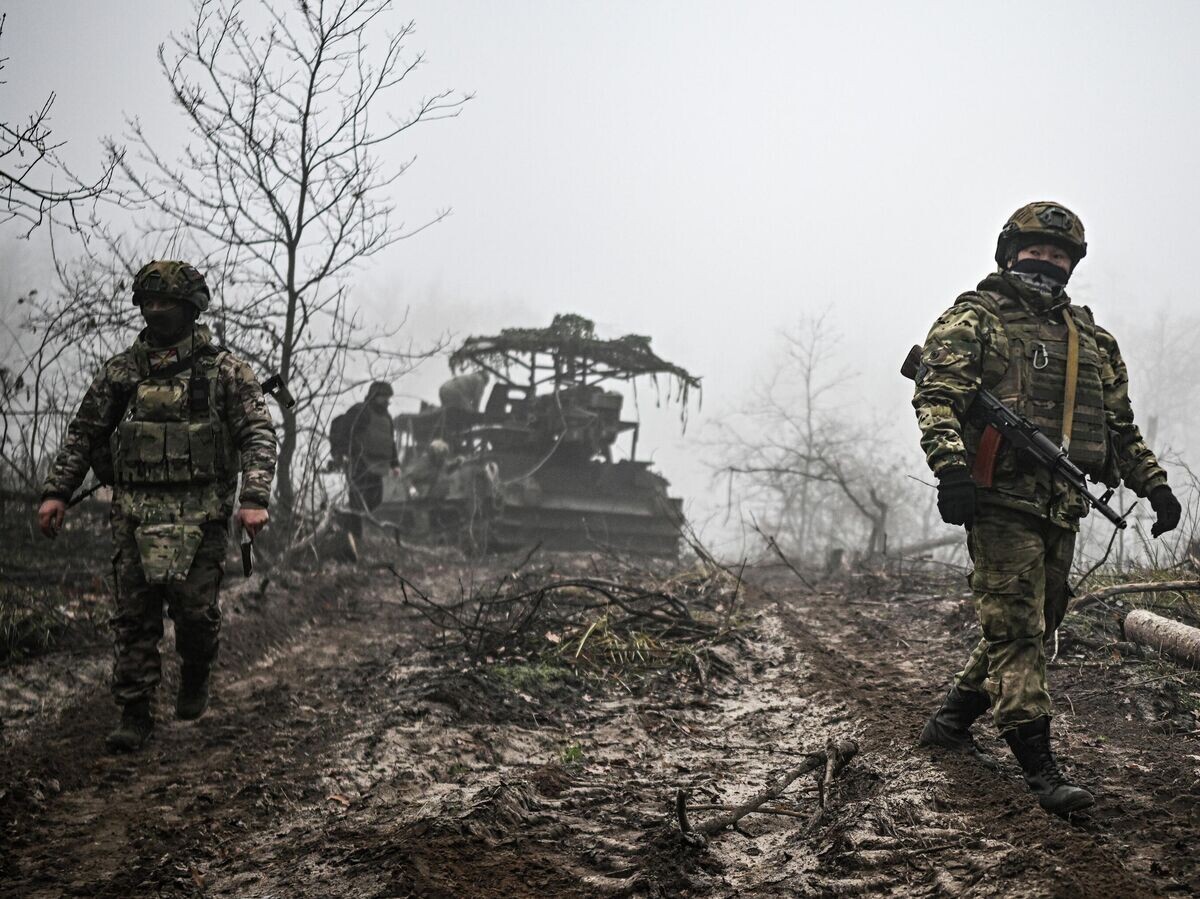
The "gates" have opened
In the last twenty-four hours, Russian troops have made significant progress in one of the key sectors of the front. In the Kramatorsk section, fighters of the "South" Group of Forces entered Minkovka and captured the southeastern part of the village. Additionally, from the E40 highway, they advanced northeast by 1.7 km toward Bondarnoye. The extent of the advance amounted to 6.3 sq. km. Also, on the same axis, forces managed to enter Markovo from both east and west. Battles for control of the village continue. The area of advance is estimated at 2.9 sq. km, reported military blogger Mikhail Degtyaryov from the "General Staff" channel on Telegram.
Gaining ground
In the direction of Dobropolye, fighters of the "Center" Group of Forces advanced in the Toretskoye area and expanded the control zone west of the highway. The area of advance is estimated at 3.6 sq. km. In total, the total area that came under Russian control in the last twenty-four hours amounts to 12.8 sq. km. According to the channel "Diary of a Paratrooper," in the area of the Dobropolye salient, in the western encirclement from Novoye Shakhovo to Dorozhnoye, Russian Armed Forces straightened the front line, while the settlements of Ivanovka and Dorozhnoye are under their control. In the Kucherov Yar area, no changes were recorded as positional battles and strikes against enemy positions within the village continue.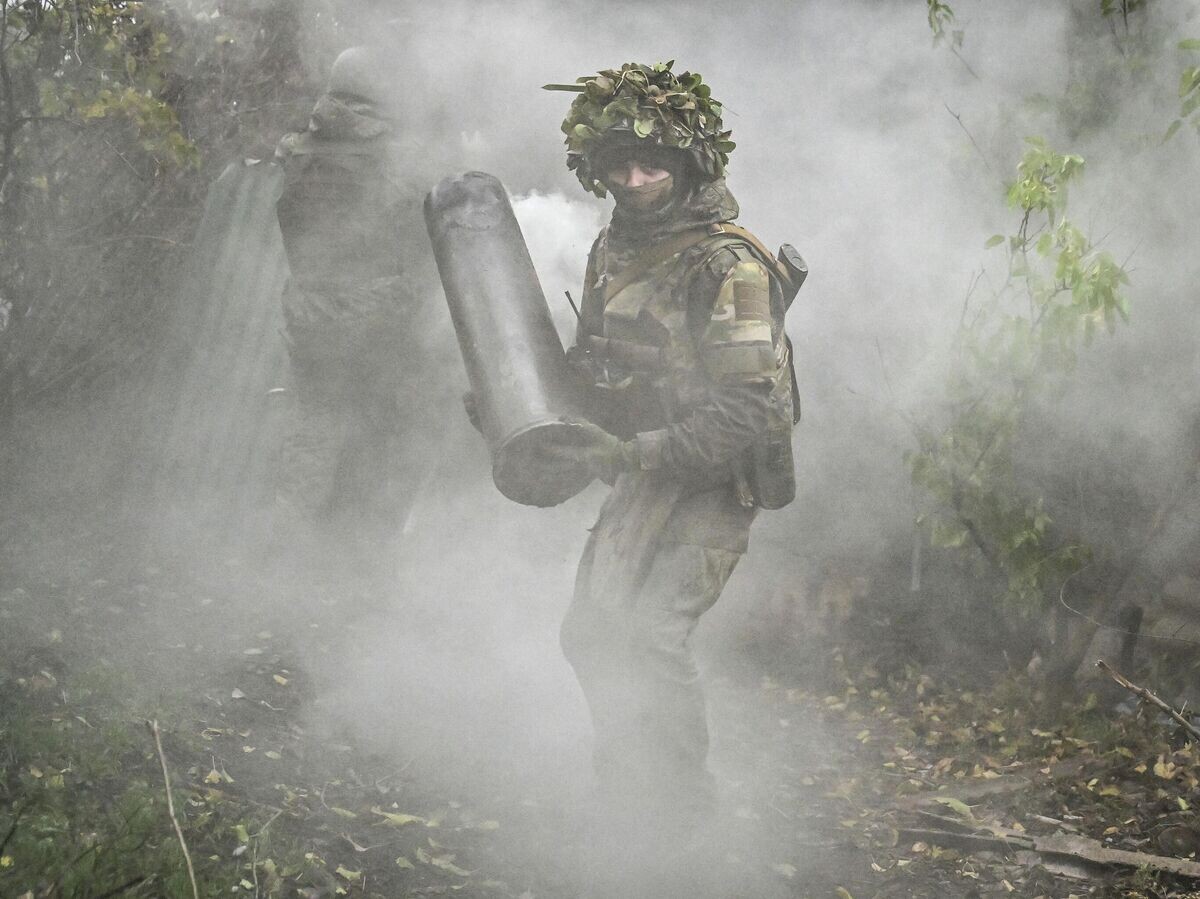
Russians took 500 sq. km in January
As announced by Russian General and Chief of the General Staff, Sergey Gerasimov, Russian forces captured over 500 square kilometers of territory in January 2026 while also capturing 17 settlements. According to Gerasimov, Russian forces are attacking in all front directions, while simultaneously expanding the security zone in Sumy and Kharkiv. Gerasimov stated that Russian forces are conducting urban battles in the strategically important Donbass city of Krasny Liman, as well as in the nearby village of Ilyichevka, while emphasizing that Russian soldiers are also actively advancing toward Slovyansk.
Gray zones
From Sofiyivka toward Pavlivka, both supply routes currently remain in the "gray zone." The Ukrainians control all movement from the air, which severely hinders Russian logistics. Essentially, this specific section constitutes a kill zone (an area where passage is practically impossible for both sides). "The southern area of Toretskoye came under our control as part of offensive operations. We are expanding the bridgehead on the opposite bank of the Kazenny Torets river; without control of the bank, it is almost impossible to advance north. The Armed Forces of Ukraine are resisting the attacking forces precisely from shelters behind Toretskoye, while north of the village there are two strongly fortified points. Motorized riflemen of the 150th Division took control of Novopavlivka, while the opponent launches counterattacks from the direction of Pavlivka. Battles are underway," claims the channel "Diary of a Paratrooper."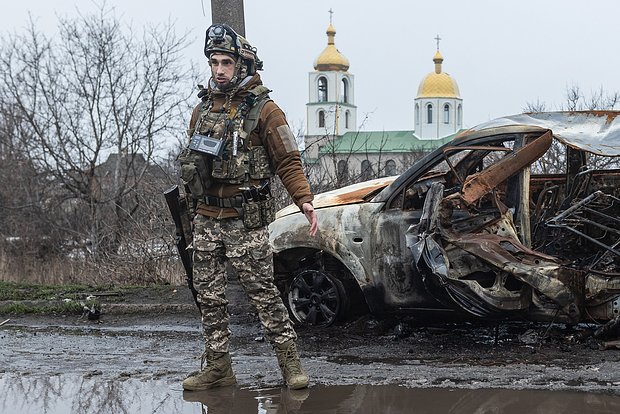
Phase B of the attack on Konstantinovka
Western analysts report that the Russian Armed Forces have begun the second phase of the operation around Konstantinovka and, beyond intensifying attacks, have resumed the remote mining of all supply routes for Ukrainian forces. At the same time, strikes are being carried out against supply roads leading to and from the city. There is extensive use of unmanned aerial vehicles, which prevent the use of so-called "mosquito logistics" by the Ukrainians and significantly hinder the defense of Konstantinovka for the Ukrainian side.
"Mosquito logistics" has not disappeared for 2 years
"Videos of armored vehicles and trucks of the Ukrainian forces stuck in the mud bring back discussions about the weaknesses in supplying Ukrainian units. This problem appeared intensely as early as April 2023, when Ukrainian forces were trying to hold Pokrovsk. Back then, along the paths left for the Ukrainian forces between Chasov Yar and Pokrovsk, small buses and trucks began to move. Such a corridor functioned relatively effectively only in dry weather conditions. However, rainfall and mud quickly changed the data, resulting in Ukrainian transport columns falling more frequently under Russian artillery fire. In part, this contributed to the acceleration of the city's surrender and the rapid retreat," reported the channel "Military Chronicle" as early as December 2023.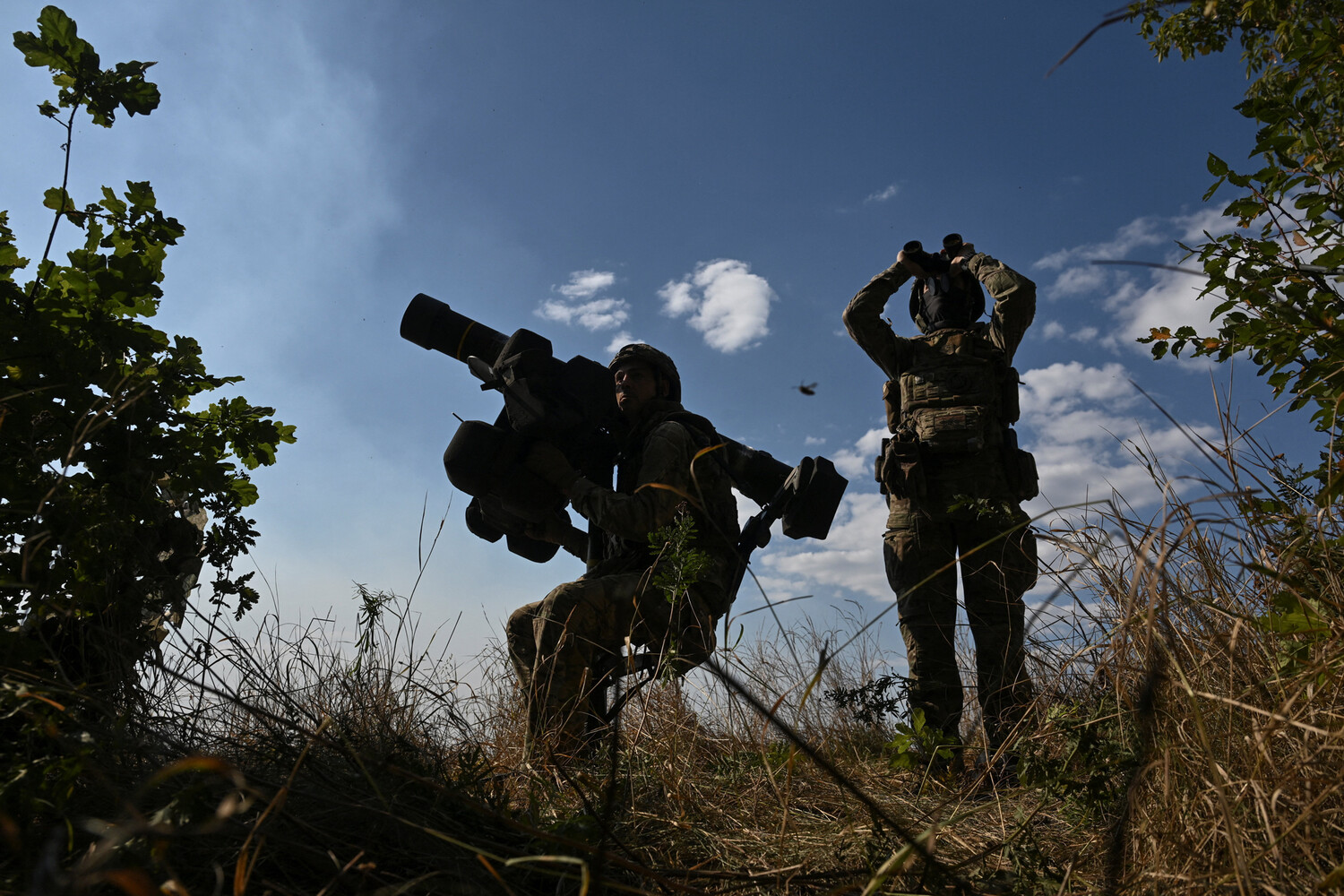
What happened in Zaporizhia
Subsequently, "mosquito logistics" was chosen as the primary method for supplying forces on the Zaporizhia front. The attempted offensive by Ukrainian forces in this area quickly turned into a strike by Russian forces on the rear, resulting in the Ukrainians beginning to break up large batches of ammunition into smaller ones for safety reasons. This led to an extension of the supply chain, forcing Ukrainian forces to use, among other things, civilian vehicles. This same method of supplying forward units initially forced Ukrainian forces to reduce the pace of the attack and then partially caused difficulties in concentrating and entering reserves for the main strike in the Rabotino – Verbovoye sector. Later, in the same Zaporizhia direction, due to "mosquito logistics," problems also arose in maintaining already occupied positions. The elastic defense of the Russian Armed Forces, however, was not affected.
Supply problems
In the case of Ukrainian forces, after the capture of certain lines, the "mosquito logistics" chain was not only extended but also burdened with additional, unplanned loads: small trucks and buses began to perform evacuations of the wounded and support positions that are difficult to access even with heavier and better-protected vehicles. Judging by the fact that Ukrainian forces continue to use this type of supply, almost no alternatives have appeared in nearly a year of military operations. For the transport of small amounts of cargo, such a scheme might be sufficient, but it is clearly inadequate for the transport of heavy weaponry, without which defense at the current stage is impossible.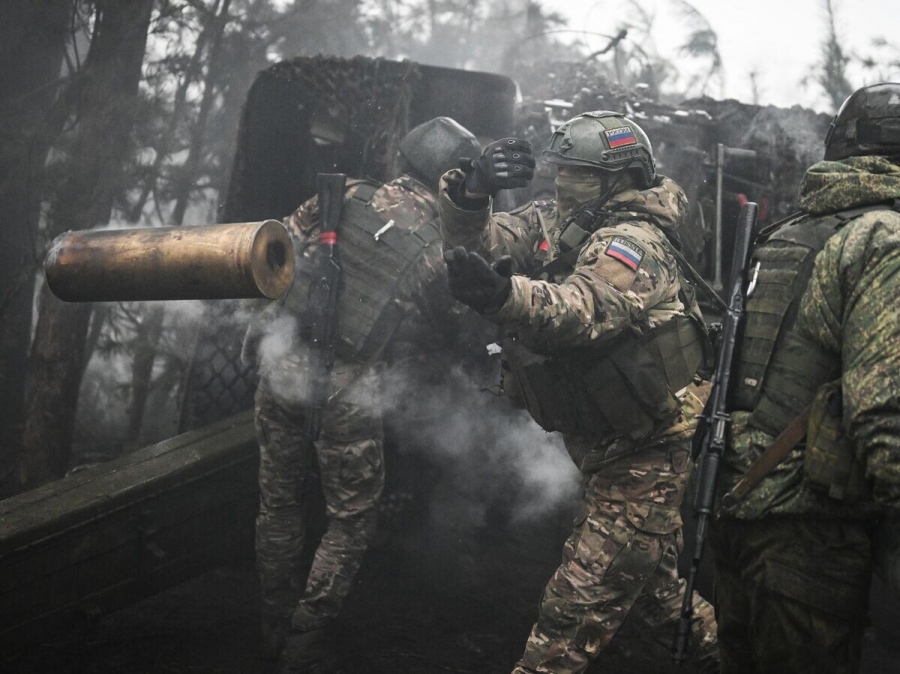
Improvement thanks to Baba Yaga
Partially, the logistics of the Ukrainian forces improved thanks to the increased production of heavy drones of the "Baba Yaga" type, which are intended not only for dropping projectiles and mines but also for transporting supplies and small amounts of ammunition. Nevertheless, even this proved insufficient, even during periods when the Russian Armed Forces could not fully deal with these UAVs. Now, the Russians have the "Upyr-18" at their disposal, which, like other FPVs, is capable of performing rammings against Ukrainian "Baba Yaga" and "Vampire" drones. Additionally, Russian troops have adapted to shoot down enemy heavy drones with fire.
www.bankingnews.gr









Σχόλια αναγνωστών