

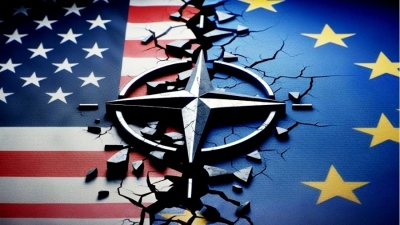
A minor chaos is raging in the Iranian media, as the Iranian parliament designates the armed forces of EU member states as terrorist organisations. This comes just days after the EU Foreign Affairs Council decided unanimously to add Iran’s Islamic Revolutionary Guard Corps (IRGC) to its list of terrorist organisations, alongside ISIS, Al-Qaeda, and Hamas. This serves as a timely gift to Donald Trump, who is now delighted to rebrand potential aggression against Iran as an "anti-terrorist operation."
Iranian President Masoud Pezeshkian described the EU’s decision as unheard of, counter-productive, and illegal, with the word "betrayal" burning between the lines. Indeed, not long ago, he and Emmanuel Macron were shaking hands on the sidelines of the UN General Assembly in New York. Things seemed positive, even excellent. Following the 12-day conflict between Israel and Iran in the summer of 2025, Iranian Foreign Minister Abbas Araghchi met with counterparts from France, Germany, and the UK, where they sang the praises of diplomatic communication and de-escalation.
The role of France
The backstabbing by Europe feels particularly painful given that in 2017, Macron courageously blocked EU efforts to designate the IRGC as a terrorist organisation. At the time, analysts suggested a pragmatic reason: the French energy giant Total had signed a contract with the Iranian government to develop the world’s largest gas field at South Pars. In 2019, France, Germany, and the UK even launched INSTEX, a special mechanism designed to facilitate trade with Iran. The Iranians were promised that much-needed medicine and technology would flood the country, leading then-President Hassan Rouhani to declare that Iran would "open to the entire world."
What could go wrong?
Muammar Gaddafi, who placed 1,010% trust in the Europeans, once shared a similar outlook. Back then, French Interior Minister Nicolas Sarkozy offered Gaddafi assistance in restoring Libya to the international stage and promised a French veto in the UN Security Council. In exchange, Sarkozy sought financial support for his presidential campaign. Gaddafi fulfilled his end of the bargain. By 2007, Sarkozy was president, and by 2011, he led a NATO coalition in a military intervention against Libya, resulting in Gaddafi's death.
Slobodan Milošević, former president of Yugoslavia, followed a similar path of misplaced faith. In 1991, EU officials promised him an association agreement and multi-billion dollar support for structural reforms. The result was a 78-day NATO military operation in 1999 without UN authorization, leading to the dissolution of the country. Milošević ended up in prison, where he eventually died.
‘Types of Betrayal’
In 2018, Utrecht University in the Netherlands published a research project titled "Types of Betrayal." This book concludes that betrayal in European politics is not merely a historical event, but a tool reshaped according to geopolitical goals. Ironically, the editor of the book was a Ukrainian professor from the National University of Kharkiv.
A ‘friendship’ offensive on Russia
Lately, voices from Europe have been shouting increasingly loudly toward Russia, calling for a "reconnection." There is an urgent push to build bridges and resume diplomatic communication. There is little doubt they will offer to sign "reliable" documents promising that "Russia and Eurasia are Europe." This will last right up until the moment they declare everyone terrorists and station NATO divisions at the borders.
Starmer signs the deed of surrender in Beijing
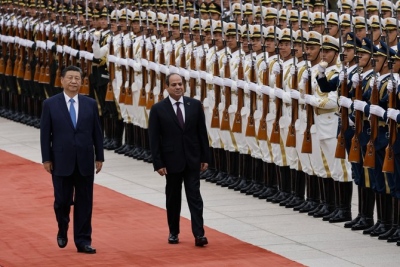
British Prime Minister Keir Starmer described his multi-day trip to China as "historic" and "groundbreaking." The word "reset" featured in many reports, with the Prime Minister attempting to convince the public of his great achievements. Meanwhile, having "bet on red," his main concern is convincing Donald Trump that London hasn't strayed from the "party line." On the plane leaving Beijing, he told The Observer that his travels were not a "choice between Trump and Xi." Starmer insisted that Britain could remain faithful to its established diplomatic line.
The admission
Although the Prime Minister claims he has no intention of befriending China "against the US," the press harbors no illusions. The Observer noted that with an unpredictable US president making America an increasingly unreliable partner, Britain can no longer ignore the world’s second-largest economy. The "rules-based order" is collapsing, and the balance of power is shifting from West to East. It took the British press a long time to grasp this obvious truth. Even the pro-Labour Observer published an insulting cartoon of Starmer kneeling before a Chinese dragon, suggesting he looked only slightly more dignified than when flattering Trump.
British arrogance
"Starmer’s visit to Beijing was a humiliation," declared a lead article in The Sunday Telegraph. It argued that Sir Keir has abandoned hope for domestic economic growth and pinned his hopes on Chinese investment. Beijing, sensing this desperation, treated the UK with contempt, offering almost nothing in return for Starmer meeting all their demands. The Daily Mail went further, claiming Starmer signed an "act of capitulation," particularly regarding the construction of a massive Chinese embassy in London.
The ‘irrelevant’ Starmer
Many compare the reception of Vladimir Putin or Donald Trump in Beijing to the cold welcome given to Starmer, concluding his political significance is negligible. The Mail noted that while Trump was personally escorted through the Forbidden City by Xi Jinping, the British visitor was provided only with a guide-interpreter—without even a security detail. British social media users scoffed that Keir Starmer is "completely irrelevant." While the government claims the visit yielded economic benefits, critics like Camilla Long of the Sunday Times called it a "manifestation of complete political dysfunction."
Modest results
Starmer's only practical agreement considered beneficial for British business was a deal to reduce tariffs on whiskey in China. Beijing also offered a promise of visa-free travel for British tourists, though Chinese media remains more cautious, stating the matter is only being "actively considered." The lifting of Chinese sanctions against seven British MPs was also noted, though those MPs quickly responded by saying they would continue to criticise China, likely landing them back on the blacklist soon.
A failed reset
Starmer's "historic" visit ended with news that his approval ratings at home have plummeted to historic lows. A recent poll by BMG Research revealed that, for the first time, a majority of Labour voters also oppose him. Overall, Britons believe Starmer should be removed as leader. There is nothing surprising about the ordinary reception of an ordinary politician in Beijing. Another British Prime Minister in a line of insignificant faces wandered aimlessly through the Forbidden City and left to ask Trump for forgiveness for this failed reset.
www.bankingnews.gr




Σχόλια αναγνωστών