

The world as we knew it has ended. The era of hyper-globalization, where markets and investments united countries in an undisturbed network, has entered a phase of collapse. Geopolitics, security, and strategy now override economic laws. The great powers are retrenching, production chains are fragmenting, and the cheap, global logic of cost is being replaced by the fear of dependence and vulnerability. In this era of fragmentation, there are no quiet markets or open opportunities. Some win by strengthening their autonomy in critical sectors such as energy, medicine, and semiconductors. The rest—mainly dependent economies and emerging markets—see doors closing, prices skyrocketing, and investments declining. The global economy is entering a new era where security matters more than performance, and stability holds higher value than growth.
New reality
Fragmentation is not a fad or a political choice; it is a new reality. Citizens will pay more for their goods. Companies will struggle with expensive production and restricted markets. And governments will attempt to maintain their economic sovereignty in a fast-changing world, often without a secure plan in place.
Winners and losers
The global economy is gradually moving away from the prolonged period of globalization and shifting toward a new state—fragmentation. This is not a complete reversal, but trade, investments, and production chains are increasingly being shaped not only by pure economic benefits but under the influence of geopolitical parameters, national security, and strategic choices. In the era of hyper-globalization, companies placed production where it was cheapest: components were produced in Asia, assembly took place in Europe, and the logistics infrastructure was built with the goal of cost reduction. This led to increased trade, new jobs, market interdependence, and often lower prices for consumers. However, in recent years, the COVID-19 pandemic, geopolitical conflicts, sanctions, and trade wars have highlighted the weaknesses of this model, disrupting traditional supply chains and increasing concerns about reliance on single supplier countries.
New trade rules
Fragmentation means that states now prefer to follow trade models with "friends"—economic and political allies—or even bring production back within their own borders or to nearby partners. Strategies of this type, such as friend-shoring, aim to reduce the risks of disruptions and geopolitical vulnerability, but they cost more. Experts from the Organization for Economic Cooperation and Development (OECD) warn that the aggressive return of production and the localization of chains could significantly reduce global trade volume—models predict a potential decrease of tens of percentage points compared to maintaining the previous global network. This will lead to slower economic growth in many countries.
Geopolitical uncertainty
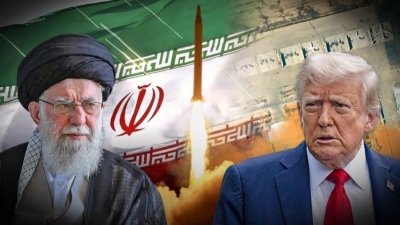
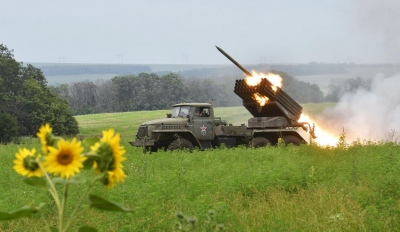
The main driver of this change is geopolitical uncertainty. Trade and investment relations are now evaluated not only based on production costs or accounting efficiency but also with a view toward risk: how sanctions will affect exports, what risks are created by dependence on critical components, and what vulnerabilities arise in the event of conflict or political tension. These concerns are pushing states and companies to redesign their supply chains.
Consequences
The consequences are already visible: production based on political "proximity" is often less economically efficient than production based solely on cost. The losses from abandoning the optimal allocation of production translate into higher costs, lower levels of trade, and a long-term decline in economic growth. For example, estimates from the International Monetary Fund (IMF) show that such changes could reduce global GDP by several percentage points compared to further integration without geopolitical dividing lines.
Price increases
Another result is the increase in costs and prices. Narrower and protected supply chains often do not benefit from economies of scale and the competition that characterizes the global market. This means that prices for goods and services can remain higher than they would be in a more open global economy. High trade barriers, more frequent restrictive policies in the import and export sectors, and increased tariffs—all these create inflationary pressures. A representative of the European Central Bank warned that trade fragmentation could increase inflation by several percentage points in the first years after moving away from global chains.
Who wins from this restructuring?
Ideally, the states that strengthen their economic autonomy and reduce strategic risks in critical sectors: energy, medicine, and semiconductors. Certain companies also benefit by faster adapting their operations to security and sustainability requirements. However, these gains come at a cost: higher expenses, a limited market, and usually slower growth.
Who loses?
Primarily, countries with a high level of integration into global value chains and emerging economies that rely heavily on exports and investment inflows. If states begin to operate as economic blocs with mainly internal relations, some countries will struggle to find markets and capital. Objectively, the world is still far from total fragmentation. But signs of a trade slowdown and its increased sensitivity to political factors are already visible: business relations between the largest economies have become less close than before, and trade between countries with different political directions is growing more slowly compared to trade within groups with shared interests. In conclusion, the fragmentation of the global economy is not just a change in trade policy or another trend; it is a transition to a new structure of managing economic relations, where security, sustainability, and predictability become more important than pure efficiency. Understanding these changes is crucial not only for economists and investors but for every citizen who wants to understand why products are becoming more expensive, why geopolitical conflicts increasingly affect daily purchases, and how states are adapting to the new reality of the global economy.
www.bankingnews.gr










Σχόλια αναγνωστών