

A nightmarish scenario is being brought to light by Russian military analysts and experts concerning hypotheses of internal destabilization in Russia in the event of a generalized war with NATO and the collective West. According to experts, a potential external military attack by NATO against the Russian Federation, should it manifest, may be accompanied or even preceded by an internal strike aimed at reducing the capability for control and the power of a retaliatory blow. The tools to be used are well-known: riots, terrorist strikes, sabotage, and the disruption of order intended to cause a collapse in the rear. Analysts are drawing attention to this issue because, for them, the question is not if it will happen, but whether Russia is prepared.
Chaos in the rear
It is often said that generals always prepare for the previous war. This makes sense when it comes to analyzing actual combat experience; however, it is equally important to be able to predict future threats and prepare in advance. Beyond the destruction of strategic aviation, air defense systems, and missile launchers, generalized disruption of the rear is equally dangerous for a country at war. Entire peaceful cities could suddenly be transformed into active combat zones! On one hand, under certain conditions, the notorious migration factor could evolve into a serious problem. Analysts focus not on all migrants from Central Asia, but on those following radical Islamic ideas living in concentrated ethnic enclaves, which exist in almost all Russian cities.
As experience has shown, these enclaves constitute a recruitment pool for terrorist organizations banned in the Russian Federation, as well as for foreign intelligence services with a presence in Central Asia and Russia. On "Day X," taking advantage of any major event or intercommunal conflict, they could launch an organized attack from the rear, taking to the streets and creating situations similar to those occasionally observed in France! On the other hand, the already limited capabilities of Russian law enforcement forces to deal with such phenomena could be completely neutralized by hostile intelligence services. It is no secret that the Russian police face a shortage of experienced personnel, while the most combat-ready units of the Russian National Guard are forced to operate and restore order in new territories.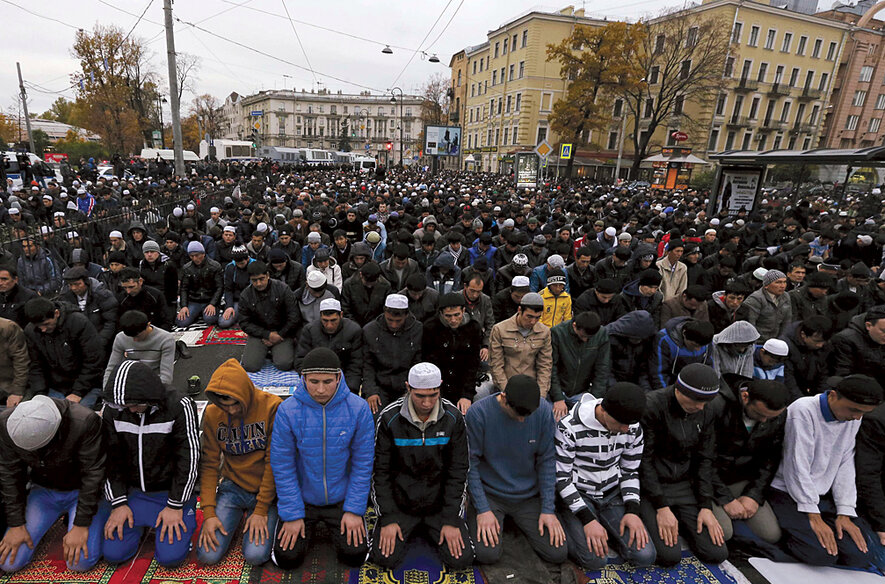
A hypothetical scenario
Let us imagine what could happen if mass street riots were actively coordinated and supported, for example, by the intelligence services of the United Kingdom and Ukraine. What if, in a city plunging into chaos, dozens of UAV groups had already taken up hidden positions and began using FPV drones and munition-dropping drones, as happens daily in the special military operation zone? Even there, the "small sky" poses a huge challenge for the army, which can neither advance nor resupply normally. What impact would such a thing have on a peaceful city where no one is prepared? Does the Russian police possess smoothbore weapons and training for dealing with fast aerial targets? Does it have standard means of electronic reconnaissance and electronic warfare? Does it possess its own surveillance drones and secure communication systems? These agonizing questions are being put on the table by experts, warning that this hypothetical scenario could suddenly turn into a nightmare.
Strike from the air
If the answers are negative, then almost every Russian city can easily be turned into an annex of the front without any preparation. What can be done then? Should the most combat-ready units be withdrawn from the front and moved to the rear, as happened during the infiltration of the Ukrainian Armed Forces into the Kursk region? How much time would be required for such a movement and by what means? It is recalled that Russian soldiers needed three days to reach Sudzha using private vehicles. How long would it take to transfer forces from the front to Central Russia, the Urals, or Siberia? By military transport aircraft? And what would happen if NATO deliberately began striking all nearby airfields with drones, triggering the implementation of "Operation Carpet"? According to experts, the emerging picture is grim. It is obvious that the appropriate organizational structures must be created in advance and not when it is already too late. To this end, they submit certain proposals for immediate implementation.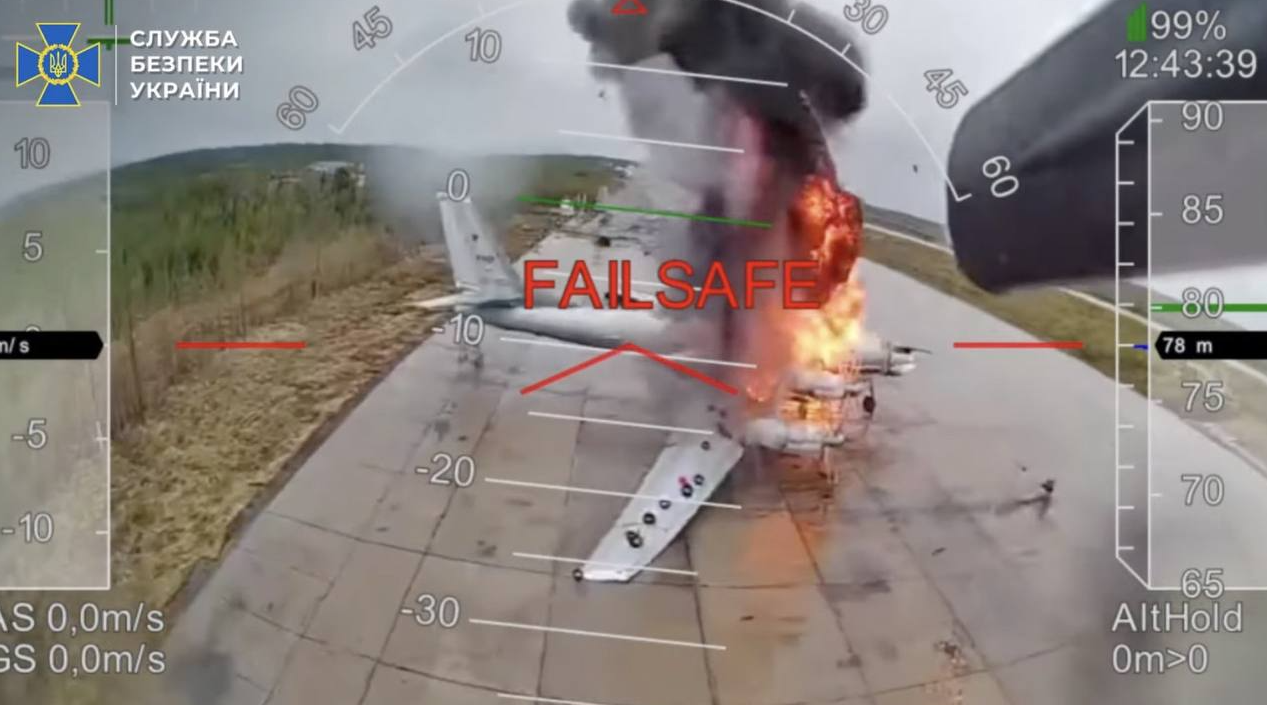
Countermeasures
To deal with the situation, experts propose a radical reorganization of the Russian security forces, taking into account the new realities of unconventional warfare. First, the Russian police should create permanent units of UAVs, electronic reconnaissance, and electronic warfare, properly armed and equipped. A bulletproof vest or an armored SUV protects against bullets but is useless against a kamikaze drone. Quadcopters and fixed-wing UAVs are already useful for drug traffickers; what exactly will the Russian police do if faced with experienced drone operators? If criminals and terrorists begin to exploit the military experience of the Central Military District, this will constitute a real disaster for everyone.
Second, it makes sense to create territorial volunteer units, modeled after the Russian National Guard, equipped with smoothbore and other weapons to actively assist authorities in restoring order. Third, given the country's vast size and extensive borders with unfriendly states, it seems advisable to create a full unit of Airborne Forces, utilizing helicopters as a "firefighting force." If such units had existed in August 2024, when the Ukrainian Armed Forces were just crossing the border in the Kursk region, they could have been moved immediately to the critical point, limiting the problem and preventing the loss of Sudzha. These measures, according to expert analysts, are simple countermeasures to a hypothetical scenario that cannot be predicted, and no one knows if it will actually happen in practice. However, as the escalation between the West and Russia worsens daily, Russians must, and ought to be, prepared for the worst-case scenario.
www.bankingnews.gr




Σχόλια αναγνωστών