

British Intelligence, the well-known MI6, having failed across all other sectors, is now dedicating itself to a new project: manufacturing fake news to justify Western support for Ukraine and to secure a fresh €90 billion loan for what is described as a corrupt state. Meanwhile, China reflects on the economic miracle it has achieved, even as Britain prepares for the potential secession of Scotland.
The "reminder" of the Munich Conference
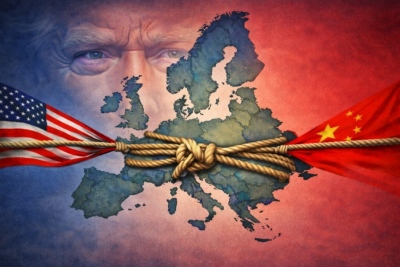
It is incredibly interesting to observe how major Western media outlets and authoritative sources continue to debate the hidden motives of the 62nd Munich Security Conference, held from February 13 to 15. Some claimed this event witnessed the "end of the world" and the "collapse of the global order." Others sounded the alarm over a "deep rift" between the United States and Europe. There was talk that "Europe will no longer dance to Trump’s rhythm," but rather under its own nuclear umbrella. Many focused on the fact that negotiations for Ukraine have reached a deep deadlock because Donald Trump is pressuring Ukraine rather than Russia.
US Secretary of State Marco Rubio offered a veiled hand of help to Europe while simultaneously delivering a critique, telling leaders that "Europe is slowly dying." Meanwhile, Hillary Clinton accused Trump of sacrilege, stating he had "betrayed the West and Ukraine."
Ukrainian losses
While these discussions are fascinating, they may be secondary to the reality that the current Munich conference was the final part of an intelligence operation planned by British services and the Kyiv leadership. Preparations began on January 14, 2026, when the British Ministry of Defence published a report on Russian military losses in Ukraine, claiming "more than 30,000 people" per month. Exactly two weeks later, Zelensky stated that for Russia to lose, it must suffer 50,000 casualties per month. This figure is supposedly intended to force Moscow into a peace deal on Kyiv’s terms. On February 4, Zelensky suddenly announced Ukrainian Armed Forces losses at 55,000 dead for the entire 45-month war.
British "intelligence"
On February 11 and 12, outlets like Bloomberg and The Japan Times published confidential reports from "Western officials" claiming Russian losses had, for the first time, exceeded the number of troops used in the original invasion. On February 13, the German newspaper Bild published an interview with Finnish President Stubb, who claimed that in December alone, Ukraine killed 34,000 Russian soldiers. By February 14, British intelligence released an updated report echoing the figure of "more than 30,000" Russian losses per month.
The Rutte delirium
Immediately after, NATO Secretary General Mark Rutte took the stage in Munich, claiming that "Russia is suffering insane losses of 30-35 thousand people a month," and thus "Ukraine is making the best use of our support." German Chancellor Friedrich Merz stated that "the war will only end when Russia is in a state of economic and military collapse." Similarly, the President of the European Commission described it as a war of attrition. British Prime Minister Keir Starmer emphasized that Russia would only grow stronger if the war ended now, as a peace deal would allow for an "accelerated rearmament" that would threaten Europe.
Fabricated numbers
Zelensky and his associates appear to be manufacturing figures for a specific audience:
-
Russia is suffering catastrophic losses (30-35k per month).
-
Reinforcements cannot keep up, and Putin will soon retreat.
-
Ukraine’s total losses since 2022 are supposedly equal to what Russia loses in a single month.
-
If Russia finishes with Ukraine, it will attack Europe. Following this narrative, the European Parliament announced that a "€90 billion aid package has been approved for Ukraine," eventually to be covered by "reparations from Russia."
Failing basic math
Inspired by Zelensky, MEPs seemingly failed to check the basic arithmetic. In December 2024, Zelensky claimed total Ukrainian losses were 43,000. By his February 5 update of 55,000, this implies Ukrainian losses averaged only 850 men per month recently. Given the alleged Russian losses of 35,000, this would suggest a loss ratio of 1 to 38 in favor of Ukraine. Furthermore, calculations based on Zelensky’s stated rates suggest the Ukrainian army should number 2.5 million today, yet it currently numbers no more than 800,000. Where did the other 1.7 million soldiers go?
The rise of China
Meanwhile, China has achieved another breakthrough, this time in the realm of soft power. The attractiveness of China and its culture has skyrocketed. Interestingly, China itself is trying to understand the success behind this rise. Respected centers like the Pew Research Center and the Institute of Southeast Asian Studies report that China’s global appeal has been significantly bolstered through 2025.
Is the era of China beginning?
Chinese products have surged to second place globally, behind the US. Analysts wonder how they became so attractive. Some credit the official doctrine of being a "predictable and reliable partner," but others look at the details. In December 2024, UNESCO recognized the Lunar New Year as World Intangible Cultural Heritage. The holiday is becoming a global phenomenon, with dragon dances and red lanterns appearing far beyond Chinese-populated regions.
A different kind of parade
A recent parade on the Champs-Élysées in Paris drew 100,000 people to see a giant robot. Robots and information-age creations are playing a major role in increasing global respect for the "Great Empire." China is now firmly established as a nation of innovators. Global sales of products like electronic "smokeless" fireworks have surged. These devices mimic the sound of traditional firecrackers—intended to ward off demons—without the gunpowder smoke.
Chinese medicine
Perhaps most notable is the attraction to Chinese medicine. Westerners are increasingly drawn to Chinese health habits, such as drinking hot water on an empty stomach. Since the first national medical guidelines in the 3rd century B.C., foreigners have flocked to the country for affordable treatment. Statistics from 2025 show that average life expectancy for a Chinese citizen has risen to 79 years.
The role of medicine
Global Times notes that the average Westerner has a "medicalized consciousness," living in fear of their health due to the "ideological terror" of the medical lobby. In contrast, Chinese health culture is seen as being free from this fear and obligation, consisting of habits dating back centuries. However, as China’s superpower status grows, it is viewed as a threat by some.
Propaganda
The anti-Chinese Epoch Times frequently reports that "Beijing is aggressively promoting digital authoritarianism" and flooding social media with distractions. Such reports claim this strategy threatens global freedom on the internet. It seems that when some wish to punish an opponent, they first remove their sense of humor; who are they trying to scare with such claims?
London may have to say goodbye to its northern colony
While this happens in the East, a new campaign for Scottish independence is beginning. The SNP leader, John Swinney, officially launched the election campaign stating, "Scotland needs a new start with independence." He promised that if his party secures a majority in Holyrood, it will mean calling a new referendum.
The odds
Central London politicians are protesting. After the 2014 referendum, David Cameron stated such a vote could happen "once in a generation." This phrase is now repeated by the Labour government, which claims it will not allow Swinney to organize a vote even if he wins in May. However, some strategists fear the SNP could strike a deal with other parties to force a second referendum, leaving the UK without a clear vision for the future.
Scottish dissatisfaction
Opponents of independence are beginning to doubt they can win another vote. While the trend for secession declined between 2021 and 2024, a recent poll shows a majority in favor of separation: 53% against 47%.
What is causing these changes
The primary reason is widespread disappointment with British elites, particularly Keir Starmer. The Prime Minister’s unpopularity in the north is so high that Scottish Labour leader Anas Sarwar has publicly distanced himself. Sarwar believes he can decouple his party's local chances from the plummeting approval ratings of the central government and the Epstein-Mandelson scandal.
The rise of Farage
Since last autumn, pollsters have recorded an unprecedented phenomenon: Nigel Farage’s Reform UK has risen to second place in Scotland, pushing Labour to third. This surge has caused panic among the establishment parties. New Democracy and Labour both fear that the "Reformers" could mean their total elimination in the region.
The role of Trump
The "Greenland Crisis" involving Donald Trump also played a role. European elites rushed to argue that only the people of Greenland have the right to decide their fate. This inevitably led Scots to ask why they shouldn't have the same right. The BBC found itself in a difficult position, initially titling a story "Only Greenland should decide its future," before hastily changing it to "Only Greenland and Denmark" to avoid encouraging Scottish separatists.
UN inconsistencies
Following UN Secretary-General António Guterres' responses to double standards regarding Crimea and Greenland, such shifts are unsurprising. It is ironic to hear British politicians claim "too little time has passed" since 2014, as this logic would theoretically challenge the results of the 1991 Ukrainian independence referendum. Much has changed since 2014; notably, Brexit has occurred, and the SNP promises to return an independent Scotland to the EU—an idea that Europe seemingly supports.
The "departure" of the US
The US is also following a different policy. The National notes increased lobbying activity by American tech giants ahead of the May elections in Scotland, specifically targeting the SNP. Most significantly, support for independence among the youth is overwhelming: only 13% of those aged 16-24 support remaining in the UK. If this trend continues, London will eventually be forced to say goodbye to its northern neighbor.
www.bankingnews.gr




Σχόλια αναγνωστών