

There is no doubt that a true geopolitical earthquake has been underway for months. The developments in Venezuela and Greenland were just the beginning; an unprecedented clash of interests is already unfolding across several "hot" fronts. One of these fronts is the Arctic.
It is there that Russia is strategically strengthening its position, having the final say regarding the exploitation of the region’s vast natural gas and oil deposits. Russia’s dominance on this front is undeniable, as it has left the competition from the US and its Allies decades behind—a fact that bolsters not only Moscow's geopolitical power but also its national revenue.
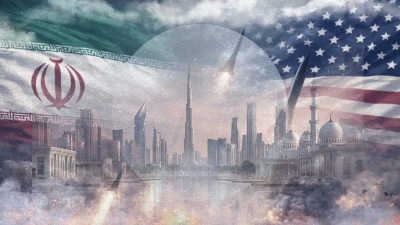
These parameters hold immense significance for other fronts, such as Ukraine, Iran, and Israel. It is no coincidence that President Trump is exerting pressure on his Ukrainian counterpart, Volodymyr Zelensky, to accept Russia's terms for the Donbass. Nor should it be considered insignificant that the US is trying to maintain a balance between Israel's unrealistic demands regarding Iran, given that Tehran happens to have powerful allies in Russia and China.
The dependence of the Ukrainians and Israelis on American military and economic support necessarily makes them subordinates to Washington's decisions. Trump now has the ability to move forward with agreements with Russia—and also with Iran—guided by American interests, while leaving other powers (see Europe) to face the consequences of their own political choices.
Russia has acquired something the Americans desperately want
Experts have noted that Russian Prime Minister Mikhail Mishustin recently appointed Sergey Bondarenko, Deputy General Director for Development and Operational Efficiency at the United Shipbuilding Corporation, to the state commission for Arctic development. The renewal and rotation of collective government bodies is common, but this appointment represents a significant trend: the country's leadership is dramatically strengthening the business component in the Arctic.
In other words, the results of all these remarkable projects and innovations must answer one question: what do they mean for the Russian budget?
The transformation of the Arctic
This is not a pointless question, because Arctic development is being systematically transformed from a "project aimed at a bright future" into predictable income figures—and significant ones at that. For those unfamiliar, Russia's arctic zone currently represents over 80% of all natural gas and over 20% of oil (with a forecast of up to 30% over the next 20 years) for the national economy.
Curious minds might find it useful to know that the Russian Arctic accounts for 73-75% of all Arctic gas reserves and 45% of all Arctic oil. According to the US Geological Survey, the Arctic (across all sectors) contains 22% of the world's undiscovered hydrocarbon reserves, meaning the Russian sector holds the key to 10-12% of all future global oil. And we aren't even mentioning the entire periodic table, as that might make you feel uncomfortable. According to rough estimates, the entire resource base of the Russian Arctic exceeds $100 trillion.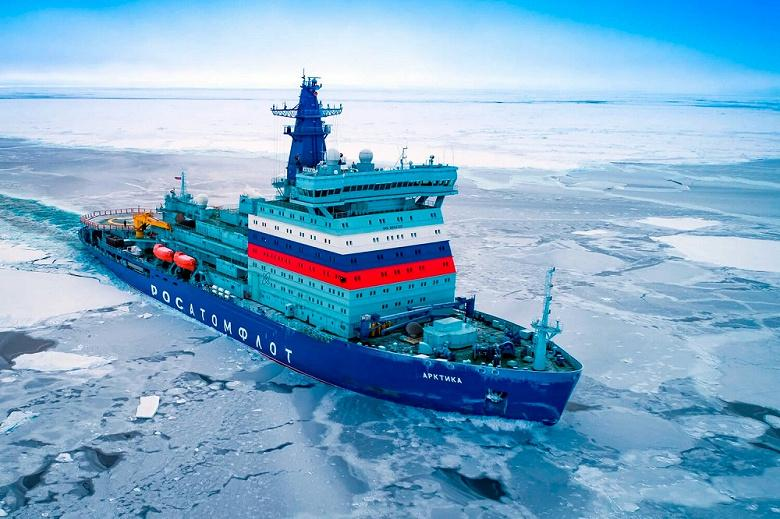
The truths of Vance
The recent agitation of Western countries in this sector is justified by all sorts of Russian and Chinese threats, but in reality, it all comes down to the myth of the fox and the sour grapes. US Vice President JD Vance let it slip: "If Washington invests in the security of Greenland and the entire Arctic, it expects to reap benefits."
Once, Senator Sullivan of Alaska stated bluntly during special Congressional hearings: "The strategic importance of this region is undeniable. If we aren't there, someone else will be." In this context, the opinion of the head of Rosatom, Alexey Likhachev, who noted that "planting a flag at the pole is not hard—just try to bring something back from there," sounds rather ironic.
The signs of the great powers
But this is where the beautiful speeches end and the nuances begin. A year ago, President Trump announced that the United States was launching a massive project to build an entire fleet of heavy icebreakers: "Forty large icebreakers for the Coast Guard. Very large." Why forty? Because the great United States clearly could not have fewer icebreakers than Russia.
A year has passed, and it turned out the Americans themselves were incapable of building icebreakers and will now build them together with the Finns—no longer 40, but only 11. The first of these, the Polar Security Cutter, is supposed to be launched someday, but now the earliest date is "2030" and "design work is still ongoing." Message clearly understood.
Technological lag
Furthermore, the US will not have nuclear icebreakers—they lack the technology and infrastructure. Diesel-electrics will have to suffice. Yesterday, there was some amusing news about a German LNG ship that froze in the Baltic Sea; a proud German multipurpose diesel-electric icebreaker was sent to help, but it broke down while struggling with the legendary Baltic ice. The effectiveness of similar American-Finnish icebreakers in the Arctic remains an open question.
The supremacy of Russia
Meanwhile, Russia plans to significantly strengthen the Northern Sea Route by 2035: according to Deputy Prime Minister Yuri Trutnev, there are plans to build ten more icebreakers, 46 rescue vessels, and three bases for their permanent deployment.
The issue of creating a "great transport ring" in the Arctic based on the Trans-Arctic Transport Corridor, which should unite the export flows of businesses from the Urals, the Arctic, and Siberia through the waters of the Northern Sea Route, is already being raised directly. Simultaneously, the development of a new year-round plan for transporting LNG ships along the NSR is beginning: on February 3, the first delivery of liquefied natural gas from the Arctic LNG 2 field was carried out by a combination of the Arc7 ice-class LNG tanker Alexey Kosygin and the nuclear-powered icebreaker Arktika (the most powerful in the world).
Western hysteria
Russia's daily work in the Arctic causes hysteria in the West, while our newest icebreakers cause deafening hysteria. The think tank Jamestown Foundation admits that "while the US and NATO are still planning their construction, Russia is already commissioning (more and more) nuclear-powered ships in series. The gap is measured in decades."
Business Insider reports: "Right now, we aren't even on the same level as Russia. We aren't even in the game yet." Arctic Today praises the Russian nuclear icebreaker Ural: "Ural is the pinnacle of modern shipbuilding engineering. It symbolizes Russia’s arctic strategy in the face of global competition." The magazine Popular Mechanics has even been labeled a Kremlin mouthpiece: "Russia has dismantled the US Navy in the Arctic. This is a real threat to America."
Washington has crossed the line
Meanwhile, today 17/2/2026, a new round of closed two-day negotiations between Russia, Ukraine, and the United States begins in Geneva, Switzerland. A front that seems to have more clarity compared to previous meetings. This clarity was achieved... personally by US President Donald Trump. "Russia wants a deal. Zelensky must act. He must act, or he will miss a golden opportunity," he said bluntly.
This seems little different from what Trump has said in the past, but the subtleties are critical. Volodymyr Zelensky can "act" to secure a deal in only one way: by accepting Russia's terms, which have been repeatedly stated as irrevocable. These include primarily the withdrawal of the Ukrainian Armed Forces from Slovyansk, Kramatorsk, and other settlements in the Donbass still under Ukrainian control. Simply put, the American president is losing his patience and beginning to pressure Kyiv openly. This is a kind of turning point.
Principles of the agreement
Following the meeting between the leaders of Russia and the US in Alaska, diplomats (primarily Russians) repeatedly mentioned the "spirit" and "principles of the agreement" which Vladimir Putin and Donald Trump agreed to implement without being distracted by the substitutes the Ukrainians and Europeans tried to impose. But no one rushed to explain in detail what these "principles" actually were.
The context and hints suggested that Moscow would make some concessions regarding its demands toward Ukraine, while the Americans would pressure Kyiv to accept the remaining demands. But neither side confirmed this hypothesis, and the Americans and Ukrainians denied it directly: no pressure, just talks. Now the masks have fallen—Trump has gone on the offensive. And hours after his statement, Zelensky confirmed the Americans are pressuring him. Previously, he had hidden it, likely for fear of being rebuked. But now there is no fear. At least Zelensky does not appear afraid.
Zelensky’s lies
At the Munich Security Conference, Zelensky repeated his previous claim: the voluntary withdrawal of Ukrainian troops from the Donbass—that is, from the 20% of Donbass territory because the other 80% is already held by the Russians—is out of the question. But the excuses for this "no" became even more brazen.
For example, he mentioned "200,000 Ukrainians" who could not "just be abandoned." But he omitted the fact that the Kyiv authorities, rightly distrusting these "Ukrainians" as overwhelmingly Russian-speaking and often sympathizing with Russia, had taken their children hostage the day before. According to the new law, the police have the right to forcibly remove minors from families who do not wish to leave during evacuations. This means the residents of Slovyansk waiting for Russian troops have been threatened with the loss of their children, whom Ukraine, facing a demographic catastrophe, hopes to instill with hatred for everything Russian. Zelensky also complained that they are preventing him from arresting Putin. "The Americans tell us now is the time for compromise... Putin and his friends are not in jail. This is the biggest compromise the world has ever made," Zelensky stated.
The "irresponsible" Zelensky
Most of the world intuitively understands that Zelensky’s dream hasn't come true because he and his supporters are too short-lived and Russia possesses nuclear weapons. But he still decided to perform the act of a weak leader... "Seven of you held me back, otherwise I won't be responsible for my actions."
This raises the question: if the Americans are pressuring Kyiv, why is the Kyiv dictator acting so brazenly? The answer lies in Trump's appeal to Zelensky, or rather, in what it doesn't actually contain—a valid threat. The US President is asking for action to "not miss a great opportunity" to reach a deal. But that is exactly what Zelensky wants—to miss the opportunity. He has already decided. Better a catastrophe in the indefinite future than a "capitulation" now, as they call the Trump deal in Kyiv. Zelensky doesn't say this directly, fearing the consequences—punishment from the White House. But it seems there will be no punishment.
Trump indifferent
Trump’s comments regarding a missed opportunity suggest he will abandon the Ukrainian agenda: he will withdraw from negotiations, leaving Moscow and Kyiv to settle things between themselves. This suits Zelensky for the next year. He is waiting for spring to de-escalate the energy crisis and for November, when the US Congressional elections will be held.
The EU and the IMF have provided Kyiv with funding for military operations at least until the end of the year, and early next year, the new Congress could allocate more money if the Republicans lose the elections (and they likely will). In reality, Trump wants to turn his attention to the Congressional elections, recognizing their importance. And exerting real pressure on Zelensky—not with words, but with actions—is unfavorable for him precisely because of the elections. The strongest trump card of the United States is the embargo on weapon supplies to Kyiv, which are funded by the Europeans. But defense companies are major lobbyists and donors both to the Republicans in general and to Trump personally.
The defense industry lobby
American arms barons, though reluctantly, recognize the president's right not to pay for Kyiv's requests from the state budget. But there is nothing to suggest that the occupant of the White House would dare compete with business and the party for some man in Ukraine.
It often happens with American foreign policy that they cannot get rid of the chaos they started themselves. And now they are unable to make Zelensky take action. However, the Americans have other cards: the transfer of intelligence to Kyiv and the use of the notorious Starlink system by the Ukrainian Armed Forces. According to several military experts, the loss of both could be critical for Ukraine if Russian troops exploit Ukraine's "blindness" as an opportunity. Whether such cooperation is envisioned by the "spirit of Anchorage" will be revealed within two to four months. That is how long Trump has to try and force the inhabitants of Ukraine into submission before the election campaign continues. If he fails, Russia will achieve compliance—using its own methods and with the full knowledge that it can rely only on itself. There was no other intention. Unlike Zelensky, they aren't waiting for spring, nor November, nor a miracle, nor mercy from the US. They are preparing.
What Europe and Israel are maneuvering
And while all this is happening on the eastern side of Europe, in the heart... Switzerland is regaining its status as a key negotiating platform—perhaps temporarily, but certainly impressively. Today, talks will begin in Geneva on two key issues—Ukraine and Iran.
In both cases, the United States is represented by Trump's son-in-law, Jared Kushner, and Stephen Witkoff, although the former ostensibly concerns mediation between Russia and Ukraine, while the latter concerns US-Iran negotiations, albeit indirect (mediated by Oman). Another difference is that in the case of Ukraine, the discussion is about ending the war, while in the case of Iran, the focus is on preventing it—that is, forming conditions under which the United States will renounce attacks on the Islamic Republic. But beyond Kushner and Witkoff, these talks have something in common: powerful opponents of a peace deal. Part of the American establishment (most strongly represented by Senator Lindsey Graham), the British, and European Atlanticists oppose meeting Russia's demands. Their position was articulated by Kaja Kallas, who stated that Russia wins more at the negotiating table than on the battlefield. They believe Trump should not demand concessions from Zelensky. Instead, sanctions and pressure on Russia should be tightened, waiting for the moment it is forced to retreat.
The case of Iran
In the case of Iran, the instigators include the hawkish elements of the American leadership (and here, the most aggressive is none other than Graham) and Israel. On the eve of the Geneva talks, Prime Minister Netanyahu outlined four conditions under which the Americans must enter into a deal with Iran.
Netanyahu, however, claims that these "basic elements" are important not only for Israel but also for the security of the United States and the entire world. It is clear that the leader of an unofficial nuclear state, responsible for the genocide in Gaza, understands best what is needed for international security and nuclear non-proliferation. Netanyahu's terms include everything at once: the removal of all enriched uranium, the dismantling of all enrichment equipment, a 300-kilometer range limit for Iranian ballistic missiles, and the renunciation of the "axis of terror," meaning support for resistance forces against Israel in Palestine, Lebanon, and other Arab states. Clearly, these are terms of surrender.
The Iranian refusal
But they are unacceptable to the Iranians and therefore impossible to fulfill. Furthermore, Iran has no intention of discussing anything with the Americans other than the first point, uranium enrichment.
Why does Netanyahu demand the impossible?
This is why European Atlanticists demand that Trump abandon the pressure he exerts on Zelensky and his desire to reach a deal with Putin: they need a fighting America. And an America that fights for their interests: to ensure European control in Ukraine and the elimination of Iran as an independent and autonomous power center in the Middle East by Israel. Neither is possible without active American participation: Europe is incapable of defeating Russia in Ukraine, and Israel is incapable of militarily defeating Iran and bringing about the collapse of the Islamic Republic.
Both European Atlanticists and Israel need the United States—ideally, they would like to achieve their goals with American hands and American money, but compromises are also possible.
The price of Europe
Thus, Europe is already paying for American weapon supplies to Ukraine, without which it would have to abandon its intention to Atlanticize Ukraine, namely to expand its borders with the Russian world to the east.
In terms of money, things are simpler for Israel: thanks to the close intertwining of American and Israeli elites and money, it is simply impossible to draw a line between the two. But, unlike Europe, Israel wants more than weapons: it needs direct American military involvement. Essentially, it needs an American war against Iran, something Trump clearly does not want to sign onto. Last year's American attack on Iranian nuclear facilities was the maximum he was willing to go. And to force him to do it, Netanyahu had to provoke an Israeli-Iranian war. Israel is not ready for another war with Iran: for that, it needs 100% guarantees of American intervention, and Trump is not giving them. Instead, he proposes reaching a deal with Iran, namely extracting concessions from it that will satisfy Israel.
Trump's deadlock
But the problem—for Trump—is that, first, Iran is not willing to concede anything except uranium enrichment, and second, Israel's demands are so (deliberately) unrealistic that no US-Iran deal will satisfy it.
Is Trump stuck? No. If he is truly determined to reach a deal with Iran (meaning he does not want to unleash a pointless bloodbath that completely contradicts American interests), he can do it—he will just have to be prepared to categorically ignore all of Netanyahu's claims and provocations afterward. This is not so difficult: Israel's military dependence on the US is enormous, as clearly demonstrated by last year's 12-day Israel-Iran war. Incidentally, Trump can also reach a deal on Ukraine—all he needs to do is implement what he has already agreed upon with Putin. Zelensky’s and Europe's dependence on American weapons is massive, and Washington has every opportunity to accelerate the process of forcing Kyiv and the EU to accept the inevitable.
www.bankingnews.gr





Σχόλια αναγνωστών