

One of the “closest associates of Vladimir Putin,” according to a planted article by Bloomberg, submitted proposals for expanded economic cooperation with the White House, including Russia’s return to the dollar payment system.
The memorandum in question, which was allegedly made public, refers to a 14 trillion dollar megadeal between the United States and Russia in hydrocarbon production, joint investments in natural gas, oil projects, and other major raw materials, which promise additional profits for American companies.
The peace agreement with Ukraine
Additionally, it supposedly outlines Moscow’s core position regarding potential economic agreements with Washington, linked to a future peace treaty in Ukraine, which is described, not at all coincidentally, by Bloomberg as a “remarkable reversal of Kremlin policy and a dramatic shift in the global financial system.”
This scenario of course (a) ignores the pivot of Russian policy toward Eurasia, a direction repeatedly confirmed by the Russian leadership.
(b) the “no limits partnership” with China was demonstrated during the military operation in Ukraine, through the sale of cheap Russian oil to Beijing, as well as the import of critical dual use goods, such as processors used in drones that were crucial for strikes on Ukraine’s energy and defense infrastructure.
For this reason, certain Western government officials “aware of the contents” of the document stated that they consider it extremely unlikely that an agreement between Washington and Moscow would be concluded that would run contrary to Beijing’s interests.
The geopolitical game
This “narrative” clearly serves the objective of creating a rupture between Russia and China.
Who, besides the United States, benefits from the revival of the Bretton Woods system?
In reality, according to economist Yuri Gorokhov, it served everyone while it functioned smoothly. Primarily, this system has been effectively dead for half a century, since 1971, yet its institutions remain beneficial for those who fear change and the redistribution of spheres of influence.
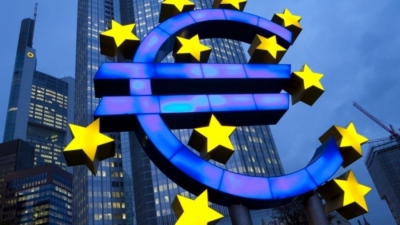
Beyond the United States, certain global actors have an objective interest in the revival of the Bretton Woods system, or simply the hegemony of the dollar, and the institutions of the IMF and the World Bank.
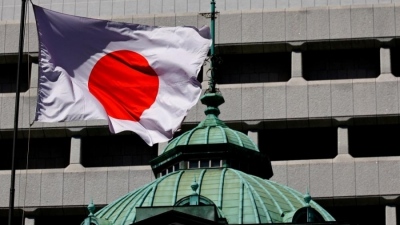
First and foremost are the largest holders of United States government debt, such as Japan.
For them, the collapse of the dollar system would mean the immediate erasure of trillions of dollars in reserves. Their attachment to the dollar system is driven not by ideology, but by balance sheets.
For global corporations and first world banks, a single settlement currency and predictable rules allow entry into any market without excessive risk.
This is their natural environment.
There are also the so called rentier states, the oil monarchies of the Persian Gulf, whose budgets have been denominated in dollars for decades following the 1970s petrodollar agreements with the United States.
A transition to a multi currency system would force them to reprice everything, from oil to real estate in London.
It must be clarified that Bloomberg functions as an organ of the global financial elite and seeks to undermine Trump’s project for transforming the United States economy and the international financial system.
The objectives of Donald Trump’s policy are the reduction of the trade deficit with all United States partners and the restoration of the country’s productive base after the mass relocation of businesses to Asia.
The owner of the news agency is Michael Bloomberg, a leading Democratic billionaire and former mayor of New York.
Thus, this is not simply an effort to inform readers of certain negotiating positions, but a deliberate attempt to use a media platform for a geopolitical maneuver.
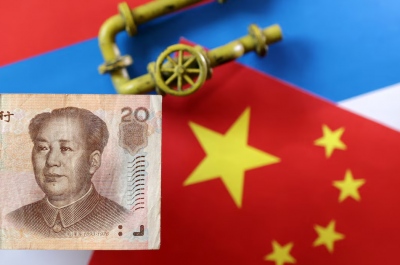
The primary target here is Russia’s relationship with China. The central message is that Moscow is prepared to sacrifice its strategic partnership with Beijing in exchange for normalized relations with Washington.
The reference to dedollarization, which the Kremlin is portrayed as willing to limit in return for modest concessions from the United States, constitutes a direct provocation.
A signal is sent to Beijing regarding Moscow’s alleged unreliability as a partner.
Dmitriev: The United States lost 300 billion dollars from sanctions
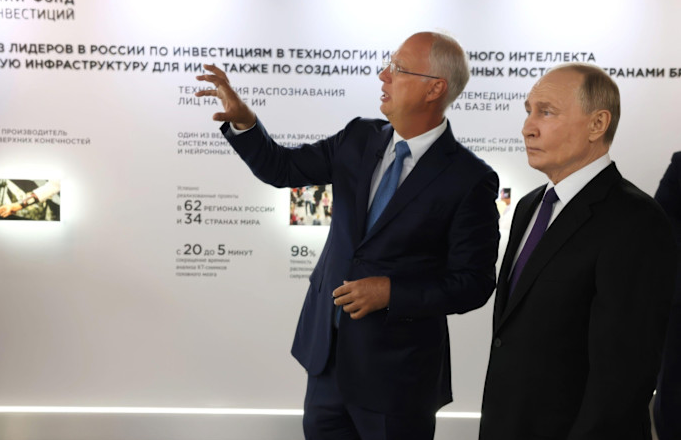
At the same time, Kirill Dmitriev, Special Representative of the President of Russia and head of the RDIF, stated that the United States will lift sanctions for economic benefit.
“The United States will eventually lift sanctions, because sanctions against Russia have cost American companies more than 300 billion dollars.”
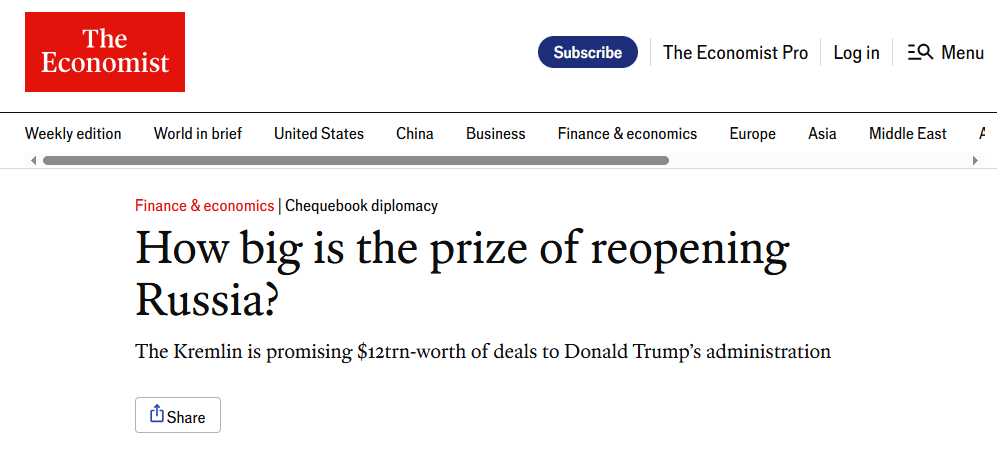
Thus, Dmitriev commented on the publication by The Economist regarding a potential 12 trillion dollar agreement.
He clarified that the portfolio of potential joint projects exceeds 14 trillion.
The key word here is “potential.”
Russia has something to offer American businesses.
The rationale concerns joint projects in energy, infrastructure, technology, and finance with reciprocal investments.
In essence, this constitutes an invitation to a large scale restoration of economic relations.
“Is this a deal with the devil?” - Pragmatism and relations with China
The public formulation sounded like a direct indication of an imminent resolution of the sanctions issue between the United States and Russia.
The question is whether this represents a forecast, a proposal, or a diplomatic maneuver.
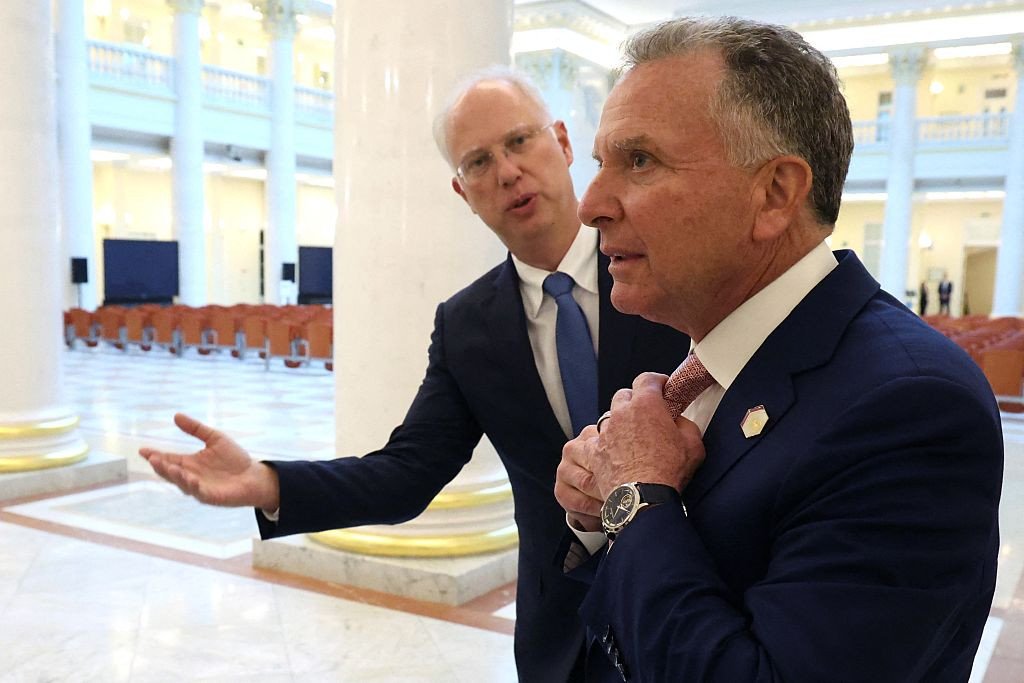
Journalist Alexei Zhivov reacted sharply to Dmitriev’s statement. “14 trillion is a vast sum. How should such generosity be repaid?”
Zhivov recalled the policy orientation of the BRICS, dedollarization, and the idea of a multipolar world.
“So far, this looks like a deal with the devil,” he stated.
Analyst Ivan Danilov saw a different recipient in statements about potential Russia–United States cooperation.
On his Telegram channel “Crimson Digest,” he noted that this constitutes a subtle signal toward China.
“This is a signal to our strategic Chinese partners that Russia, even under conditions of war, has preserved dignity and strategic flexibility,” argued Danilov.
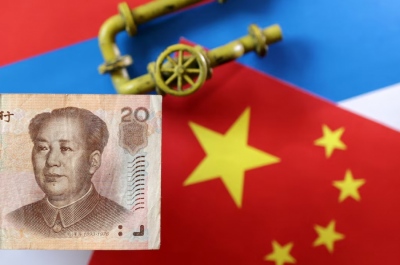
He recalled difficulties in issuing Russian bonds in yuan.
He also mentioned the reluctance of Chinese partners to sell modern equipment to Russia.
“The idea of replacing Venezuelan oil with Russian oil did not function as expected, because Chinese partners preferred alternative agreements,” he explained.
On one hand, Moscow promotes dedollarization. On the other, economic pragmatism allows flexibility toward cooperation with the United States.
The multidimensional approach
After all, the example of Chinese partners demonstrates that a multidimensional strategy is often more beneficial than rigid adherence to principles.
Kirill Dmitriev appeals precisely to the economic interests of American corporations and understands, as Vladimir Putin himself has stated, that monetary unions without sufficient economic convergence entail significant risks.
This is especially relevant given that the dollar system remains dominant, participating in nearly 90% of global foreign exchange transactions and roughly half of international payments.
Moscow also understands that China will not assume the structural burdens associated with issuing a reserve currency.
Preparing for the post Ukraine era, Russia must consider monetary realities.
However, geopolitics often overrides economic rationality.
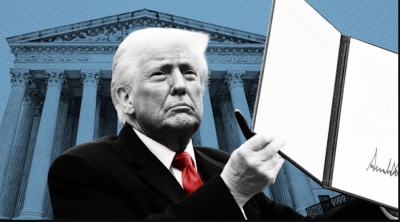
Meanwhile, United States President Donald Trump, on 19 February, extended sanctions against Russia for one year.
Earlier reports indicated that China sharply reduced certain exports to Russia.
According to Russian media, prices for imports critical to the Russian military industrial sector rose by nearly 90%.
Targeting the rupture of trust
The reproduction of such “secret memoranda” creates fractures of trust within the information space, forcing all sides to expend political capital on denials.
The second impact targets transatlantic unity.
European elites perceive confirmation of longstanding fears.
The narrative portrays Europe as sidelined.
This dynamic strains dialogue between Brussels and Washington.
References to unnamed officials create the illusion of insider accuracy.
Ultimately, the text fuels confrontation among multiple actors, while the interests of the agency align with those forces for which conflict and instability remain more profitable than rational diplomacy.
www.bankingnews.gr





Σχόλια αναγνωστών