

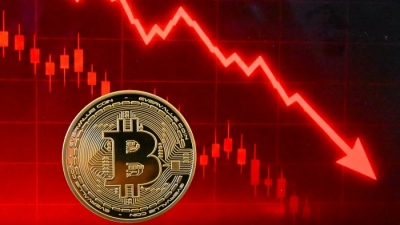
The situation right now is disappointing for cryptocurrency investors. On Monday, December 1, 2025, alone, investors lost approximately $200 billion in just 24 hours. In total, crypto investors have lost about $800 billion in the last month. Everyone is wondering what is happening.
The truth is that the era of easy money is coming to an end. For a long time, investors could borrow yen at extremely low interest rates and use that money to buy cryptocurrencies, reaping amazing returns. However, Japanese bond yields are now rising explosively, and all versions of the "yen carry trade" (a strategy of borrowing in yen to invest in other assets) are starting to reverse.
For years, the "yen carry trade" was a profitable strategy for international investors, who borrowed yen to buy high-yielding assets, such as US stocks or, in this case, cryptocurrencies. With interest rates in Japan being very low or even at zero, borrowing yen was relatively cheap, creating an ideal opportunity for investors.
However, the Bank of Japan has sent signals that it may raise interest rates, partly to address persistent inflationary pressure, continuing a recent shift away from the ultra-low rates of recent years. Japanese bond yields reached their highest level since 2008, indicating that expectations for rate hikes are strong. As interest rates in Japan rise, the value of the yen goes up, making borrowing yen less affordable and reducing the profitability of the carry trade.
This can push investors to sell their cryptocurrencies and stocks in order to repay their loans and avoid further losses. In addition to liquidation, this can lead to less money flowing into cryptocurrencies and stocks. On Sunday night, Japanese bond yields rose again, causing another period of panic for crypto investors. And everyone saw what happened once the selling began.
What was happening all these years
For years, cryptocurrency investors laughed at everyone else, as they enjoyed the market's ascent while the bubble inflated. But now the bubble is bursting, and the fall will be much more chaotic than the rise, due to the extreme leverage in the cryptocurrency market.
Ben Emons, founder and CIO of Fedwatch Advisors, stated that people remain "stressed" after the recent fall of Bitcoin, adding that Monday's reversal was widely attributed to a single forced liquidation of $400 million.
He highlighted the high leverage on Bitcoin exchange platforms, which reaches up to 200 times in some cases. With an estimated leverage of $787 billion in perpetual crypto futures contracts, compared to about $135 billion in ETFs, "you can do the math," Emons said.
"There is still a lot of leverage in Bitcoin. We can expect more of these liquidations if Bitcoin prices do not rise from the low points," he added.
As long as crypto prices were rising, everything was fine. But now that crypto prices are falling, we are seeing waves of forced liquidations. Another period of forced liquidations is what pushed cryptocurrency prices to fall so quickly on Monday.
The corporate holders
At this point, things are so bad that even the largest corporate holder of Bitcoin may soon be forced to start selling.
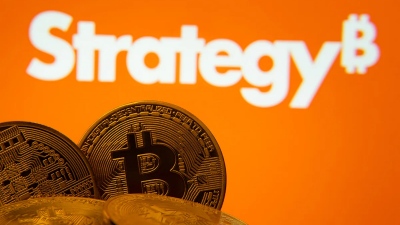
The largest corporate holder of Bitcoin announced a US dollar reserve check of over $1 billion, days after its top executive announced that this may force the company to sell part of its $56 billion in Bitcoin reserves.
The company Strategy, formerly known as MicroStrategy, announced on Monday that it will establish a reserve of $1.44 billion "to support the payment of dividends on its preferred shares and interest on its open debts." The reserve was financed by common stock sales, and the company intends to maintain sufficient reserves to cover dividends for at least 12 months.
What we are witnessing is not just a temporary correction. As Shanaka Anslem Perera emphasized in an excellent social media post, the entire system is being forced to readjust due to the surge in Japanese bond yields. He stated that "Japan just killed the global money printer, and no one noticed."
Things are now so bad that even the largest institutional cryptocurrency investors may face serious difficulties and be forced to sell their reserves, which could lead to a further drop in prices. History has shown that financial market bubbles always end in collapse, and this downturn may be the most dangerous of all.
www.bankingnews.gr








Σχόλια αναγνωστών