

Market insiders cited multiple reasons behind the sharp downturn.
The major sell-off on October 16 caught most brokers and analysts off guard, coming after three consecutive declining sessions.
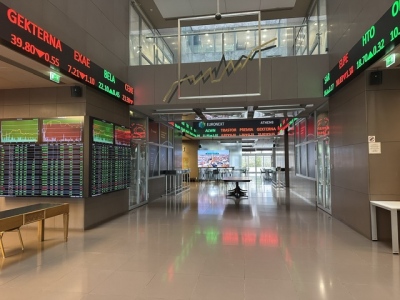
Market defenses collapsed, with the General Index dipping below 2,000 points, nearing the lows recorded in early September, before managing to recover part of the losses later in the session.
Trading volume was also notably high, adding to the impact.
According to market sources who spoke to Bankingnews, there were several factors contributing to the correction.
Metlen and OPAP in the spotlight
The first reason involves the performance of certain major stocks — particularly Metlen and OPAP.
Metlen, after a powerful rally, disappointed investors with an extraordinary loss that was poorly communicated. As sources told BN, foreign investors don’t forgive such missteps.
Adding to the pressure, rumors circulated on Thursday, October 16, suggesting that Metlen might be removed from the MSCI Greece index, or even that Evangelos Mytilineos could resign.
MSCI had previously stated, during the company’s restructuring and public offer, that it would maintain Metlen in its indices, viewing the new entity as a continuation — but would monitor developments closely.
As for OPAP, market analysts appeared divided, citing the company’s shift from a dividend-driven model to a growth-focused one, along with concerns over the reduced free float of the new corporate structure.
The stock also saw heavy trading, losing 12% over just four sessions.
The legislative issue
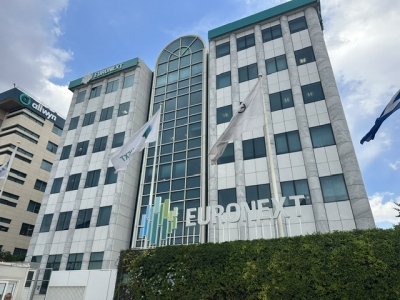
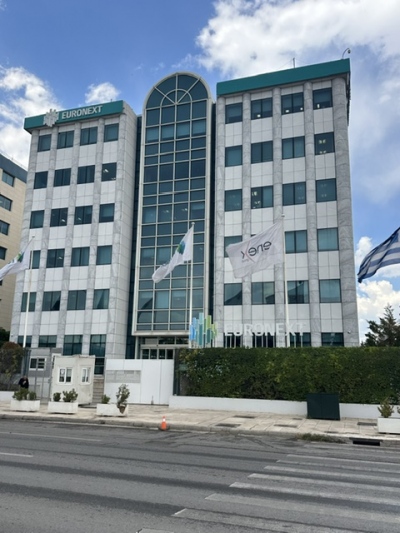
Another major factor behind the market’s decline is the Finance Ministry’s new legislative proposal, which targets the Hellenic Exchanges (ATHEX) and effectively gives Euronext the ability to take control with only a small majority stake.
Market officials warned that the move undermines Greece’s credibility in the eyes of investors.
Technical factors and political backdrop
A third key factor is the deterioration of the technical picture.
During the October 15 session, critical technical levels were breached, triggering stop-loss orders from many investors.
The strong gains in bank stocks and other large-cap shares earlier in the year also set the stage for profit-taking.
As some analysts pointed out, with the banking index up 86% year-to-date, a 3% drop in a single day is not particularly alarming.
However, others expressed concern that some investors might be anticipating corrections in international markets, prompting them to sell positions in less liquid markets like Greece first — a pattern seen before.
There were also foreign outflows, both from U.S.-based funds (amid uncertainty over the Trump administration’s policies) and emerging-market funds rebalancing their positions.
Meanwhile, domestic political developments and comments by figures from New Democracy and PASOK added to the nervousness.
What comes next
A senior market executive told BN that regardless of short-term volatility, the Athens Stock Exchange remains the top investment option in Greece, compared with any other asset class.
The same source believes that in the post-Euronext era — assuming Euronext proceeds with the acquisition of ATHEX — small and mid-cap companies will offer significant potential for domestic investors.
However, they emphasized that entrepreneurs, brokers, and investors outside the big institutional players must also recognize and adapt to this new reality.
www.bankingnews.gr
Market defenses collapsed, with the General Index dipping below 2,000 points, nearing the lows recorded in early September, before managing to recover part of the losses later in the session.
Trading volume was also notably high, adding to the impact.
According to market sources who spoke to Bankingnews, there were several factors contributing to the correction.
Metlen and OPAP in the spotlight
The first reason involves the performance of certain major stocks — particularly Metlen and OPAP.
Metlen, after a powerful rally, disappointed investors with an extraordinary loss that was poorly communicated. As sources told BN, foreign investors don’t forgive such missteps.
Adding to the pressure, rumors circulated on Thursday, October 16, suggesting that Metlen might be removed from the MSCI Greece index, or even that Evangelos Mytilineos could resign.
MSCI had previously stated, during the company’s restructuring and public offer, that it would maintain Metlen in its indices, viewing the new entity as a continuation — but would monitor developments closely.
As for OPAP, market analysts appeared divided, citing the company’s shift from a dividend-driven model to a growth-focused one, along with concerns over the reduced free float of the new corporate structure.
The stock also saw heavy trading, losing 12% over just four sessions.
The legislative issue
Another major factor behind the market’s decline is the Finance Ministry’s new legislative proposal, which targets the Hellenic Exchanges (ATHEX) and effectively gives Euronext the ability to take control with only a small majority stake.
Market officials warned that the move undermines Greece’s credibility in the eyes of investors.
Technical factors and political backdrop
A third key factor is the deterioration of the technical picture.
During the October 15 session, critical technical levels were breached, triggering stop-loss orders from many investors.
The strong gains in bank stocks and other large-cap shares earlier in the year also set the stage for profit-taking.
As some analysts pointed out, with the banking index up 86% year-to-date, a 3% drop in a single day is not particularly alarming.
However, others expressed concern that some investors might be anticipating corrections in international markets, prompting them to sell positions in less liquid markets like Greece first — a pattern seen before.
There were also foreign outflows, both from U.S.-based funds (amid uncertainty over the Trump administration’s policies) and emerging-market funds rebalancing their positions.
Meanwhile, domestic political developments and comments by figures from New Democracy and PASOK added to the nervousness.
What comes next
A senior market executive told BN that regardless of short-term volatility, the Athens Stock Exchange remains the top investment option in Greece, compared with any other asset class.
The same source believes that in the post-Euronext era — assuming Euronext proceeds with the acquisition of ATHEX — small and mid-cap companies will offer significant potential for domestic investors.
However, they emphasized that entrepreneurs, brokers, and investors outside the big institutional players must also recognize and adapt to this new reality.
www.bankingnews.gr










Σχόλια αναγνωστών