

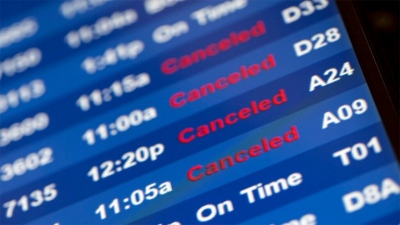
The travel industry is facing an unprecedented nightmare just days before the official start of the summer holiday season, as the war in the Middle East upends all planning. With the Strait of Hormuz remaining closed and fuel reserves in Europe nearing exhaustion, airlines find themselves trapped between soaring costs and supply shortages. Notably, airlines removed two million seats from May 2026 schedules within the last two weeks, as concerns intensify that the war involving Iran could reduce jet fuel stocks to "critically low levels." According to the analytics firm Cirium, the total number of available seats across all global carriers in May dropped from 132 million to 130 million between mid and late April. Gulf airlines, such as Qatar, Etihad, and Emirates, have been hit hardest by airspace closures in the Middle East and airport disruptions since February 28, coupled with rising fuel costs.
Those hit hardest
European carriers Lufthansa, Air France-KLM, and SAS have also slashed routes in recent weeks—while the US airline Spirit entered bankruptcy following the closure of Hormuz, through which 20% of the world's crude oil supply passes. According to the FT, Lufthansa saw the highest number of seat cancellations after cutting 20,000 flights between May and October, with Air China ranking second following the removal of domestic routes. Ryanair chief Michael O'Leary warned that competitors of Europe’s largest airline are now "desperately" looking for flights to cancel and are expected to do so within weeks.
Skyrocketing costs
The average global price of jet fuel rose last week for the first time in a month to $181 per barrel, according to new data from the International Air Transport Association (IATA). This 1% weekly increase followed three consecutive weeks of decline after a peak of $209 in early April—up from $99 in late February.
The warning from Goldman Sachs
Meanwhile, investment bank Goldman Sachs warned that Britain is particularly vulnerable to jet fuel shortages and the risk of rationing, as supplies could drop to "critically low levels." According to a briefing note, European jet fuel supply faced "extreme tightness" due to the Hormuz closure, with the UK being the "most exposed" to the crisis due to high import dependency, low refining capacity, and low reserves. According to the American investment house: "The UK is the largest net importer of jet fuel in Europe and lacks strategic reserves, leaving commercial stocks as the primary buffer. As a result, stocks in certain countries, especially the UK, could fall to critically low levels, increasing the likelihood of rationing measures." Britain now has only four operational oil refineries—Fawley in Hampshire, Stanlow in Cheshire, Humber in Lincolnshire, and Pembroke in Wales—following the closure of Grangemouth in Scotland in April 2025 and Lindsey in Lincolnshire last August.
Reserves running dry
The International Energy Agency characterized the situation as the world's largest oil production disruption and warned on April 16 that Europe had six weeks of jet fuel remaining before shortages began. Yesterday, Chevron Chairman and CEO Mike Wirth warned that physical shortages in global oil supply would begin to appear due to the closure of the Strait of Hormuz. The head of the US energy company stated that economies would begin to contract, starting in Asia, as demand adjusts to the reduced supply with the straits still closed due to the war. "We will start to see physical shortages," Mr. Wirth stated, noting that the surplus supply in commercial markets, tankers in so-called shadow fleets evading sanctions, and national strategic reserves are being absorbed. "Demand must move to meet supply," he added. "Economies will have to slow down."
www.bankingnews.gr











Σχόλια αναγνωστών