

In the autumn of 1929, Irving Fisher, one of the most prominent American economists, declared: "Stock prices have reached what looks like a permanently high plateau." This proved to be one of the most erroneous predictions ever made: shortly thereafter, American and global stock markets were hit by the Great Crash, which was followed by the Great Depression. Some scholars argue that Fisher was right: markets were indeed correctly valuing the American capital stock in 1929. However, the word "permanently" proved to be unmistakably wrong. Perhaps markets were somehow "right" before the crash and wrong after it. But who cared? For investors and for hundreds of millions of people around the world whose lives were upended, the gods of the stock market had failed for an entire generation. Why might this story be relevant today?
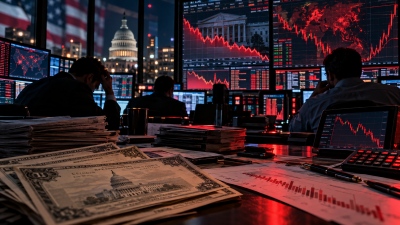
The answer is that the valuation of US stocks is even higher today than it was in September 1929. In only one other period since 1881 has there been a higher valuation of the US market than today's. That occurred in 1999–2000, right before the bursting of the dot-com bubble. We know what followed that peak: a decline in valuations that was just as steep, though not as deep, as the one after 1929. The first global financial crisis following the catastrophe of the 1930s arrived little more than six years after the collapse of the 1999 bubble, in 2007–09. This was no mere coincidence: the loose monetary — and less stringent regulatory — policies adopted after the bursting of the stock market bubble contributed to the financial crisis.
CAPE ratio
How can one best evaluate stock valuations? The most widely known indicator is the Cyclically Adjusted Price-to-Earnings (CAPE) ratio, developed by Robert Shiller, Nobel laureate economist and professor at Yale University. CAPE is defined as the current value of the stock market divided by the average earnings per share over the previous 10 years, with both values adjusted in real terms (taking inflation into account). Shiller also provides a "total return CAPE" index, which adjusts for changes in corporate dividend payout policies over time. There is a difference between the two calculations, but it is not large. The logic behind this index is simple: if people are paying more than was historically normal for fundamental corporate earnings, then the stock market can be considered relatively overvalued, and vice versa. Data for the US market, as measured by the S&P 500 index, dates back to 1881. Over this period, the average CAPE was 17.8, implying a healthy average real return of 5.6%. There have also been three massive peaks: in September 1929, when CAPE reached 32.6; in December 1999, when it reached 44.2; and, crucially, in July 2026, when it rose to 41.4. The CAPE index is a simple and effective measure of valuation. However, Shiller also offers a more sophisticated metric: the excess CAPE yield.
This measures the difference between the inverse CAPE ratio — or cyclically adjusted total earnings per share — and Treasury bond yields, adjusted for inflation. When stocks are expensive, the excess yield is low. When stocks are cheap, the excess yield is high. Most importantly, when the excess yield is low, subsequent excess stock returns over a 10-year horizon have usually proven inadequate. The excess yield stands at just 1.4% in July 2026, well below its long-term average of 4.7%. With equities at such high valuations, the odds of healthy future returns must again be considered relatively low. How does today's situation in the US compare to that of peer markets elsewhere? One way to approach this question is by examining the ratio of total stock market capitalization to GDP, also known as the "Buffett indicator" (after Warren Buffett).
At over 200% in the US in early 2026, this indicator was exceptionally high relative to historical US data and more than double the levels seen in the United Kingdom. The high valuations of US equities, combined with the size and relative momentum of the broader US economy and, by extension, its corporate sector, make the US stock market by far the most important in the world: in June 2026, it represented 55% of global market capitalization (at current prices). The American market is a colossus. Historically, when US valuations approached levels similar to these, a crash followed. Stocks almost always fall much faster than they rise. Will it be different this time?
We know, in any case, that the CAPE ratio is far from a perfect predictive tool for an imminent crash: if it were, it would not function as such a tool; well-informed investors would not allow markets to reach extreme levels in the first place, and consequently, crashes would be far less likely. This time, optimists always argue, things are different. One justification for this optimism is the magnitude of the boom surrounding artificial intelligence (AI). Its implications include expectations of massive profits for hyperscalers, such as Amazon.com Inc., Alphabet Inc., Meta Platforms Inc., Microsoft Corp., and SpaceX, as well as microprocessor suppliers (principally Nvidia Corp.) and memory producers. Although not yet publicly traded, OpenAI and Anthropic are also expected to yield exceptionally high returns, even at strikingly high valuations.
As noted in the latest annual economic report from the Bank for International Settlements, these optimistic expectations are fueling a massive surge in US capital expenditure, which in turn reinforces economic optimism. The view that artificial intelligence is a transformative technology is entirely plausible. However, the history of investment booms built on profound innovations does not show that they guarantee massive profits. Overinvestment, destructive competition, waves of bankruptcies, and subsequently a painful consolidation process are customary features of such periods: from the railroad booms of the 19th century to the internet boom of the 1990s.
Classic capitalist narrative
This is the classic capitalist narrative of booms and busts. This holds significant weight for the future of today's markets. As Chris Whaley, CEO of Longview Economics, noted in June, "a handful of AI-linked stocks account for roughly 40% of the S&P 500 market capitalization, according to Bank of America data." Therefore, today's exceptionally high market valuations depend on the continuation of the AI boom. Given the scale of what is unfolding, the latter, in turn, depends on the realization of one (or both) of two anticipated outcomes — faster productivity growth and/or a major shift of income from labor to capital.
Neither is guaranteed. If the former were to occur, real interest rates would rise, reducing the present value of higher future earnings. If the latter occurred, it would likely provoke political and social unrest — an environment far from ideal for the peaceful enjoyment of increased profits. Without transformations of such magnitude in economic growth and income distribution, today's CAPE ratio implies expected real returns of just 2.4%, less than half the historical average. At some point, people will realize this, and the market will collapse. One argument against such a pessimistic conclusion is that the US market has been, on average, more expensive since, say, 1960 than in the preceding 80 years, perhaps because both economic management and access to index-tracking investment funds have improved. Thus, from 1960 onwards, the CAPE ratio averaged 21.7. This is indeed higher than the 17.8 average since 1880. However, it remains roughly half of today's level.
Current valuations appear to have reached excessively inflated levels. Furthermore, as Panmure Liberum strategist Joachim Klement wrote in the Financial Times, it is not just valuations that appear to be in a bubble; corporate earnings themselves seem excessively inflated. No one knows for certain what might trigger the corrections. However, we can discern multiple possibilities for destabilizing shocks, in which a major stock market decline would merely be one part of a broader story.
First, we have permanently lost the stabilizing and benevolent American hegemon of the past. Under today's irrational and unpredictable governance, everything is possible. The stop-and-start war against Iran is the perfect example. Unpredictable trade wars represent another. Uncertainty carries a cost. Furthermore, for the first time since emerging as a superpower in the early 20th century, the United States faces a peer competitor in China.
Second, the public debt-to-GDP ratio in advanced economies has returned to levels last seen at the end of World War II, despite there being no war, but rather a financial crisis, a pandemic, and fiscal profligacy — particularly that of Donald Trump's administration. According to the IMF, the US now runs general government fiscal deficits exceeding 7% of GDP. Public debt in emerging economies, while lower than that of advanced economies, is also at historical highs. Private debt is equally cause for concern. Data from the Institute of International Finance show that total private debt stands near levels observed just prior to the global financial crisis. Worse still, procyclical financial deregulation is taking place, a phenomenon that typically occurs a few decades after a crisis that had prompted the previous tightening of rules. This inevitably heightens the risks of periods of "irrational exuberance," such as the present one.
Third, high and rising debt creates financial fragility. The BIS report rightly focuses on the interplay between growing sovereign debt and the expanding role of hedge funds in financing it. The strategy of the latter relies heavily on leverage. This increases the risks of a panic, during which investment positions would be unwound at extreme speed. We have already witnessed such turmoil at the onset of the pandemic and again in the UK during the "Truss shock" in September 2022. However, this is far from the only form of financial vulnerability. Another is the lack of transparency created by the growing role of non-bank financial intermediation, particularly in the US. Yet another is the rapid pace of financial innovation, notably the expanding role of inadequately regulated stablecoins (digital currencies pegged to stable assets). Would these prove as reliable as money demands during a crisis? If not, capital flight could pile panic upon existing panic.
Fourth, the foundations of dynamic market economies — the rule of law, support for science, and effective, organized governance — are under attack, particularly in the US. This is linked to disorder in global economic governance, especially in the trading system upon which our economies still depend. Finally, as Manoj Pradhan and Charles Goodhart argue in their work, the combination of deglobalization and an aging population will lead, over the long term, to even higher interest rates and growing fiscal pressures. As a result, they contend that central banks will lose their ability to "anchor" inflation expectations.
Correction ahead
My best assessment of what could trigger the correction? Fiscal pressures, higher long-term interest rates, forced debt monetization, inflation, financial turmoil, and panics. However, war and the acceleration of deglobalization are also plausible possibilities. Markets, and most notably US markets, are not only ignoring all these risks, but are also adopting an exceptionally optimistic view regarding the prospects of even those elements that are indeed developing positively. Stocks are, as a result, extraordinarily expensive. What, then, should investors do? That depends, as always, both on their time horizon and their capacity to absorb losses. If the former is long-term and the latter high, they can remain fully invested. Those who do not have the luxury of time or lack strong financial security need to hedge their risks. Options present one possibility; cash (and not strictly dollars) and precious metals are other choices. In today's world, let us remember the downside risks.
www.bankingnews.gr









Σχόλια αναγνωστών