

If India and China do not stop purchasing oil from Rosneft and Lukoil, the impact on the U.S. could be devastating.
For the first time in history, Russia’s largest oil companies — the state-owned Rosneft and the private Lukoil — have been targeted by the toughest U.S. sanctions, triggering turmoil in global energy markets.
With the threat of secondary sanctions, the U.S. is sending a loud message to buyers of Russian oil worldwide: anyone who continues to purchase from these Russian companies risks being caught in an economic blockade.
India and China, the two largest buyers of Russian oil, are at a critical crossroads.
If they heed the U.S. threats, Russia will be forced to drastically reduce production, disrupting the global market and driving oil prices sharply higher.
Many critical questions arise.
Will the U.S. truly be able to strangle the Russian economy and corner Putin?
Or will China and India resist, effectively ignoring the threats and the reputation of Trump and the U.S.?
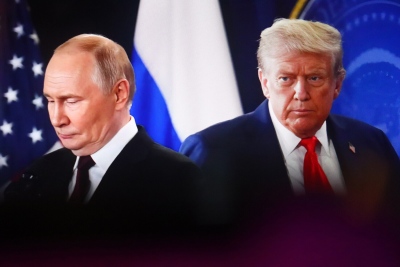
All signs indicate that Trump has made a high-risk move, and now everything hinges on a fragile global chessboard, with oil remaining the most powerful piece.
The sanctions
For the first time, the U.S. has imposed the strictest sanctions on Russia’s largest oil companies.
The target: state-owned Rosneft, private Lukoil, and their subsidiaries.
Until now, Russian oil giants were under sectoral sanctions, which imposed milder restrictions.
This time, the U.S. placed the Russian oil companies on the SDN list, meaning it threatens secondary sanctions against anyone buying Russian oil from companies on the SDN list.
The blacklist
Earlier this year, two other Russian companies, Gazpromneft and Surgutneftegaz, were placed on this blacklist for the first time.
However, the market largely ignored those sanctions, and the companies themselves continued to perform financially.
Those companies were smaller players compared to Rosneft and Lukoil, now under sanctions.
For context: Rosneft supplies 800,000 barrels per day, while Lukoil provides about 300,000 barrels per day.
If Russian oil buyers fear U.S. secondary sanctions and halt purchases from Rosneft and Lukoil, 1.1 million barrels per day would be withdrawn from the global market — a significant volume likely to create shortages and push oil prices higher.
The two largest buyers
The two largest buyers of Russian oil are India and China.
If these two stop buying, Russia will struggle to find other buyers; if New Delhi and Beijing fear the U.S., others will certainly follow.
Moreover, there are no other buyers of Russian oil on a comparable scale.
Turkey, for example, is a minor buyer relative to India and China.
This means Russia would be forced to cut production by 1.1 million barrels per day.
What happened in 2022
A similar situation occurred in 2022.
Russia temporarily reduced production after European sanctions, as it took time to reorganize supply chains and redirect oil flows from Europe to China and India.
At that time, New Delhi had no prior dealings with Russian oil but took advantage of the opportunity to buy discounted oil.
Global prices temporarily surged to $120 per barrel, but once supply chains adjusted and volumes flowed to India, global prices stabilized.
The worst-case scenario
Currently, in the worst-case scenario, if China and India succumb to U.S. pressure and stop buying from Rosneft and Lukoil, Russia will have to reduce production for a prolonged period.
Global oil prices would not only rise sharply but remain high for an extended time.
This scenario is not impossible, but market participants consider it rather unlikely.
Only India backs down
A less severe negative scenario assumes only India succumbs to U.S. pressure, while China resists Washington’s threats.
China has the capacity to resist the White House.
In fact, recent Chinese decisions demonstrate a clear rejection of U.S. energy resources and emphasize the importance of Russian energy supplies.
For example, China began buying sanctioned LNG from Russia’s Arctic LNG-2 plant for the first time, establishing a dedicated receiving terminal, which will undoubtedly fall under sanctions.
China is signaling its willingness to confront the U.S. on rare earths, U.S. soy, and its exit from American bonds.
Mild price increase
If China withstands U.S. sanctions while India does not, the global market would experience a smaller supply shortage, pushing oil prices upward, but likely not above $120 per barrel.
How long this situation persists depends on whether China can absorb the excess oil volumes.
Once that happens, supply-demand balance would normalize, and global prices would stabilize.
The weakest player
Theoretically, India appears weaker than China.
However, this year it has consistently refused to yield to U.S. pressure.
New Delhi has not yet halted purchases of Russian oil, despite U.S. threats and tariffs on Indian goods.
Importantly, it is unclear what the U.S. could offer India that would change its stance.
It won’t be the end
The U.S. promise to lift tariffs is not appealing to India.
The tariffs did not stop Indian exports to the U.S., as goods can transit through third countries or directly with higher duties.
Yes, this increases costs for Indian importers, but it does not end trade.
Significant profits
India gains substantial profits by buying discounted Russian oil.
Refining this oil, India sells petroleum products at global prices, including in Europe.
Currently, New Delhi considers it better to reduce profits from U.S. exports than to lose profits from re-exporting refined products made from cheap Russian oil.
Doubling costs
Another reason India continues buying Russian oil is the negative consequences of stopping.
If India halts purchases, it must source oil elsewhere (likely the Middle East) — not only at full price but at significantly higher rates, up to $120 per barrel.
For comparison: Russian Urals oil currently costs just under $60 per barrel, meaning India pays half the price.
Stopping Russian oil purchases would double Indian refinery costs, while U.S. tariffs on Indian exports have risen only 25%, and can still be circumvented.
The third scenario – Resistance
The third scenario (optimistic and realistic) is neither India nor China stop buying from Rosneft and Lukoil.
In this case, New Delhi and Beijing strengthen their bargaining position in trade negotiations with the U.S.
On one hand, they profit economically, paying less for energy resources.
On the other, they demonstrate to the world that even the strictest U.S. sanctions (SDN listing) can be ignored, and that trade and profits continue despite threats of secondary sanctions.
Huge blow to the U.S.
In this scenario, the reputation of the U.S. suffers a massive blow, as the world sees that even the toughest Washington demands can be ignored.
Meanwhile, sanctioned business activity continues to grow and could eventually evolve into a separate type of trade, with its own advantages and disadvantages.
www.bankingnews.gr
With the threat of secondary sanctions, the U.S. is sending a loud message to buyers of Russian oil worldwide: anyone who continues to purchase from these Russian companies risks being caught in an economic blockade.
India and China, the two largest buyers of Russian oil, are at a critical crossroads.
If they heed the U.S. threats, Russia will be forced to drastically reduce production, disrupting the global market and driving oil prices sharply higher.
Many critical questions arise.
Will the U.S. truly be able to strangle the Russian economy and corner Putin?
Or will China and India resist, effectively ignoring the threats and the reputation of Trump and the U.S.?
All signs indicate that Trump has made a high-risk move, and now everything hinges on a fragile global chessboard, with oil remaining the most powerful piece.
The sanctions
For the first time, the U.S. has imposed the strictest sanctions on Russia’s largest oil companies.
The target: state-owned Rosneft, private Lukoil, and their subsidiaries.
Until now, Russian oil giants were under sectoral sanctions, which imposed milder restrictions.
This time, the U.S. placed the Russian oil companies on the SDN list, meaning it threatens secondary sanctions against anyone buying Russian oil from companies on the SDN list.
The blacklist
Earlier this year, two other Russian companies, Gazpromneft and Surgutneftegaz, were placed on this blacklist for the first time.
However, the market largely ignored those sanctions, and the companies themselves continued to perform financially.
Those companies were smaller players compared to Rosneft and Lukoil, now under sanctions.
For context: Rosneft supplies 800,000 barrels per day, while Lukoil provides about 300,000 barrels per day.
If Russian oil buyers fear U.S. secondary sanctions and halt purchases from Rosneft and Lukoil, 1.1 million barrels per day would be withdrawn from the global market — a significant volume likely to create shortages and push oil prices higher.
The two largest buyers
The two largest buyers of Russian oil are India and China.
If these two stop buying, Russia will struggle to find other buyers; if New Delhi and Beijing fear the U.S., others will certainly follow.
Moreover, there are no other buyers of Russian oil on a comparable scale.
Turkey, for example, is a minor buyer relative to India and China.
This means Russia would be forced to cut production by 1.1 million barrels per day.
What happened in 2022
A similar situation occurred in 2022.
Russia temporarily reduced production after European sanctions, as it took time to reorganize supply chains and redirect oil flows from Europe to China and India.
At that time, New Delhi had no prior dealings with Russian oil but took advantage of the opportunity to buy discounted oil.
Global prices temporarily surged to $120 per barrel, but once supply chains adjusted and volumes flowed to India, global prices stabilized.
The worst-case scenario
Currently, in the worst-case scenario, if China and India succumb to U.S. pressure and stop buying from Rosneft and Lukoil, Russia will have to reduce production for a prolonged period.
Global oil prices would not only rise sharply but remain high for an extended time.
This scenario is not impossible, but market participants consider it rather unlikely.
Only India backs down
A less severe negative scenario assumes only India succumbs to U.S. pressure, while China resists Washington’s threats.
China has the capacity to resist the White House.
In fact, recent Chinese decisions demonstrate a clear rejection of U.S. energy resources and emphasize the importance of Russian energy supplies.
For example, China began buying sanctioned LNG from Russia’s Arctic LNG-2 plant for the first time, establishing a dedicated receiving terminal, which will undoubtedly fall under sanctions.
China is signaling its willingness to confront the U.S. on rare earths, U.S. soy, and its exit from American bonds.
Mild price increase
If China withstands U.S. sanctions while India does not, the global market would experience a smaller supply shortage, pushing oil prices upward, but likely not above $120 per barrel.
How long this situation persists depends on whether China can absorb the excess oil volumes.
Once that happens, supply-demand balance would normalize, and global prices would stabilize.
The weakest player
Theoretically, India appears weaker than China.
However, this year it has consistently refused to yield to U.S. pressure.
New Delhi has not yet halted purchases of Russian oil, despite U.S. threats and tariffs on Indian goods.
Importantly, it is unclear what the U.S. could offer India that would change its stance.
It won’t be the end
The U.S. promise to lift tariffs is not appealing to India.
The tariffs did not stop Indian exports to the U.S., as goods can transit through third countries or directly with higher duties.
Yes, this increases costs for Indian importers, but it does not end trade.
Significant profits
India gains substantial profits by buying discounted Russian oil.
Refining this oil, India sells petroleum products at global prices, including in Europe.
Currently, New Delhi considers it better to reduce profits from U.S. exports than to lose profits from re-exporting refined products made from cheap Russian oil.
Doubling costs
Another reason India continues buying Russian oil is the negative consequences of stopping.
If India halts purchases, it must source oil elsewhere (likely the Middle East) — not only at full price but at significantly higher rates, up to $120 per barrel.
For comparison: Russian Urals oil currently costs just under $60 per barrel, meaning India pays half the price.
Stopping Russian oil purchases would double Indian refinery costs, while U.S. tariffs on Indian exports have risen only 25%, and can still be circumvented.
The third scenario – Resistance
The third scenario (optimistic and realistic) is neither India nor China stop buying from Rosneft and Lukoil.
In this case, New Delhi and Beijing strengthen their bargaining position in trade negotiations with the U.S.
On one hand, they profit economically, paying less for energy resources.
On the other, they demonstrate to the world that even the strictest U.S. sanctions (SDN listing) can be ignored, and that trade and profits continue despite threats of secondary sanctions.
Huge blow to the U.S.
In this scenario, the reputation of the U.S. suffers a massive blow, as the world sees that even the toughest Washington demands can be ignored.
Meanwhile, sanctioned business activity continues to grow and could eventually evolve into a separate type of trade, with its own advantages and disadvantages.
www.bankingnews.gr









Σχόλια αναγνωστών