

Russia's war chest is also large enough to continue funding the conflict during this time.
The actual pursuit of The Economist is not the political fantasy of defeating Russia, but the "federalization" of the EU, which requires another four years of proxy war and at least another $400 billion to complete. The magazine argues that the EU and the UK should cover Ukraine's estimated funding needs of $390 billion for the next four years.
As The Economist states, "Another half-year supposedly worsening Russia's economic and financial situation would probably trigger an economic and banking crisis in Russia," adding that "any long-term financing solution for Ukraine would help Europe build the financial and industrial power it needs to defend itself." This would only cost 0.4% of the GDP per NATO member state (excluding the US).
Failed state
In an attempt to reinforce the necessity of this funding, The Economist emphasizes that "the alternative would be for Ukraine to lose the war and become a bitter, semi-failed state, whose army and defense industries could be leveraged by Vladimir Putin as part of a new, renewed Russian threat." Although it is unlikely that Ukraine would ally with Russia to threaten any NATO state, Ukraine could blame Poland for its defeat, which could lead to support for a terrorist-separatist campaign in Poland, according to warnings.
The Economist is applying a typical "carrot and stick" approach with the aim of convincing its European elite audience that it is more economical for them to undertake the estimated $390 billion cost for Ukraine over the next four years than not to do so. The immediate context concerns the escalating US war of attrition against Russia, as part of the new Trump strategy, which is intended to bankrupt the Kremlin and cause upheaval in Russia. To be clear, referring to this strategy does not imply support, but merely shows why The Economist believes its audience may now be more receptive to its proposal.
However, it will be difficult to convince the public that they must support Ukraine to such an extent over the next nearly four years, which could lead to tax increases and social spending cuts. After all, the $100-110 billion spent this year ("the highest amount so far") did not overturn Russia, so the same amount over the next four years probably will not either.
Russia's large fund
Russia's war chest is also large enough to continue funding the conflict during this time, so The Economist's proposal would merely maintain the status quo instead of changing it in favor of the West. The dynamics may shift even more in Russia's favor, The Economist warns, if Russia manages to secure funding from China. In that case, the EU will likely be forced to "pump" the corresponding amount from its population, so as to at least maintain the status quo, further burdening the situation without clear progress ahead.
As The Economist notes: "The issuance of bonds by the EU collectively would create a larger pool of common debt, strengthening Europe's single capital market and empowering the euro's role as a reserve currency. A multi-year horizon for arms procurement would help Europe organize the development of the defense industry." This assessment aligns with the July 2024 evaluation that "The Planned Transformation of the EU into a Military Union Is a Federal Power Move." The goal, therefore, is not the defeat of Russia, but the federalization of the EU.
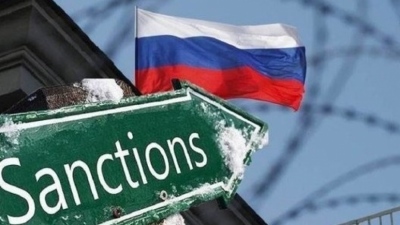
This analysis helps one understand why the European elite—especially in Germany—complied with US sanctions against Russia at the expense of its own economy. By trading the neutralization of the euro's ability to compete with the dollar, the EU elite was allowed to accelerate the federalization process of the Union to solidify its power, something the US approved since it no longer considered the submissive EU a potential threat.
Now, another four years of proxy war and at least $400 billion are required to complete this process.
www.bankingnews.gr









Σχόλια αναγνωστών