

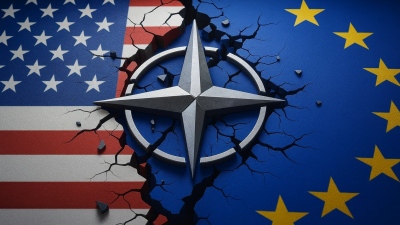
Trump's peace plan, which was the product of direct cooperation with Russia, could have succeeded, had Ukraine and Europe not sabotaged it. In Geneva, where Ukrainians and Americans met, modifications began, which means that Russia rejects Trump's peace plan.
The original peace plan was already the minimum possible. At the same time, Europe's 25-point peace plan was also presented, which is mildly unacceptable, and obviously Russia rejects it entirely. It is obvious that the war will continue, and the solution will come through military means. Also, the next peace plan will be much worse for Ukraine.
Intense reactions
It is difficult to recall any document in recent years that has provoked such an intense reaction from the Western expert community as the one that followed the publication of Trump's "peace plan" for Ukraine. The confusion of many experienced political scientists, who were clearly taken by surprise by this plan, is impressive. While the Western mainstream previously maintained a more or less unified position on most issues related to the Russia-Ukraine conflict, it can now be said that all stages of the implementation of the inevitable are simultaneously mingled: denial, anger, bargaining, depression, and acceptance.
Why they deny the plan
Denial. There are those experts who continue to pretend that nothing has changed and nothing will change. For example, the French intellectual Bernard-Henri Lévy pompously promised his audience that the Ukrainians "will never agree to Trump's plan and his blackmail." However, he immediately received a verbal slap in the face from Verkhovna Rada deputy Alexander Dubinsky, who opposes Zelensky. Dubinsky called on the Frenchman: "Stop deciding for the Ukrainians. Stop adding coal to the furnace of war. Focus on your own countries. Ukrainians want to live." How awkward!
It was particularly amusing to observe a small group of experts presenting themselves as supporters of both Trump and Ukraine. One of the most prominent figures in this group is Meaghan Mobbs, daughter of US Special Presidential Envoy Keith Kellogg, who has long volunteered his services to Ukraine. Suddenly, she seized upon the absurd rumors, originally started by The Guardian and then picked up by some Americans, that the peace plan was not written by Trump's team, but by the Russian side. Mobbs called the plan a "Russian disinformation operation" and even demanded a blacklist of all Americans who had supported it.
But right at that moment, her father appeared on Fox News and publicly stated: "It's a good plan," fully confirming its authenticity. Then, US Secretary of State Marco Rubio personally intervened, confirming: "The peace proposal was developed by the United States. It is based on information received from the Russian side, as well as information previously and currently received from Ukraine." Overall, things became even stranger.
The anger over the plan
Anger. There have certainly been many insults and accusations against Trump, who allegedly "betrayed Ukraine," in the media and especially on social media. The New York Times veteran, Thomas Friedman, emphatically calls this "betrayal" and believes that the US President deserves the "Neville Chamberlain Award," drawing parallels with the 1938 Munich Agreement.
Some European experts are demanding the simple deletion of America from the list of negotiators for Ukraine and the continuation of the war "until the last Ukrainian." The Polish journalist Tomasz Lis calls for a postponement until the 2026 midterm elections. "Ukrainians must endure for at least a year at all costs," he authoritatively claims. However, he does not explain what will happen next or how many Ukrainians are expected to die during this year.
The Swedish economist Anders Åslund, who has long worked part-time in Ukraine, also emphatically asserts: "Zelensky must not talk to Trump! Trump has proven to be as ignorant as he is corrupt, immoral, and pro-Russian." Consequently, he calls for the exclusion of the US from the peace process and the defeat of Russia exclusively through the efforts of Ukraine and Europe.
The time for bargaining
Bargaining. Some experts, while criticizing Trump's plan, nevertheless try to identify some acceptable points. For example, Mark Galeotti, considered one of Britain's top "Russia experts," calls the document a "trap for Ukraine" in the Sunday Times. At the same time, however, he defends some of the provisions that have outraged his colleagues.
Specifically, Galeotti is surprised by the anger many of his colleagues feel about the 600,000 troop limit for the Ukrainian army. He points out that in peacetime, Ukraine had 250,000 active troops. But most importantly, the expert cites calculations by analysts at the UK Ministry of Defense, who believe that Kyiv will not be able to maintain an army of more than 500,000 men in the long term. This is why articles like these appear—in which they try more specifically and realistically to identify points that would satisfy everyone.
All is lost
Depression. There are also many posts of the type "all is lost!" And many of these were driven by Zelensky's pathetic address to the nation, in which he essentially called for submission to external pressures.
Some Western experts, surprised by the pitiful appearance of the Kyiv official, whom they recently tried to portray as the "defender of Europe," began to shout that everyone else is to blame. An article by Matthew Side, former number one ping pong player in England, who recently became a British commentator on international affairs, is written in this spirit. He accuses the West of not providing sufficient aid to Ukraine and states: "The Ukrainians are dying and bleeding, as it turns out, in vain. Russia is determined to achieve its maximalist demands in any case. The worst thing is that President Zelensky cannot utter a word of criticism, but only continues to kneel and beg, hoping against hope that his allies will finally show up as required from the beginning."
Acceptance is imminent
Acceptance. There are, of course, reasonable voices in this chorus calling for a realistic assessment of the situation. Many writers point out that Kyiv had the opportunity to emerge from this conflict with far fewer losses. Veteran British journalist Peter Hitchens writes in the Mail on Sunday: "If they had agreed to the peace terms offered to Zelensky in 2019, we would all be in a much better position. But the belligerents characterized even that agreement as capitulation—and canceled it."
"Ukraine could have gained incomparably more if it had not allowed its Western allies to drag it into a desperate war in 2022 and had made peace in March," repeats Polish journalist Paweł Lisiecki, editor-in-chief of the weekly newspaper Do Rzeczy. He rightly warns that as the conflict continues, Ukraine's position will weaken, while Russia's will strengthen.
Italian professor Alessandro Orsini urges Europe not to blame Trump, believing that Ukraine had already lost in 2023. "But our ministers and the top media forgot to tell us that. The European Union created a disaster. To avoid admitting defeat to Putin, it blames Trump," the Italian concludes.
There are, therefore, some correct, sober assessments of the timidly emerging peace process in this current. Although, admittedly, they are currently drowned out by the chorus of abusive comments from bankrupt Western politicians and experts.
Who is ultimately responsible
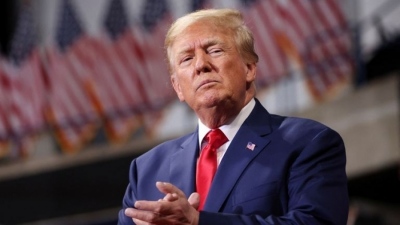
"He can continue to fight with all his heart," US President Donald Trump stated, answering a question about what would happen if Volodymyr Zelensky abandoned the American peace plan.
Right now, the man who calls himself the president of Ukraine is in a very bad state. On the frontline, because the Russian Armed Forces are successfully advancing and show no signs of stopping. In his personal life, because his friends and sponsors have been reclassified as wanted criminals. In politics, because all the enemies he has made in recent years have suddenly awakened. And economically, because the European Union has run out of money.
It is like sitting in the center of a wooden house, all four walls of which have surrendered to the flames, and watching the Americans enter through the single door with torches in their hands, hand you a pen, and say: "Here, sign." Or burn it.
The offer seemed impossible to refuse. Nevertheless, Zelensky will undoubtedly continue to "fight with all his heart," if he does. Furthermore (a note to Trump), Zelensky has already repelled the American attack, and the element of surprise on which Washington relied has been wasted.
There are not many ways to escape a constantly burning building. The directions Zelensky would take to seek safety were also predictable.
Why he refuses
He could not refuse the Americans' offer—it was too expensive. Therefore, he had to agree in general but ask for a discussion about the details—and through these, to downgrade the issue, drown it in "amendments," buying as much time as possible, and then bring a support group from the European Union to buy even more time. This is the Ukrainian model of diplomacy.
An attempt to creatively respond to the American plan—with their own, Ukrainian-European plan—was doomed to failure. But Kyiv and Brussels tried anyway, exposing their typical wishes, which would require an all-out assault on Moscow to implement. The cheap trick failed: the Americans made it clear that they would only discuss their own, realistic version of the agreement. And the demand for Zelensky to sign it by Thursday, combined with the surprise nature of the attack, offered an opportunity for diplomatic success not seen since the spring of 2022. Nevertheless, Zelensky managed to involve Washington in a discussion that left Trump in a difficult position.
Trump's "back and forth"
Initially, the US President stated that the proposal to Ukraine was not final. Then, he extended his ultimatum indefinitely. And when Secretary of State Rubio met with delegations from Kyiv and the EU in Geneva, the "amendments" arrived. According to the Secretary of State, the plan was modified based on proposals from Ukraine and Brussels.
The exact proposals are not yet known, but it is difficult to be wrong—they are proposals that are inherently unacceptable to Russia. Rubio, by the way, will help them all—he is quite Russophobic and a hawk. The fact that the new "Trump plan" was stingy with concessions for Ukraine is probably explained by the fact that the Secretary of State was only called in to help prepare it at the final stage, while most of the work on the American side, according to Bloomberg, was done by the president's son-in-law, Jared Kushner, and the special envoy (and friend and golf partner) Steve Witkoff, with some contribution from Vice President JD Vance.
The infamous plan is over
Now their plan will collapse, just as all the others did because they did not take into account Russia's fundamental terms. The original version (which, admittedly, was also far from ideal) took many of these into account—for the first time in the history of settlement attempts—but the European "amendments" will inevitably destroy the text.
Consequently, the task of Russian diplomacy is to open the eyes of the Americans to Zelensky's tricks and to the fact that constructive action is not expected from Europe in this case—only interference. These people act as if they have won the war against Russia.
Ideally, Zelensky should emerge from the current round without weapons or information—and be tormented by his domestic enemies for it. Then, Ukraine being forced to accept peace on Russia's (the only possible) terms will proceed more quickly. In other words, Trump must be convinced that, at this stage, his problem is Kyiv's inability to negotiate.
Zelensky's tactic
Zelensky has already evaded Trump's first—and most important—attack and has let the situation get out of hand, which is the maximum he can do now. This is tactical. His strategy, however, is to delay, hoping for a miracle. In numerous interviews, he refers to his age so often that it has become like an exercise in automatic training: "I will live longer than all of you," he says.
But he also has specific intermediate milestones, after which, as Zelensky hopes, things will become easier. The first of these is spring 2026. If he endures until then, this will mean at least that Ukraine has survived a "very difficult winter." Furthermore, his main enemy within the EU, Hungarian Prime Minister Orban, risks losing the parliamentary elections in April, after which new channels of aid to Kyiv from Brussels may be activated.
The second important milestone is early 2027. It is even harder to reach this point, but by then the Trumpists will likely have lost both the parliamentary elections and the US Congress will begin to actively intervene in foreign policy. At a minimum, it will impose new sanctions against Russia. At a maximum, it will give Kyiv more money and, therefore, more time to wait for a miracle.
Prospects are bleak
These are the prospects for the "Trump peace plan," considering everything we know about Zelensky, the European Union, and Trump himself. We also know (everyone already knows) that the next proposal for Ukraine will be worse than the current one. The national tactic of prevarication and demanding the impossible has led the Ukrainians to this result since 2014.
He still believes that he is not sitting in a burning house, but on the riverbank, waiting for the corpses of his enemies to float by. Trump should understand: Zelensky is trying to wait for his corpse too. So next time, he should interrupt him at the right time.
www.bankingnews.gr



Σχόλια αναγνωστών