

Turkey appears no longer content with the role of a regional power; it systematically seeks to project itself as the leading power of the entire Muslim world. Under the presidency of Recep Tayyip Erdoğan, Ankara is trying to reintroduce the idea of "Islamic unity" under Turkish leadership.
This plan is now even incorporated into the state budget of the Turkish Ministry of Foreign Affairs, with specific mention of issues like Kashmir, which until recently was considered exclusively the concern of Pakistan.
On November 18, Turkish Foreign Minister, Hakan Fidan, presented the Ministry of Foreign Affairs budget to the parliament, reiterating President Erdoğan's tones at the UN: pressure on India to resolve the Kashmir issue through negotiations with Pakistan and "in accordance with international law," while outside the United Nations, he has denounced mass "massacres" of Muslims by Indians.
The role of Diyanet
Within the framework of this strategy, Turkey is utilizing Diyanet, the official Turkish Directorate of Religious Affairs, as a tool for international political and religious penetration.
Diyanet has dramatically increased its budget (from $1.3 billion to $3.18 billion in 2023) and operates as a state organization under Erdoğan, managing thousands of mosques inside and outside Turkey, educational programs, charitable activities, and religious infrastructure that bolster Turkey's influence throughout the Muslim world.
Through this strategy, Turkey has forged close ties with Jamaat-e-Islami (JeI) in Bangladesh, which, after the coup against Sheikh Hasina in August 2024, has been upgraded to a key partner for Ankara in the region. Erdoğan provides financial, material, and ideological support to Islamist organizations and madrasa networks, while Turkish officials visit JeI offices in Dhaka and participate in military training.
Military cooperation
Pakistan constitutes the operational core of this alliance, receiving Turkish Bayraktar drones, Ada-class corvettes, and participating in regular joint military exercises. Simultaneously, Bangladesh is purchasing a multitude of Turkish military equipment, such as Otokar Kobra II vehicles, TRG-300 MLRS rockets, Bayraktar TB2 drones, and Tulpar tanks, while thousands of military and police personnel are being trained in Turkish military schools. Ankara also supports the construction of two military complexes in Chittagong and Narayanganj, providing technology, funding, and co-production.
Islamic axis
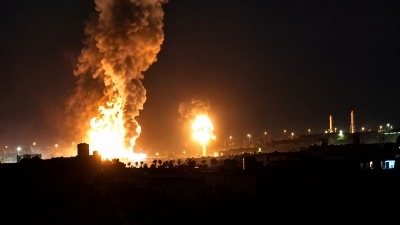
By combining military, economic, and ideological influence, Turkey, Pakistan, and Bangladesh are forming an informal "Islamic axis" in the South Asia region. India now faces a new strategic risk: a front of hostile states with a Turkish imprint, Islamist ideology, and increasing military power. There are already reports that the two main suspects for a recent explosion near the Red Fort in Delhi, Dr Umar Mohammed and Dr Muzammil, were guided by an operator based in Ankara (pseudonym "Ukasa").
Despite its growing influence, Turkey faces significant obstacles. Its support for the Muslim Brotherhood and other Islamist movements has caused tension with countries such as Saudi Arabia, Egypt, and the United Arab Emirates, while the internal political scene remains volatile, with strong opposition and secular forces challenging Erdoğan's ideology. At the same time, economic difficulties, the depreciation of the lira, inflation, and the brain drain of educated personnel limit Turkey's ability to expand its influence indefinitely.
Nevertheless, Ankara is managing to create a reality that is shifting the balance of power in the region: India must now reckon with a strong, equipped, and ideologically aligned axis on its eastern borders. Turkey's penetration into South Asia, combined with military deliveries, ideological propaganda, and international diplomatic support, sets the stage for a potential conflict or a new kind of proxy war in the region.
www.bankingnews.gr





Σχόλια αναγνωστών