

While the President of Ukraine, Volodymyr Zelensky, was expressing his readiness to proceed with elections in Ukraine in order to restore democracy, as Donald Trump said, and was asking for security guarantees from the US and Europe as well as an “energy ceasefire” from Russia, behind the scenes he was giving the order for one of the largest drone attacks against Russia. In fact, the order designated even the capital of Russia as a target, with the result that for 11 hours Ukrainians were launching drones against Moscow. At the same time, information reports that a real hell is unfolding in the Black Sea, with more and more analysts pointing out that behind the Ukrainian attacks stands London. There is also intense background activity on the diplomatic front, with the Americans suddenly declaring that the Russians have agreed to hand over the Zaporizhia nuclear power plant to American interests, although at this point the real interest lies once again in the details. As negotiations over Trump’s peace plan continue with undiminished intensity, it is obvious that the sole catalyst of developments is what is happening on the battlefield. And there the Russians are prevailing.
Target Moscow
On the night of 11 December, one of the largest attacks with Ukrainian drones against Russia took place. According to the Ministry of Defense, 287 Ukrainian drones were destroyed. Of these, 40 were heading toward Moscow. Russia’s air defense system operated without the slightest error. And this was only the night raid, during the day, Ukrainian drones continued attempting to strike the capital of Russia. Approximately 200 flights were delayed or canceled at Moscow’s airports, the media report. The aircraft of the Prime Minister of Armenia, Nikol Pashinyan, which was intended to participate in a summit of the EAEU intergovernmental council, failed to land in Moscow due to the closed airspace and was redirected to Pulkovo.

Ukrainian drone attack
Beyond Moscow, 19 Ukrainian UAVs were shot down over the Novgorod region. According to the Telegram channel Kanala Vizionera, the Acron plant in Veliky Novgorod, where the largest fertilizer production in Russia takes place, was attacked. In the Smolensk region, the target was the chemical plant PAO Dorogobuzh in the city of Dorogobuzh. 118 UAVs were shot down over the Bryansk region. Four UAVs were shot down over Voronezh. Their debris caused serious damage to the city’s urban infrastructure, reported the governor of the Voronezh region, Alexander Gusev. In one of the city’s districts, heating was cut off, while 17 people were forced to take refuge in a shelter for the night, including four children.
Launches from Odesa
The Ukrainians used airplane type drones capable of flying long distances, therefore the likely launch points, in addition to the Kharkiv, Sumy, and Chernihiv regions, also included Odesa. With regard to the last two regions, a major issue emerges: the start of the attack on Kharkiv was a response to Ukrainian attacks against the civilian population of the Belgorod region, not only attempted incursions, but also UAV and MLRS launches.

The semi Flamingos
Some time ago, footage was published of test launches of new drones, referred to online as Semi-Flamingos. The Flamingo missiles are British FP-5 missiles, while the drones received the official designation FP-1/2. In order to confirm the functionality of the new drones, London published the first official obituary of a British armed forces officer who, according to Ukrainian media, was killed due to a malfunction of the new Ukrainian drones at a testing site in Ukraine. The problem is that visually these Semi-Flamingos differ very little from the AN-196 Lyutyy, which is a copy of the Turkish Bayraktar.
The British behind it
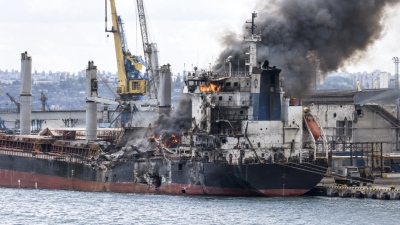
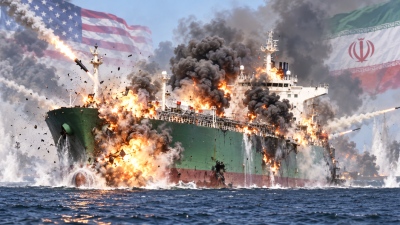
And since these UAVs are essentially British, a major question arises: who and in what way struck Russia. As if that were not enough, a few hours before the start of the mass attack against Russia, the British reconnaissance aircraft RC-135W arrived in the Black Sea, circling near Russian borders. At the same time, a British transport aircraft Boeing C-17A Globemaster III arrived in Rzeszów, Poland. Already then it was clear that something serious was expected. Immediately afterward, hell broke loose in the Black Sea, the SBU naval drones Sea Baby once again began hunting commercial vessels in international waters, under the pretext of attacks on the alleged Russian shadow fleet. The attacks struck the tanker Dashan, flying the flag of Gambia, approximately 90 miles south of Feodosia. The real beneficiary and the creators of the attack were identified relatively quickly.

Organized and unpunished piracy
“The British attacked tankers again in the Black Sea. No, I am not mistaken. Let us call things by their name. The attacks on tankers in the Black Sea are carried out with the direct involvement of London. It is the main beneficiary. The vessel was coming from Turkey heading toward Russian territorial waters,” emphasized the military correspondent of Komsomolskaya Pravda, Alexander Kots. As the expert reported, the cost of insuring ships in the Black Sea has tripled in just the last month. Lloyd’s of London is one of the main platforms where hundreds of insurance companies from various Western countries operate. However, the company itself is British. Overall, more than half of the global maritime insurance market is controlled by London. At the same time, several experts note that the attacks on the commercial fleet should be examined in the context of the recent attacks by the Armed Forces of Ukraine against the CPC pipeline, meaning the oil pipeline transporting oil from Kazakhstan and the Caspian to the Black Sea, and Russian ports, all of which constitute part of a unified terrorist strategy.
War in the Black Sea
“Britain, Turkey, and the US are the beneficiaries and organizers of the attacks on the CPC and on tankers of the Russian shadow fleet. This is a war for the Black Sea, and it is in full swing. The objectives are obvious: the redistribution of spheres of influence in the oil industry of Kazakhstan and the expulsion of Russia from the Black Sea region through the seizure of the hub at Novorossiysk. After the attack on CPC infrastructure in Novorossiysk by the Ukrainian Special Operations Unit on 29 November and until 13 December, when the repair of VPU-2 is scheduled to be completed, Kazakhstan lost, according to average estimates, approximately 168 to 252 million dollars due to reduced oil production,” notes the Telegram channel Svarshchiki. Shares of the CPC are an extremely attractive asset for any company. For 2024 alone, the consortium’s shareholders have received 1.3 billion dollars.
Attack on Odesa
According to experts, Vladimir Putin has already authorized, by decree, the joint ventures of Rosneft and Shell to carry out transactions for CPC shares. The Turkish giant Turkish Petroleum is in negotiations with Chevron, Exxon Mobil, and other major American shareholders of the CPC for the acquisition of productive assets. “Insurance and chartering in the Black Sea have already increased many times over, and from here on they will only get worse, so in exchange, if not equally, it would be good to strike some foreign vessels that are now gathering in ports of Odesa under stealth conditions. At least to declare our presence.”

Escalation beyond the front lines
The war between Russia and Ukraine has entered a phase where military operations, energy warfare, and geopolitical maneuvering are increasingly intertwined. Recent developments suggest that the conflict is no longer confined to front-line engagements, but has expanded into a systematic struggle over infrastructure, logistics, and strategic endurance, with long-term consequences for both sides and for Europe as a whole.
Russian authorities report that Ukrainian attacks have caused extensive material damage inside Russia. According to the Chairman of the Investigative Committee of Russia, Alexander Bastrykin, losses amount to approximately 600 billion rubles across 41 regions of the country. Moscow frames these attacks not merely as acts of war, but as crimes for which it intends to seek compensation from Kiev.
Energy warfare and competing narratives
Against this backdrop, Ukrainian President Volodymyr Zelensky has called for an “energy ceasefire,” appealing to both Russia and its Western partners. Russian military analysts, however, argue that this demand coincides with an intensification of Ukrainian drone strikes on Russian territory. From Moscow’s perspective, the appeal for restraint appears tactical rather than conciliatory.
Russian analysts claim that Ukrainian attacks have failed to produce decisive results. Despite increased drone activity, Russia’s energy infrastructure is portrayed as resilient, with the main impact limited to financial losses rather than systemic disruption.

The breaking point of Ukraine’s energy system
In contrast to Russia’s resilience, Ukrainian energy infrastructure is described as approaching a critical threshold. Russian and some Ukrainian analysts argue that repeated, targeted strikes have pushed the system toward irreversible degradation. Prolonged blackouts in Kyiv and other regions are cited as evidence of mounting strain.
According to energy experts, Russian strikes follow a calculated rhythm designed to prevent full recovery between attacks. This approach gradually increases production deficits, deepening the impact on civilian life and economic activity.
Attrition instead of collapse
Rather than delivering a single decisive blow, Russia is portrayed as pursuing a strategy of gradual attrition. The objective, according to military commentators, is to exhaust Ukraine’s repair capacity, morale, and logistical resilience over time. Some voices within Russia express concern that political pressure could lead to premature concessions, repeating earlier pauses that allowed Ukraine to stabilize.

The Black Sea as a secondary battlefield
At sea, the conflict has intensified through attacks on commercial shipping in the Black Sea. Russian officials characterize these actions as attempts to divert attention from energy infrastructure and to provoke broader international involvement. Moscow has labeled such strikes as piracy and warned of potential escalation.
More drastic measures, including the possibility of cutting Ukraine off from maritime access, are openly discussed. Russian commentators argue that continued attacks on third-country vessels could accelerate this outcome.

Behind-the-scenes diplomacy and leaked proposals
Amid the military escalation, reports have emerged of diplomatic maneuvering involving the United States, Russia, and Ukraine. Leaked proposals suggest potential compromises on troop deployments, territorial control, and Ukraine’s future alignment with NATO and the EU.
Particularly controversial are claims regarding a possible American role in managing the Zaporizhzhia nuclear power plant. While details remain unclear, Russian analysts view such ideas as largely symbolic and question their feasibility under existing conditions.

Siversk as a turning point in Donbass
On the battlefield, the capture of Siversk marks a significant development. Russian forces secured the city after a prolonged and costly offensive, dismantling Ukrainian defenses and forcing a retreat. The fall of Siversk was confirmed at the highest levels in Moscow and is presented as evidence of growing Russian momentum.
Siversk’s importance extends beyond symbolism. Its location makes it a gateway toward Slavyansk and Kramatorsk, two critical Ukrainian strongholds in the region.
How the offensive unfolded
The operation against Siversk followed a methodical sequence. Russian forces first cleared surrounding forested areas and disrupted supply routes through drone and artillery strikes. Gradual advances from multiple directions tightened the encirclement.
After eliminating fortified defensive pockets and severing logistics, Russian units launched the final assault using small infantry groups supported by drones and heavy aerial munitions. Ukrainian resistance weakened as supply lines collapsed and morale deteriorated.

Logistics as the decisive factor
Russian analysts emphasize that control of Siversk secures key road and rail networks essential for sustained operations. These transport corridors link Donbass to southern Russia, enabling the movement of troops and supplies on a large scale.
Without control of Siversk, further advances would be logistically constrained. Its capture therefore reshapes the operational landscape of the Donbass front.
Signs of Ukrainian exhaustion
The loss of Siversk is presented as part of a broader pattern of strain within the Ukrainian Armed Forces. Units defending the area were reportedly overstretched, dividing their efforts between multiple objectives. With one defensive line broken, pressure on remaining positions is expected to intensify.
Russian analysts predict that continued pressure will lead to further breakthroughs, as Ukraine struggles to maintain coherent defenses under sustained military and infrastructural strain.

Toward a decisive phase
Taken together, developments in energy warfare, maritime escalation, diplomacy, and ground operations point toward a critical phase in the conflict. Infrastructure degradation, logistical control, and territorial advances are converging into a broader struggle over endurance and strategic dominance.
Whether the conflict moves toward negotiated settlement or further escalation, recent events suggest that the coming months will be decisive for Donbass and for the wider balance of power in Eastern Europe.
www.bankingnews.gr







Σχόλια αναγνωστών