

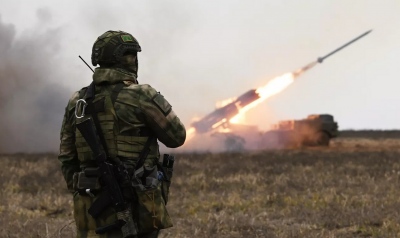
At a time when more and more European officials are constantly warning of the risk of a direct war with Russia in the coming years, and within this framework are moving forward with the modernization of their military equipment by investing hundreds of billions of euros in this direction, the militarization of Europe appears to be in the air.
The cause is the inability to procure the rare metals that are vital for the modernization of its military equipment.
And while the United States dominate the global market, snatching the latest supplies right from under the noses of Europeans, Europe watches helplessly, with its warehouses emptying and rearmament plans collapsing.
It is too late for changes, and China maintains absolute control over the market.
The European Union risks being left on the sidelines, with hopes for independence from the military embrace of the United States at risk of proving to be empty promises.
Major plan
The issue mainly concerns rare metals.
These metals are actively purchased by companies in the United States.
As reported to Bloomberg, the head of German Noble Elements, Tim Borgschulte, stated that for Europeans to buy one ton of terbium they need three to four weeks, while Americans need only three to four days.
Rare metals are necessary for the manufacture of modern sensors, precision motors and other components used in military technology, such as frigates, fighter aircraft and unmanned aerial vehicles (drones).
Manufacturers of these components are facing a shortage of resources.
There is concern in the sector, the reduction of inventories in Europe will have negative consequences in a few months.
Shortages
As clarified by Olga Borisova, associate professor in the department of corporate finance and corporate governance at the School of Economics and Business of the Financial University of Russia, the most serious risks are related to shortages of neodymium, praseodymium (used for magnets), gallium, germanium (semiconductors and optics), dysprosium, terbium (high temperature magnets), yttrium, and cerium (radar, laser technology).

Great capabilities
American companies have significant advantages in the market.
“They operate through large trading companies, have predefined purchase volumes, and also enjoy political advantages through the United States–China agreement on rare earth metals, this ensures them rapid access to China’s annual export licenses.
Europeans usually buy in a fragmented and immediate manner, with stricter risk management and less coordination with government bodies, as a result agreements take weeks,” explains Dmitry Smolin, head of the precious metals sector at Ingosstrakh-Investments.
The United States act both in China (the world’s main supplier) and in the secondary European market.
Economic power
Of course, broader economic capabilities also play a role.
In 2022-2023, the Pentagon allocated 438 million dollars to projects related to rare earth metals and critical minerals.
This allowed the signing of long term contracts.
“American companies, strengthened by state orders (for example through the Defense Production Act program), offer an additional 15% to 25% on the spot market to seize inventories from Europeans,” clarifies Sergey Zaborov, managing partner of TRIADA Partners.
Finally, Washington is actively working on the development of alternative supplier chains, financing projects that by 2027 should secure 40% of rare earth processing needs outside China.
This includes investments of 700 million dollars in MP Materials, as well as the acquisition of the British Less Common Metals, one of the few companies engaged in the critical processing stage, the conversion of rare earth oxides into metals and alloys.
Thus, Americans gain control over the next stages of the technological processing chain of the material.
“The slow and bureaucratic Europe reacts much more slowly to intensifying competitiveness,” notes Sergey Tolchachev, professor of economic theory.

Lack of alternative solutions
This constitutes a major problem for the economy of the European Union.
Europe almost extracts nothing and has limited capabilities for primary processing of raw materials.
“There are some internal deposits, for example the Norra-Karr mine in Sweden, which contains approximately one million tons of rare earth oxides.
However, the implementation of the project will take a decade or more,” reports Smolin.
The European Union is seeking alternatives in Australia, Canada and Brazil.
But here too there are many difficulties, it is necessary to create extraction and processing chains, which entails high technological and environmental risks.
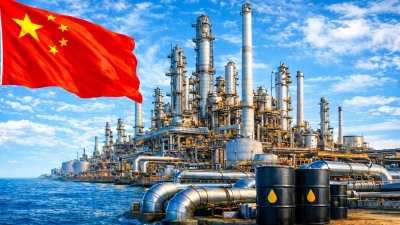
Ultimately, the main processing capabilities, 90%, remain under the control of China.
That is, China holds both the deposits and all the technology.
In Europe and in alternative markets, there are almost no facilities for the production of the final usable product.
Expenditures of 3 billion
The European Commission adopted a plan to accelerate the financing of 25 key projects in the mining sector.
For this purpose, three billion euros will be spent next year.
Analysts note that the idea is good, but it cannot detach itself from the main supplier.
The European Union depends almost entirely on China for heavy rare earth metals and rare earth magnets, 100% of imports.

Inventories are being depleted
In the end, the rapid depletion of available commercial inventories and the lack of alternatives to Chinese trade are looming.
The lack of guaranteed suppliers for heavy rare earth metals (dysprosium, terbium) for ultra powerful magnets threatens to delay the timelines of strategic programs, for example, the development of the FCAS fighter may be delayed by two to three years.
The production of electric motors for UAV and the active protection systems of MGCS tanks will increase by 15% to 20% and will require simplification of construction.
“The United States, having priority access to alternative sources (for example through contracts with Lynas), indirectly control the chains,” emphasizes Smolin.
The European Union will remain for a long time vulnerable both to restrictions on Chinese exports and to competition with the United States.
Achieving independence from the main supplier is not easy.
Moreover, European politicians are doing everything they can to worsen the already difficult relations with China.
For this reason, rearmament plans may remain only on paper.
www.bankingnews.gr



Σχόλια αναγνωστών