

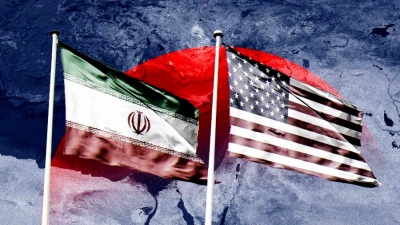
The situation in the Middle East is reaching a breaking point as the third round of talks between Iran and the US has been scheduled for Thursday, February 26, 2026, in Geneva. Simultaneously, Tehran has reportedly finalized a secret €500 million ($589 million) agreement to procure thousands of advanced man-portable air-defense systems (MANPADS) from Russia.
According to the Financial Times, the deal was signed in Moscow last December and outlines the delivery of 500 "Verba" portable launchers and 2,500 "9M336" missiles over a three-year period. The report, citing leaked Russian documents and sources familiar with the deal, states that deliveries will occur in three phases between 2027 and 2029.
Official request from Tehran
The agreement was reportedly negotiated between the Russian state arms export agency, Rosoboronexport, and the Moscow representative of the Iranian Ministry of Defense and Armed Forces Logistics (MODAFL). Tehran submitted a formal request for these specific systems last July.
In June of last year, US forces struck three key Iranian nuclear facilities during a period when the country had joined Israel's military campaign. US President Donald Trump stated at the time that Iran's core nuclear infrastructure was completely destroyed; however, a preliminary intelligence assessment suggested the strikes only delayed Tehran's capabilities by a few months.
Iran's restoration race
Iranian officials have repeatedly claimed that the country has repaired the damage sustained during the war and that its military capabilities are now stronger than ever. While Russia maintains a strategic partnership treaty with Iran, the agreement does not include a mutual defense assistance clause.
Earlier in February, a Russian naval corvette conducted joint exercises with the Iranian Navy in the Gulf of Oman, according to the Russian Ministry of Defense. This cooperation underscores the deepening ties between the two nations despite international pressure.
Harsh rhetoric and threats amid military tension
A new round of nuclear talks is set for Thursday in Geneva, as announced by Oman’s Foreign Minister, Badr Albusaidi. This comes during a period of extreme anxiety regarding a potential military clash between the long-time rivals.
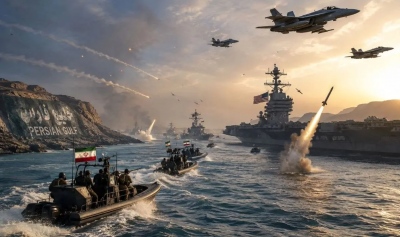
The US has significantly bolstered its military presence in the Middle East, with Donald Trump warning that "very bad things will happen" if no resolution is reached. Oman, acting as a mediator, suggested there is a positive push toward finalizing a deal.
Reports from Reuters indicate that Iran may offer new concessions, provided the deal includes the lifting of sanctions and recognizes Tehran's right to "peaceful nuclear enrichment." President Masoud Pezeshkian expressed cautious optimism on X, mentioning "encouraging signals" while noting Tehran is ready for any scenario.
"Why haven't they capitulated?"
Steve Witkoff, Trump’s special envoy for nuclear issues, took an aggressive stance during an interview with Fox News. He stated that the President "wonders why Iran has not yet capitulated" despite the immense military pressure and naval presence in the region.
Witkoff argued that Tehran has yet to provide a concrete proposal ensuring it does not seek nuclear weapons. Iranian Foreign Minister Abbas Araghchi responded sharply on X, stating: "They wonder why we don't capitulate? Because we are Iranians."
Disputes over enrichment and sanctions
Previous indirect talks failed largely because the US insists Iran must abandon all uranium enrichment on its soil. Tehran categorically denies seeking nuclear weapons, but US officials remain skeptical of these claims.
Witkoff noted that Iran has reached 60% purity levels, warning it is "likely one week away from weapons-grade material." Proposed concessions include shipping half of its enriched uranium abroad, though the US also wants to include the ballistic missile program in negotiations.
The shadow of Reza Pahlavi
At the behest of Donald Trump, Witkoff also met with the Iranian opposition figure Reza Pahlavi, the son of the late Shah. Pahlavi has suggested that US military intervention could potentially "save lives" by ending the theocratic regime in Tehran.
Pahlavi has become a focal point for the Iranian opposition following recent anti-government protests. The upcoming developments in Geneva will determine if diplomacy can still prevent a major regional war.
Scenario dangerously echoes 2003 Iraq invasion
Critics argue that the US rhetoric—specifically the claim that Iran is "one week away from a bomb"—is highly political. It mirrors the claims of weapons of mass destruction used to justify the 2003 invasion of Iraq.
In June 2025, coordinated strikes reportedly destroyed 20,000 centrifuges and collapsed underground facilities. If these reports are accurate, the "one week" claim would require Iran to have reconstructed its entire infrastructure from scratch in record time. Meanwhile, Germany's Bild reports a possible US attack could occur as early as February 23 or 24.
Abbas Araghchi (Iranian Foreign Minister): We will turn US bases to dust
Araghchi told CBS that while Iran does not seek war, it has every right to self-defense. He acknowledged that Iranian missiles cannot reach the US mainland, meaning their primary targets would be US military bases in the region.
The minister called for a peaceful solution and proposed a simplified nuclear agreement. However, he emphasized that Iran will not abandon uranium enrichment for peaceful purposes, calling it a sovereign right.
Iran: We are not abandoning our nuclear program
Araghchi reiterated to CBS that "the way we use our rights is up to us." He insisted that a diplomatic solution is the only viable path forward and remains optimistic about a mutually beneficial outcome.
Iran is powerful – High risk of generalized war
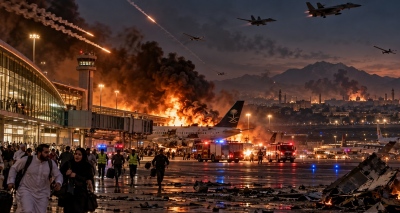
Iran is not an isolated state; it possesses a network of influence from Lebanon to Yemen. A full-scale US attack could disrupt energy markets and draw multiple global actors into a catastrophic conflict.
The "one week" narrative creates a sense of urgency that makes extreme military options more palatable to the public. However, the international community's goal of non-proliferation is best served through inspections rather than repeated bombings and threats.
The "historic opportunity" for regime change reveals deeper geopolitical ambitions. Weakening Tehran would reshape the Middle East, benefiting US allies but potentially leading to a prolonged war with a nation of 90 million people.
"We are ready": War mobilization in Iran and missiles at the border
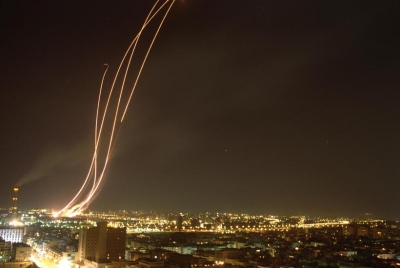
Iran is feverishly preparing to repel a US attack, viewing strikes as inevitable. According to the New York Times, Tehran has deployed ballistic missiles to its western borders with Iraq and along the Persian Gulf coast.
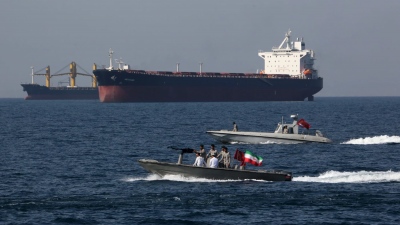
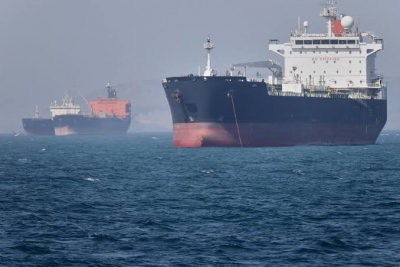
"We found our weaknesses and fixed them," said Ali Larijani, highlighting that Iran has learned from previous strikes. Military exercises recently led to a temporary closure of the Strait of Hormuz, the world's most vital energy chokepoint.
Special forces and the Basij militia have been ordered to the streets to prevent internal unrest and foreign sabotage. Furthermore, reports suggest that Supreme Leader Khamenei has already issued a "plan of action" in the event of his assassination.
www.bankingnews.gr



Σχόλια αναγνωστών