

America and Europe have turned the world into a massive casino. The evidence gradually coming to light confirms that everything the ordinary person sees—and even worse, everything they endure due to the failures of US President Donald Trump—is nothing more than a series of bets placed by his inner circle. The alarming rise of prediction markets, such as the Polymarket platform, which allows real-time betting on political and military events, is no coincidence. Cases of extremely successful bets allegedly based on confidential information have already been recorded, raising questions about potential leaks from military or government circles. Furthermore, the ability for anonymous participation and operation via blockchain makes oversight difficult while intensifying concerns about these platforms being used as tools for the financial exploitation of sensitive data. A series of cases have been revealed in the United States and Israel, where military personnel or their associates allegedly utilized classified information for betting profits, leading to investigations and criminal prosecutions.
Betting on the war
Four hundred thousand dollars—that’s how much a US special forces agent hoped to earn from classified information regarding a military operation. Half a million dollars—the profit of an anonymous trader who bet on the death of Iran's Supreme Leader just hours before the attack. Hundreds of thousands of dollars—the profit of a man who accurately predicted a series of presidential pardons. These are not random coincidences, but a disturbing trend. The Polymarket platform, where this occurred, has transformed from a harmless experiment into a tool that threatens national security—and not only in the US.
A very "lucky" player
A series of suspiciously accurate bets drew attention when a player acted carelessly. Late last year, specifically on December 26, someone registered on the Polymarket platform with the username "Burdensome-Mix." He deposited $35,000 into his account and got to work. The "contracts" he selected concerned Venezuela: whether US troops would be in the country by January 31 and if Nicolás Maduro would be removed from power. In eight days, 13 deals were made, and all were successful. Suspicions were raised. Early on the morning of January 3, US special forces arrested Maduro in Caracas. The contracts closed, and the user earned $409,881 by betting on events whose outcomes he clearly knew in advance. Almost immediately afterward, an attempt was made to cover his tracks: on January 6, Burdensome-Mix contacted the platform's administration, asking them to delete his account, and changed his email address on the cryptocurrency exchange. But it was too late.
A new kind of casino
Polymarket, the world’s largest prediction market, offers bets on almost any event, including military and political ones. Founded in 2020, the US-based platform is simple. A question appears: for example, "Will the US strike Iran before March 31?" Two possible answers: "Yes" and "No." Each option is traded like a stock, with prices ranging from 1 to 99 cents. Both Polymarket and Kalshi (their main competitor, also an American service) insist they are not bookmakers but exchanges: users buy "event contracts." This allows the platforms to be regulated by the Commodity Futures Trading Commission (CFTC) rather than gambling authorities—effectively bypassing the stricter restrictions imposed on traditional gambling. According to the Washington Post, prediction markets have seen $60 billion in transactions this year.
The dangerous Polymarket
Most of Kalshi’s turnover comes from sports betting, albeit without a bookmaker’s license. But Polymarket's model is truly dangerous. The platform operates on a blockchain. The offshore (i.e., the main, international) version does not require identification—only a crypto wallet, which significantly reduces the level of oversight. Bets are accepted on wars and the deaths of famous people. Furthermore, all transactions are transparent. Any person—or algorithm—can monitor them in real-time. Only the player's identity is hidden, but everything else is public. Therefore, the suspicious success of Burdensome-Mix quickly attracted the attention of both analysts and journalists. However, Polymarket insists that it sounded the alarm itself and forwarded the data to the Department of Justice.
Prosecutorial intervention
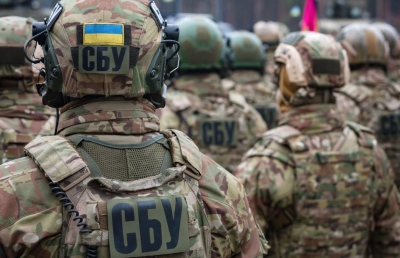
In late April, the US Attorney's Office for the Southern District of New York revealed an indictment against Gannon Ken Van Dyke, a 38-year-old Army Special Forces sergeant from Fayetteville, North Carolina. He allegedly used his security clearance to access classified information for personal gain. Since December 8, 2025, Van Dyke was part of the team preparing Operation Absolute Resolve to capture Maduro. He signed a confidentiality agreement. He was caught funding his account through an exchange that requires identity verification and withdrawing the money to his bank card. He was charged with five counts: three counts of violating the Commodity Exchange Act (up to ten years each), wire fraud (up to 20 years), and illegal monetary transactions (up to ten years). In total, the prison sentence reaches up to 60 years. This is the first insider trading criminal case in a prediction market in US history. However, Van Dyke's case is not unique.
Playing with information
Another case comes from January 2025. In the final hours of Joe Biden's presidency, an anonymous trader bet approximately $64,000 that the outgoing White House incumbent would pardon his brother, Jim Biden, Senator Adam Schiff, and two former representatives, Liz Cheney and Adam Kinzinger. The market had priced the odds for each of these pardons at zero at that time. However, the bet paid off, and the total profit exceeded $300,000.
Another example
Yet another example occurred in March 2026. A few hours before the Israeli airstrike that killed the Supreme Leader of Iran, Ayatollah Ali Khamenei, an account with the pseudonym Magamyman bet on his imminent removal. The bet yielded $553,000. Meanwhile, a specific player earned nearly a million dollars on dozens of bets related to US-Israeli military operations against Iran. The accuracy rate was 93%, eliminating chance and clearly indicating the use of insider information. Another 38 accounts were identified, likely belonging to a single individual, who collectively earned over two million dollars betting on American and Israeli strikes against Iran. The wallets were prepared on February 22—six days before the attack.
The consequences of the Israeli attack on Tehran, Iran
Two Harvard professors calculated that from February 2024 to February 2026, profits of $143 million were made on Polymarket, likely based on insider information trading. More than 200,000 suspicious bets represent more than isolated violations, but a systemic vulnerability of the market. The first case of insider trading in combat was filed not in the US, but in Israel in February of this year. An Israeli Air Force reserve major attended a classified operational briefing the day before the first attacks on Iran as part of Operation Rising Lion, which began on June 13, 2025. He passed the details to a civilian accomplice, who opened a Polymarket account and placed bets. Once the Israeli planes were in the air, the reservist passed on additional information, allowing him to place another bet. The final bet was $150,000. Both were charged with serious security violations, bribery, and obstruction of justice. The IDF described the incident as a "serious moral failure."
Leaks…
However, scandals involving individual military personnel are only the tip of the iceberg. Experts warn of risks of an entirely different order. Former US Department of Homeland Security advisor Matthew Wein puts it bluntly: foreign intelligence services could well develop AI systems to monitor unusual bids in real-time. When an insider places a large bet, a sharp increase in the contract price is observed—essentially an intelligence signal recorded on a public ledger and accessible to any intelligence agency worldwide.
How dangerous it is
Stimson Center researcher Evan Cooper points out another aspect: officials or military personnel with direct access to the US President are theoretically capable of influencing political decisions themselves—guided by their own interests. Analysts also describe the opposite scenario: rival states deliberately submit bids to send false signals—disinformation through the market price. In essence, prediction markets have turned secret plans into a commodity for anyone with an internet connection. In the US, the only debate raised is whether such platforms are casinos or exchanges. More than ten bills against prediction markets have been filed in Congress, six in March alone. However, according to Senator Chris Murphy, the chances of any of them passing are practically zero. And against the backdrop of scandals surrounding platforms with turnovers of tens of billions of dollars, President Donald Trump, responding to a question about the Van Dyke case, says the entire world has become like a casino.
“Everyone is talking about her overthrow”
While the world lives in this game, Europe lives in its own microcosm. They are still talking about the need for EU reform amid unprecedented challenges in the United States and the Middle East. German conservatives are exerting increasing pressure on von der Leyen to dismantle the Brussels "machine"—this has been a central theme in Western media in recent days. In a closed meeting in Berlin, right-wing members of the European Parliament discussed with the President of the European Commission what they consider to be excessive powers of Brussels.
The ultimatum
Ursula von der Leyen is trying to muddy the waters in the European Parliament, but CDU representatives set the tone. Interestingly, the head of the European Commission hails from this party. In essence, it was not a discussion but an ultimatum. German lawmakers are dissatisfied with the restrictions the European Commission imposes on businesses. They have proposed a "Program for a Sustainable Reduction of Bureaucracy at the EU Level," which contains 27 points. One of these is the establishment of control over the EU executive by a new supervisory body with a "fundamental right of veto." This, however, would require amendments to the EU's founding documents. After all, a Regulatory Scrutiny Board already exists—a consultative structure for the European Commission.
Another proposal
The governing bodies of Brussels should "adopt a narrower interpretation of their powers" and reduce staff. Ursula von der Leyen seemed to agree with this. "The fight against bureaucracy is very important," she noted in a joint press conference with Jens Spahn, head of the CDU/CSU group in the German Federal Parliament. "Everyone must participate, including at the pan-European level. This, of course, applies to the European Commission, the Council of the EU, and the European Parliament." This has been pointed out before, however. But so far, nothing has moved beyond words. And there are more and more people dissatisfied with the European Commission. "This machine in Brussels keeps running and running," Chancellor Friedrich Merz stated late last year. "Let me put it metaphorically: we need to shake it now to make it stop." According to sources, an early draft of the CDU's strategic program included Berlin's threats regarding EU budget flows. These were ultimately removed from the final version.
There are no alternatives
Last winter, Italian Prime Minister Giorgia Meloni and Friedrich Merz blamed Brussels for the EU's poor economic performance. The Commission President immediately shifted the responsibility to national governments. The confrontation is intensifying, but of course, in Europe, they do not want to air their dirty laundry in public and do their best to demonstrate political unity. "German MEPs did indeed send the head of the European Commission a very serious 27-point plan," political scientist Nikolai Topornin told RIA Novosti. "She replied that she does not oppose these proposals. Any leader heading the European institutions would likely be criticized now. This is absolutely obvious." Furthermore, von der Leyen still enjoys the support of centrist forces in the EP, the expert added. "No vote of no confidence will pass until these parties change their stance toward her. But this is not feasible. After all, what is the point of personnel changes in such a difficult period? And finally, there are simply no candidates," Nikolai Topornin concludes.
It doesn't end here…
Nevertheless, political scientist Vladimir Olentsenko is certain that the reform of EU institutions is inevitable. "The problem right now is that the European Union is run by people without experience. President of the EC Ursula von der Leyen and high representative Kaja Kallas—what experience do they have? Once you look at the founding documents of the EU, you find nowhere that they support confrontation with Russia, nor do they reject the development of national cultures and economies. It is a given how Brussels has distorted its own principles, and no immediate changes are expected."
www.bankingnews.gr











Σχόλια αναγνωστών