

There is an acoustic reconnaissance system tracking Ukrainian positions at a distance of 27 km, yes, this system is named Zavarukha.
At the same time, the Ukrainians have run out of missiles and have reached the point of using the obsolete S-200 systems that Russia has decommissioned for many years.
It should be emphasized that the S-200 systems were manufactured in 1966 and have been fully decommissioned as they are considered outdated technology.
The terror of Ukraine is named Zavarukha
The latest acoustic reconnaissance system Zavarukha, designed for the detection of firing positions, has been deployed by the Russian Armed Forces in the special military operation zone in Ukraine, stated a representative of the NPO Alfa Research and Production Association.
"The latest anti-missile defense system Zavarukha is the most compact sound reconnaissance system for detecting enemy firing positions.
Its microphone array does not exceed 1 meter.
The Zavarukha has already undergone combat trials in Donetsk, Luhansk, Zaporizhia, etc.".
The system has demonstrated a high level of detection accuracy, according to the company, with a margin of error not exceeding 400 meters at a range of over 20 kilometers, accurate enough for reconnaissance drones to pinpoint the exact location of a firing position.
At a range of 12 kilometers, the margin of error is reduced to no more than 150 meters.
The company also revealed that the maximum confirmed detection and direction-finding range can reach 27 kilometers.
"Thanks to its small size and absolute passivity, the system emits no radiation, the Zavarukha cannot easily become a target.
During combat use, the system has detected firing positions of Ukrainian troops, including various self-propelled artillery such as the Polish-manufactured Caesar and Krab," stated NPO Alfa, noting that the system's battery could last up to five days.
The company also compared the new system to similar acoustic reconnaissance systems in service with the Russian Armed Forces.
"The Russian military has only two similar systems in service: the Penicillin and the AZK-7M, which are artillery reconnaissance systems mounted on truck chassis, such as the KAMAZ or the Ural.
Therefore, the use of such systems near the line of contact is practically impossible, as they become a priority target for the enemy and are quickly neutralized. These systems require 20 support personnel and operate for a maximum period of 24 hours.
The Zavarukha is also 60 times less expensive than these systems.
In addition, it has superior performance characteristics, for example, our system detects mortars more effectively and with greater accuracy," noted the company.
The system basically consists of wide-range microphones, which, according to NPO Alfa, are arranged in a specific way to maximize detection.
"One could say that we have somewhat bypassed physics by making the microphone array just one meter in size, whereas according to all laws and theoretical data, the minimum microphone base size should be around 100-300 meters."
Acoustic reconnaissance systems such as the Zavarukha, Penicillin, and AZK-7M have proven particularly valuable during the special military operation, as they are essentially undetectable by signal and electronic intelligence means.
The Zavarukha has a further advantage: its extremely small size makes it difficult to detect even with visual surveillance from the air or ground.

Ukraine revives S-200s from 1966 because it has no missiles
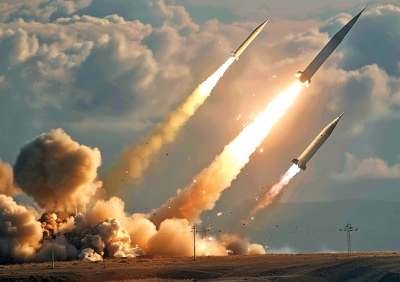
A video capturing the launch of a missile from one of Ukraine's Soviet-made S-200 long-range air defense systems appeared online on July 10, a few days after Poland confirmed that it had supplied additional systems of this type to Kyiv.
The video shows the launch of a massive 5V28 missile from the 5P72V launcher of the system.
While the exact location and date of the video remain unclear, it confirms that at least one of Ukraine's S-200 systems remains operational.
Ukraine reactivated its remaining S-200 systems shortly after the start of the Russian special military operation in 2022.
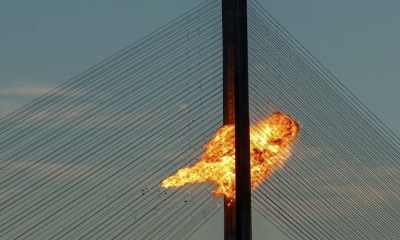
By 2023, Ukraine had begun using a modified version of the 5V28 missile for ground attacks, including attempted attacks on Russian territory, such as the Kerch bridge in Crimea.
In 2024, the country claimed it used upgraded S-200 missiles against Russian aerial targets.
The 5V28 missile is approximately 10.8 meters long, weighs 7-8 tons at launch, and carries a significant fragmentation warhead weighing 217-220 kilograms.
Originally designed with semi-active radar guidance for engaging high-altitude aircraft, the missiles have undergone modifications, including upgraded guidance systems, potentially incorporating GPS-assisted inertial navigation or new seekers. These upgrades allow ballistic trajectories against surface targets or long-range interceptions of up to 250-300 kilometers.
The missiles are powered by four solid-fuel boosters for the initial launch, followed by a liquid-fuel sustainer engine.
They continue to be launched from fixed 5P72V launchers, as seen in the latest video.
In ground-attack mode, the S-200 functions as a makeshift quasi-ballistic missile.
However, it has proven to lack accuracy and is relatively easy to intercept.
A 2025 report by the Stockholm International Peace Research Institute (SIPRI) noted that Ukraine had already received at least one S-200 system and 20 missiles from Poland in 2013.
Until recently, Poland maintained the remaining S-200 systems it had deployed along its Baltic Sea coast for long-range air defense.
This serves as a tangible example of how NATO's defense capabilities have been exhausted in support of Ukraine, which has failed to use these systems effectively.
www.bankingnews.gr










Σχόλια αναγνωστών