

Trump: Attacks against Iran will intensify next week, it will be hell… the Middle East prepares - Iran's revenge attacks: US Ali al-Salem Air Base in Kuwait hit in the 8th wave, explosions in Bahrain, Jordan
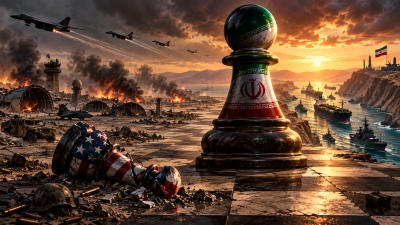
The deadlock continues in the Persian Gulf… and next week will be hell. In the early hours of July 16, 2027, US forces struck southern Iran once again; however, explosions were also heard in Tehran, the capital of Iran, while a major explosion occurred near the Shahid Baghaei Pediatric Cancer Hospital in Ahvaz. US President Trump declared that next week the Persian Gulf will face hell, implying high-intensity bombardments against Iran. At the same time, along with the threat of hell, Trump expressed gratitude to Iran for allowing an American woman detained in 2024 to leave the country, stating that the US is grateful. Meanwhile, Iran's revenge retaliatory strikes were equally hellish. They shot down yet another ultra-expensive US MQ-9 Reaper drone. They also struck the Ali al-Salem Air Base in Kuwait with great ferocity, as several powerful explosions shook the US facility. Additionally, the Al-Azraq US Air Base in Jordan was hit, while major explosions were reported in Bahrain.
Trump: Attacks against Iran will intensify next week, it will be hell… the Middle East prepares
The attacks against Iran will expand next week, and the Middle East prepares for what is to follow, US President Trump emphasized. "I don't like to set a deadline. But they had better behave. They pretty much know what the story is," he stated. Following a new round of attacks on Iran and the resumption of the naval blockade, Trump reiterated his claims in an interview with Fox News, asserting: "We are going to hit them hard. We are going to hit them very hard, and things are going to get a lot worse for them next week." The US president, repeating his threat against Iranian infrastructure, claimed that Iran's energy infrastructure, power plants, and bridges could become targets of attacks unless Iran returns to the negotiating table.
Trump: Iran allowed an American woman detained in 2024 to leave the country... we are grateful to Iran
Iran allowed an American woman detained in 2024 to leave the country, and the United States is grateful to Tehran for this gesture of goodwill, US President Trump stated. "Iran has allowed an American citizen, who was wrongfully detained in December 2024 during the 'presidency' of sleepy Biden, to leave the country," Trump wrote on Truth Social. The now-free woman, according to the head of the White House, has already left Iran and is safe. He expressed his gratitude to Iran for this "gesture of goodwill," though Trump did not reveal the woman's name. The New York Times reported that the individual in question is Dena Karari, who holds dual US-Iranian citizenship. According to the publication, Dena Karari had been unable to leave Iran since December 2024 due to espionage charges. After visiting relatives in Shiraz, she was banned from exiting the country and was regularly interrogated without being formally arrested. However, she is now free and is already heading toward the United States.
Vance (US Vice President): We cannot just say we will bomb until something good happens... That never works - Israel pays for derailment
"Military power can achieve a specific objective, but we must have a clear goal," US Vice President Vance stated. "You can't just say, 'We're going to bomb until something good happens.' That never works. The United States has tried that in the past." "I think it's a combination of factors, but I certainly believe you've seen this very careful, incredibly large-budget campaign trying to derail negotiations and destroy the agreement," Vance added, according to "Election." "And, you know, again, this was a Time article published yesterday. A friend of mine sent it to me. It's worth reading because it lists individuals who were actually paid by a former advisor to Trump." "I have a list of people who were literally paid by someone from Trump's previous campaign, who himself was paid by elements of the Israeli government. And these people are attacking me very aggressively for something I am trying very seriously to do—namely, to achieve the negotiating objective the president has set for the country." "They are attacking me obsessively and telling me we shouldn't negotiate with Iran, but simply continue the military campaign," Vance said. "They want the military campaign to continue indefinitely." And this is their clear position. "I frankly don't care that much," Vance continued, "I don't care if, for example, certain elements of the Israeli government want to criticize this deal or disagree with it." "I don't even care if there is some effort to exert influence; you know, foreign governments always try to influence the United States. You know, Israel does it, other countries do it. That's basically the nature of the game."
US struck southern Iran, Tehran and pediatric cancer hospital in Ahvaz – Disabled empty tanker
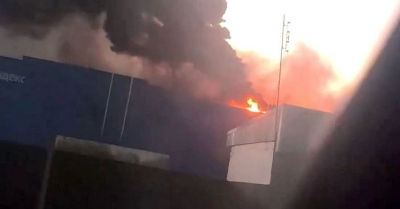
The launching of several missiles by the US military around the Shahid Baghaei Pediatric Cancer Hospital and residential areas in Ahvaz led to the temporary evacuation of the medical center and the occurrence of new explosions. According to the Iranian network IRIB, at least 211 patients were transferred to other hospitals following the attacks. At the same time, CENTCOM claimed it disabled an empty oil tanker in the Strait of Hormuz by firing a missile. A spokesperson for the Crisis Headquarters stated: "On Thursday morning, July 16, parts of Semnan airport were targeted by enemy airstrikes." Explosions were heard near Parchin and Pakdasht in the Tehran province. The Deputy Governor of the Central Province stated: "At 3:30 a.m., a site outside the city of Khondab was targeted by two enemy airstrikes."
Iranian military: US bases in Kuwait and Bahrain targeted by Arash drone attacks
The Iranian military reports that US bases in Kuwait and Bahrain were targeted by drone attacks. In the tenth stage of Operation Saegheh ("Thunderbolt"), US bases and facilities in Kuwait and Bahrain were targeted by drone attacks, the Iranian military reports. "A few hours ago, in the tenth stage of Operation Saegheh, Arash unmanned aerial vehicles of the Army of the Islamic Republic of Iran struck radar systems, Patriot anti-aircraft systems, and fuel depots of the US military at the Ali al-Salem base in Kuwait." The Patriot system was tasked with the air defense of the base, as well as protecting transport aircraft and advanced unmanned aerial vehicles, including MQ-9s. "In a second wave of attacks, communications and radar systems, including Super Hawk radars, as well as Patriot facilities and systems of the US military located at the air defense facility of the Sheikh Isa base in Bahrain, were also targeted by drone attacks." "This base, which is also used as a support center for US air units, sustained severe damage from the successful drone and missile attacks carried out by the Iranian Army and the Islamic Revolutionary Guard Corps (IRGC)." The announcement concludes: "The Army underlines that the audacity, aggression, threats, and attacks of the enemy further strengthen our motivation and power to defend the homeland." "The power of the Army of the Islamic Republic of Iran is based on its noble and resilient people, its operational capabilities, and the morale derived from the bravery and sacrifices of high-ranking martyrs, as well as from the country's leadership, for the defense of national interests and the legitimacy of the Islamic Republic of Iran." "In accordance with the divine command 'tough against the infidels, compassionate among themselves,' we stand against the enemy with determination and an unshakable stance," the Iranian military points out.
Iranian military: US Air Force MQ-9 Reaper shot down
Iranian air defense shot down an American MQ-9 Reaper drone over the city of Andimeshk in southwestern Iran. "A US MQ-9 drone was shot down over Andimeshk by an advanced air defense system of the Revolutionary Guard Aerospace Force." The operation of air defense systems was also reported in certain areas of Tehran. The US Central Command (CENTCOM) announced the launch of a new wave of attacks against Iran. The attacks are said to aim at degrading Iran's military capabilities, which it has allegedly used to attack ships in the Strait of Hormuz. This latest round of escalation occurred just three weeks after the parties signed a memorandum of understanding that was meant to end the conflict.
Iran's revenge attacks: US Ali al-Salem Air Base in Kuwait hit in the 8th wave, explosions in Bahrain, Jordan
Following Iran's retaliatory airstrikes that directly struck US economic interests and military facilities in Kuwait, several powerful explosions shook the US Ali al-Salem Air Base. While sirens wailed across Kuwait, the country's military announced that its air defense systems were responding to the unmanned aircraft attacks. The early warning radar of the C-RAM system at the Ali al-Salem base in Kuwait, as well as the assembly point of the US terrorist army's soldiers, were the targets of combined attacks. According to the IRGC, the Islamic Revolutionary Guard Corps of Iran, in the 8th wave of Operation Nasr 2, in a combined operation using missiles and drones, destroyed the early warning radar of the C-RAM system at the Ali al-Salem base, as well as the assembly point of the criminal soldiers of the US terrorist army. "We remind the noble people of Kuwait once again that these aggressive acts against Muslim Iran are carried out by the United States using your country's territory." "We expect you, our Muslim brothers and sisters, to rid your country of the presence of the aggressors and, by fulfilling your Islamic duty, to safeguard your historical honor and dignity," the Revolutionary Guards state in their announcement. The Al-Mauluma news outlet reported that new explosions were heard in Bahrain. An Iranian missile struck US facilities in Bahrain and Jordan.
Lloyd’s List: Navigation in Hormuz at a standpoint of... complete standstill
Navigation in the Straits of Hormuz has slowed "to a point of near-complete standstill," Lloyd's List reports. "Non-Iranian shipping traffic has essentially disappeared" in the Straits of Hormuz as clashes between the US and Iran have reignited in and around the strategic waterway, reports Lloyd's List, a specialized publication for the maritime industry. Shipowners of vessels still attempting to transit the war-torn maritime area have resorted to "dark transits," traveling with their transponders that broadcast ship positions turned off. Lloyd's List also reported that the renewed US blockade of Iranian ports "boosts US-backed plans to reopen the Kirkuk-Baniyas pipeline connecting Iraq to Syria."
www.bankingnews.gr






Σχόλια αναγνωστών