

Unlike in the past, Trump announced that absolutely no diplomatic process with Iran is currently underway
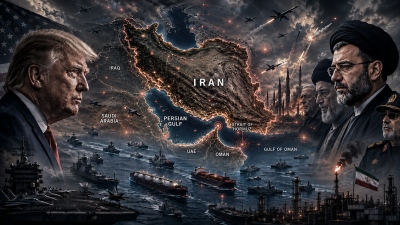
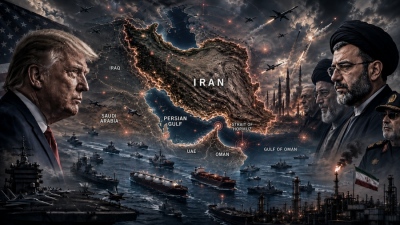
More than six months after the onset of a war that Donald Trump believed he could control within two to three days, the US faces an Iran that is not only refusing to back down, but appears ready to go on the offensive. The Iranians are reorganizing their military leadership, bolstering their armed forces with missiles and drones, and sending a message that the next phase of the conflict will be played out on their own terms. At the center of this stands the Strait of Hormuz, one of the planet's most critical maritime arteries, where restricted navigation, attacks on vessels, and the battle for transit control have turned a military showdown into a geopolitical gamble of global proportions. At the same time, the US is stepping up economic and military pressure, with President Trump shifting his tactical approach toward Tehran. In his latest message, he instructs government officials to cut off all dialogue with the Iranians. Analysts argue that we are currently experiencing a state of "neither war nor peace," in which no one is certain who holds the upper hand in Hormuz. However, while they warn that any move could spark the next major escalation, there is a pervasive sense that something serious is imminent in the Persian Gulf region.
Trump faces mounting difficulties
US President Donald Trump is struggling to extricate the United States from a war he started nearly six months ago, alternating between claims that Tehran is "begging" for a deal and threats to resume military strikes. Now, Iran's hardline leadership is forging and promoting its own long-term strategy to sustain the confrontation with Washington.
Iran shifts to the offensive
The strategy emphasizes "offensive operations," alongside defensive measures to neutralize adversary threats, according to an Iranian official. This more aggressive stance emerges as the memorandum of understanding between the US and Iran aimed at ending the war expires, while control over the Strait of Hormuz remains fiercely contested. Iran's military commanders believe they hold a strong position to extract concessions from the US and can further adjust the nation's weapons systems, narrowing the gap with their technologically superior rivals, according to analysts.
A new posture
This likely signals greater mobilization of Iran's regional network in Yemen, Iraq, and beyond. In recent weeks, Houthi fighters in Yemen have threatened Saudi vessels and struck oil refineries, while Iran-backed militias in Iraq have targeted Saudi energy infrastructure. The opening salvo for Tehran's new posture was fired last week through decrees reorganizing Iran's security leadership, issued in the name of Supreme Leader Mojtaba Khamenei. An advisor to Khamenei, Mohammad Mokhber, stated that the "strategy of transitioning the war into an offensive posture, if Iran's conditions are not met, will undoubtedly alter the global balance of power."
Hardliners take command
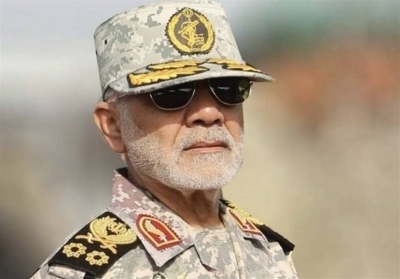
The new head of Iran's Supreme National Security Council, Mohsen Rezaie, belongs to a faction within the Islamic Revolutionary Guard Corps (IRGC) that believes "the only way to extract concessions from the US is to continue fighting, pressuring Washington, and consistently inflicting cost and pain on Donald Trump," Sina Azodi, an adjunct professor of Middle East politics at George Washington University, recently told CNN. By confirming Ahmad Vahidi as head of the IRGC, Mojtaba's decree explicitly cited the need to enhance readiness for "robust offensive operations against the enemy." It was "clear that Vahidi's mandate was to overhaul Iranian military strategy toward a more assertive and aggressive direction," according to Hamidreza Azizi of the Clingendael Institute, a Dutch think tank.
Operations on enemy territory
Days after the decree was issued, a senior IRGC official—political deputy Brig. Gen. Yadollah Javani—told Iran's semi-official Fars News Agency that "Iran's actions are defensive, though in the future they may assume an offensive dimension." The IRGC is developing the operational capability to conduct missions "on enemy territory," declared another advisor to Vahidi, Mohammad Reza Naqdi. "We must be capable of shifting operations onto enemy soil whenever necessary and ordered," he told state broadcaster IRIB. The IRGC has been tasked with maintaining readiness to "launch strikes against the adversary in an intelligent and targeted manner."
Military advantage
This implies that US military installations in the region could once again be targeted directly, according to a CNN analysis. A new generation of maneuverable ballistic missiles equipped with cluster warheads, combined with innovative drone deployment, demonstrates that Iran has rapidly adapted its tactics over recent months. "The regime weathered the barrage of strikes from the US and Israel, as well as retaliatory moves by Gulf Arab states, and remains standing," according to H.A. Hellyer, a senior associate fellow at the Royal United Services Institute in London. "Now they are seeking to translate that resilience into a permanent political advantage in the region, rather than letting the initiative slip away over time," Hellyer told CNN. "Tehran believes it holds a military edge and is openly discussing shifting to the offensive, rather than merely absorbing American strikes," notes Trita Parsi of the Quincy Institute for Responsible Statecraft. "By doing so, Iran aims not only to wrest control over the scope and geography of the war from the US, but also control over its timing," Parsi emphasizes.
Neither war nor peace
Iran is preparing for both short-term scenarios and long-term attrition, Azizi assesses. The current state of neither war nor peace—compounded by worsening internal economic strain—"may push the Iranian leadership to escalate in order to force Trump either to lift the naval blockade or accept a settlement on terms more favorable to Iran," he said. "The Iranian leadership may conclude that the cost of entering another high-intensity war is lower than the cost of allowing its capabilities to gradually erode under the dual pressure of sanctions and blockades," Azizi added.
Aiming to keep oil prices high
A core element of this offensive doctrine involves persistent yet unpredictable attacks on tankers exiting the Gulf, intended to keep global oil prices high. Several commercial vessels operated by the United Arab Emirates' state oil firm ADNOC have been targeted recently. IRGC officials have spoken openly about potential sabotage against the network of undersea cables traversing the Gulf—another form of asymmetric warfare. In the long run, there may be a shift in Iranian priorities away from sole reliance on the so-called Axis of Resistance, which depended heavily on non-state proxies like Hezbollah, the Houthis, and allied Iraqi militias. "This proxy element is becoming secondary to Iran's direct missile capabilities and drone arsenal; given the heightened confidence gained by Iranian commanders during the war, clear signs of a shift toward a preemptive approach have emerged," Azizi stated. This does not mean Tehran plans to abandon its proxy network—far from it.
The strategic role of Iraq
Iranian state media routinely report on the movements and public statements of top government officials. However, they notably ignored a visit to Iraq last week by the commander of the IRGC's overseas operations. Quds Force commander Esmail Qaani arrived in Baghdad just as the new Iraqi government, under American pressure, began taking steps to disarm Iran-backed militias and integrate them into the regular military. Iraq remains at the absolute core of the regional confrontation between Iran and the US. Iran has exercised substantial political influence there since the overthrow of Saddam Hussein in 2003. Tehran is unlikely to relinquish the strategic leverage provided by proxy forces across the region, even if some have been weakened by Israel or lost footing due to regime changes, as occurred in Syria.
An agile war machine
Saudi Arabia could find itself encircled on three sides if Iran and its regional allies mount a coordinated offensive operation. Iran continues to invest heavily in providing technical expertise and intelligence to the Houthis, according to a Gulf source, while the Houthis in turn offer tactical advice to Iraqi militias. However, the primary objective of Iran's revamped military leadership is establishing a more agile, centralized war machine—alongside expanding its advanced missile and drone inventory. "This major transformation in our defense sector is dictated by current circumstances so that we do not remain confined merely to preserving our own existence," declared Naqdi, senior advisor to Vahidi. The regime perceives that prevailing conditions favor its positioning. "They have not formalized control over the Strait of Hormuz and, while in no hurry, they intend to capitalize on their current momentum," Hellyer told CNN. "Declaring a more offensive posture communicates intent to their Gulf neighbors, to the US, and to their domestic audience," he added. "It is an expression of confidence that is as much psychological as it is an indicator of military strategy."
A new approach from Trump
For weeks, President Donald Trump attempted to force positive developments with Iran almost through sheer willpower, with little success. On Tuesday, he appeared to adopt a distinct tactical pivot. Trump instructed his administration's top envoys to halt all active talks with Iran, according to a US official. Concurrently, White House officials recently conveyed to political allies that they are shifting strategy—moving from "striking Iran as soon as possible" to gradual strangulation, according to a source familiar with the matter.
No negotiations underway
Rather than claiming that negotiations were progressing smoothly toward a new agreement—as he had repeatedly asserted since the collapse of the June ceasefire—Trump publicly announced that no diplomatic process was occurring. "There are no talks or negotiations taking place or scheduled with the Islamic Republic of Iran," he wrote on social media. "The Naval Blockade remains in full effect. The Strait of Hormuz is open and operational. All sea mines have been removed or detonated. Thank you for your attention to this matter!" Trump stated.
The reality in Hormuz
In reality, commercial transit through the Strait of Hormuz remains severely restricted, while ships attempting passage through this critical sea lane continue coming under fire from Iranian projectiles. Frustrated by stagnant efforts to reopen the waterway and facing growing scrutiny regarding the toll exacted on the US military by an unpopular conflict, Trump signals readiness to keep the battle at arm's length. Officials stated Tuesday, August 18, that Trump's order to his negotiating team—which includes Vice President J.D. Vance and envoys Steve Witkoff and Jared Kushner—to cease contact with Tehran followed several exploratory discussions. However, Trump remains dissatisfied with Tehran's refusal to capitulate to his core demands, officials said. He intends to wait until Iranian leaders show renewed willingness to accept his terms before re-engaging in diplomatic talks.
Conflicting signals
Just one day prior to Trump's social media post, Kushner offered a more optimism-tinged assessment of negotiations during a trip across the Middle East. In a Fox News interview, he claimed talks between the US and Iran were "probably more substantive" than ever before, adding that the American team was in communication with figures inside the ruling regime. "They are participating in a very active manner, which is quite positive," he said, adding: "We are engaged in very positive and active dialogue."
Tehran issues denials
Iranian officials have repeatedly denied participating in any direct negotiations with the United States. Trump previously vented frustration over these denials, claiming Iran was "playing games" and that its officials expressed eagerness to reach an agreement during private channels.
Dissatisfaction over Oman
Behind the scenes, Trump has voiced deep irritation over the emerging framework of an agreement Iran is attempting to finalize with Oman regarding maritime traffic management through the Strait of Hormuz, sources familiar with the matter indicate. This week he launched verbal attacks against Oman, even threatening potential strikes against the Gulf nation despite its decades-long status as a key US partner. "I don't think they behaved very well, but we could deal with them very easily—just as we do with others," he told reporters in the Oval Office on Monday. Both Iran and Oman possess coastlines along the strait, and regional officials describe the proposed arrangement as granting each nation administrative oversight over vessel transit entering and exiting the Persian Gulf.
White House concerns
Within the White House, concerns persist that the proposed plan, which is not yet finalized, could solidify Iranian control over the vital waterway. Some officials believe Oman has demonstrated a stance more favorable toward Iran than toward the US during negotiations, rather than acting as a neutral mediator. Among the provisions opposed by Trump and senior American officials is the proposed imposition of transit fees on commercial vessels navigating the strait. Trump insists that no tolls or administrative payments be permitted, whereas circulating drafts of the deal include fees categorized under environmental protection or maritime security. This conflicts sharply with Trump's vision for the channel's operation. He demands a resolution that fully restores the waterway to its pre-war state, when traffic through this international waterway was entirely unhindered. His administration has repeatedly emphasized that granting any state authority to exert regulatory control over the strait would establish a dangerous precedent.
The central challenge
Restoring commercial traffic through the strait has evolved into the central challenge of the conflict, even as Trump reiterated this week that his overarching goal remains preventing Iran from acquiring nuclear weapons. The US is expected to impose harsh new sanctions against Iran shortly, potentially within the week, according to American officials. Defense officials, including Secretary of Defense Pete Hegseth, have stated that US forces in the region stand ready to maintain the naval blockade of Iranian ports indefinitely. Trump and his advisors believe sustained economic pressure will ultimately compel the regime to accept US terms to end the war. Conversely, Iranian officials assess that Trump is under growing domestic political pressure to withdraw, resulting in the current diplomatic deadlock.
Military strain
Military pressure has also mounted on Trump to negotiate an exit strategy from the conflict. Historically prolonged deployments of American naval assets in the region—including the aircraft carrier USS Abraham Lincoln—have raised significant concern regarding operational wear and tear on both vessels and personnel. Trump has also acknowledged that, after six months of active hostilities, stockpiles of advanced precision munitions are not at optimal levels. Thus far, however, he has resisted mounting calls from congressional Republicans to chart an exit ramp from the war, insisting he feels under no time pressure. In another social media post Tuesday, Trump published a map of the strait underneath the caption "US Territory"—a declaration signaling no immediate intention to withdraw American military forces.
www.bankingnews.gr




Σχόλια αναγνωστών