

Russia is opening a new, exceptionally dangerous front in the war, shifting pressure to the western borders of Ukraine and striking pivotal supply gateways toward Moldova and Romania.
The consecutive strikes on border infrastructure in the Odesa Oblast, culminating in the attack on the Tabaky international border crossing, where the transit of people and vehicles was halted, demonstrate that the targets are no longer solely the frontlines, but the very arteries keeping the Ukrainian military and economic apparatus standing.
At the same time, Moscow is intensifying strikes on ports, warehouses, transport infrastructure, and military targets, attempting to cut off southern Ukraine and induce asphyxiation in supply lines.
This is a strategy having an impact hundreds of kilometers away, such as on the fronts of Dnipro, Kharkiv, and the Donbas, where Ukrainian soldiers are beginning to experience ever more acutely the consequences of a tragic shortage of essential ammunition and weaponry...
Systematic strikes on the Ukraine–Moldova border
Russian forces began striking Ukrainian checkpoints and border crossings on the border with Moldova, through which cargo from Romania is transported.
The attacks were reported by the Odesa Oblast Military Administration and the State Border Guard Service of Ukraine.
Ukrainian authorities announced a drone attack against a border crossing point in the Odesa Oblast, on the border with Moldova.
The regional military administration also added that in the southern part of the region, two semi-trailer trucks transporting foodstuffs were struck.
Today, the State Border Guard Service of Ukraine announced that drones struck the Tabaky international border crossing point in the Odesa Oblast, resulting in the complete suspension of the transit of people and vehicles.
«On the night of August 21, the Bolhrad and Izmail districts of the Odesa Oblast came under attack by HESA Shahed 136 drones.
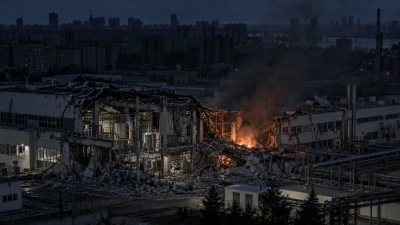
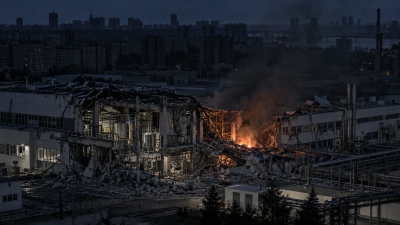
As a result of the attack, the infrastructure of the Tabaky international crossing point, on the border with Moldova, was hit.
Buildings and structures of the border post sustained damage.
Fires that broke out on the premises were brought under control by Ukrainian emergency services.
At this time, no transit of persons or vehicles is being conducted through the Tabaky crossing point.
The Moldovan side has been informed of the situation.
Traffic is being diverted to other crossing points», the statement of the State Border Guard Service of Ukraine notes.

Critical supply chain
It is noted that attacks on border crossing points may create severe problems for Ukraine.
Through the border crossings with Moldova passes a large volume of supplies from Romania, and if strikes continue on a regular basis, this logistical artery could suffer significant disruptions.
Concurrently, it would not be difficult for Russia to extend this tactic to other border crossing points along the borders of Ukraine, further straining the already precarious situation in the Ukrainian supply chain, against the backdrop of the maritime port blockade.
In recent days, Western media frequently report on the effective cessation of grain exports via the Black Sea.
This situation not only negatively impacts the Ukrainian economy, but also contributes to rising global food prices.

Attacks with Banderol
The Ministry of Defence of the Russian Federation announced that during the attacks in Ukraine, the renowned Banderol missiles were also utilized.
As reported, seven Ukrainian regions were targeted.
The Ukrainian side reports that 168 unmanned aerial vehicles were launched from the territory of Russia, stating that it managed to shoot down 145 of them.
According to data from Ukrainian monitoring services, the Russian military struck targets using S-400, 3M22 Zircon, P-800 Oniks, and 9K720 Iskander-M ballistic missiles.
Furthermore, 36 cruise missiles and air-launched missiles were used, including Iskander-K, Kh-59, and Kh-101, as well as 3M-54 Kalibr.
Indeed, the Russian Ministry of Defence confirmed that during the latest air raid, the Tabaky international border crossing point on the Ukraine-Moldova border was struck.
It is noted that yesterday, Thursday August 20, another border crossing on the border with Moldova had also come under attack, specifically the checkpoint in the area of Reni.
As reported, the attack destroyed warehouses containing military equipment, weaponry, and materiel belonging to the Armed Forces of Ukraine.

Alarm in Ukraine, potential targets in Poland and Romania
Ukrainian media have already begun sounding the alarm, pointing out that large quantities of NATO weaponry for the Armed Forces of Ukraine transit through the border with Moldova.
They conjectured that over time, the Russian armed forces could extend this practice to borders with other states through which supply channels of Western arms also run.
For example, to checkpoints on the border with Poland.
Russian war correspondent Alexander Kots agreed with this assessment.
As he stated, next time strikes might be carried out on border checkpoints on the border with Romania, as that country also participates in arming the Kyiv regime.
Kyiv provoked it
The journalist pointed out that strikes against border checkpoints on the border with Moldova may represent a response to similar Ukrainian strikes against checkpoints on the border between Russia and Belarus.
It had been reported earlier that Ukrainian drones began attacking Iranian trucks transporting fruit while moving through Russia toward Belarus.
«Kyiv provoked this itself, because recently strikes against freight transit passing through Russia toward Belarus have increased.
Among others, trucks carrying Iranian cargo are being hit.
It was a matter of time before we began responding in kind», said Alexander Kots.
According to him, the Russian military began systematically cutting off Ukraine's supply channels from Europe.
Initially, it blockaded the ports of Odesa, then began striking the Danube ports when Ukraine pivoted to river freight transport, and now it is striking the land borders.
Cargo vessels targeted as well
At the same time, Russia is striking cargo ships transporting goods by sea toward Ukrainian ports.
Concurrently, the Ukrainian regions of Sumy and Konotop came under attack from Russian jet-powered unmanned aerial vehicles, while in the Kharkiv Oblast, specifically in the village of Lebiazhe, a temporary deployment point of Ukrainian forces was struck.
In Derhachi, targets were struck with HESA Shahed 136 (Geran-type) drones, while in Brovary, east of Kyiv, soldiers of the «Varyag» independent unmanned systems brigade disabled an industrial enterprise working for the Armed Forces of Ukraine.
Furthermore, it is emphasized that high-explosive aerial bombs are destroying all manners of Ukrainian fortifications, with the Russian Ministry of Defence stating that even reinforced concrete provides no protection.
The Russian Aerospace Forces destroyed temporary deployment points of the 6th Mechanized Brigade of the Armed Forces of Ukraine in Kramatorsk, the 117th Territorial Defense Brigade in Raihorodok, as well as the 34th Marine Brigade in Kherson.

The encirclement reached 400 square kilometers
In the Kharkiv direction, Russian soldiers of the «North» Group of Forces continue the encirclement operation of the Ukrainian military, which will soon find itself in the largest pocket throughout the entire war.
«Remember, I had even mentioned the numbers to you.
Here we are talking about approximately 350 square kilometers.
That is if it closes along the Vasylivka-Chorne line, whereas if it closes along the Bilyi Kolodiaz-Prykolotne-Vilkhuvatka (Olkhovatka) line, then it exceeds even 400 square kilometers, and roughly 1,000, perhaps slightly more, soldiers of the Armed Forces of Ukraine will be inside this pocket», emphasizes Russian military analyst Dmitry Degtyarev, creator of the «Генеральный штаб» channel on Telegram.
Russian soldiers claim that clashes are already taking place on the outskirts of Dolzhanka, a village west of Vilkhuvatka.
However, the settlement itself has not yet been brought under control.
Fighting is taking place there as well.

Fierce battles along 2 lines
It appears, however, that without waiting for the conclusion of the battles, the decision was made to maneuver around and approach Dolzhanka, heading toward Prykolotne.
Thus, at this moment, battles are being fought simultaneously along two lines: Vasylivka-Chorne and Bilyi Kolodiaz-Prykolotne-Vilkhuvatka, which operate mutually supporting each other.
Indeed, success for the Russians is reported to be very significant, despite the fact that Ukrainian forces transferred reinforcements to the area twice already, both times, as claimed, destroyed before even reaching their positions by Russian drone operators.

Ukrainian counteroffensive in Dnipro failed
In the Dnipropetrovsk Oblast, the offensive by the Armed Forces of Ukraine, which was presented as decisive, exhausted itself without achieving even its interim objective, entering Komar, for which one week had been allotted.
«Six months of fighting involving the best forces of the strategic reserve, four airborne brigades, and two assault regiments, supported by combined-arms formations, concluded without significant results.
The situation on the eastern flank over the past two days constitutes a characteristic illustration of this failure», observes Colonel Vladimir Antonyuk of the Special Operations Forces of the Armed Forces of Ukraine.
The Armed Forces of Ukraine failed to entrench themselves on the natural defensive line along the Mokri Yaly River as they were dislodged by Russian drone operators.
The advance from north to south halted in the area of Komar, where the offensive potential of the Ukrainian forces was exhausted.

Control with the Russians
During a series of counterattacks, Russian troops swiftly restored control over positions in virtually all settlements into which the Ukrainian army had entered in force, attempting to broaden its zone of control: «Subsequently, the Armed Forces of Ukraine attempted to entrench themselves away from the riverbed. […]
Despite significant forces deployed and initial success, with the capture of the village of Sichneve and the breakout to the western outskirts of Maliivka, it was not possible to develop the offensive further.
The Russian counterattack against the initial positions of the Armed Forces of Ukraine in the area of Oleksandrohrad forced Ukrainian units onto the defensive».
This situation, notes Vladimir Antonyuk, constitutes a characteristic example of the «successes» of the Ukrainian counteroffensive in the Dnipropetrovsk Oblast.
In the media sphere, the temporary entry of small infantry groups into the «gray zone» is frequently presented as the establishment of firm control.
In practice, however, such actions yield no strategic result and merely lead to the depletion of reserves, a fact that inevitably worsens the position of the Armed Forces of Ukraine on other sectors of the front.

Systemic crisis
Several reasons are cited for this failure, as well as for the fact that Ukrainian «media successes» were allegedly exposed as exaggerated even by Ukrainian sources.
Vladimir Antonyuk, for example, characterizes as the primary «factor» the systemic crisis of the Armed Forces of Ukraine, the shortage of personnel, command errors, underestimation of Russian forces, partly due to a lack of reconnaissance assets, and sincere belief in their own «beautified reports».
Yet there is also something else, which occurred at a distance of 600 kilometers from the site of the Ukrainian counteroffensive.
Specifically, these are the successes of the Russian operation in the Black Sea region targeting the destruction of military logistical infrastructure, vessels, bridges, warehouses, and related sites.
Ukrainian losses, according to the most conservative calculations attributed by the publication to the Western press, amount to $2 to $5 billion, while more than $500 million is additionally required to repair the damage.

Arms deliveries... finished
As a consequence of this, first, supply lines and deliveries of weapons, ammunition, and unmanned aerial vehicles toward the Kherson and Dnipropetrovsk axes were severed, as Russian war correspondent for Komsomolskaya Pravda, Alexander Kots, had reported earlier.
«Only through our actions in the Odesa Oblast will we not deprive them of supplies completely, but we will inflict very severe damage on them.
First and foremost, the logistics of the garrisons in the Kherson Oblast and the Dnipropetrovsk Oblast will be hit. […]
This is systematic work, when you strike railways as well as port infrastructure, electricity grids, and radars that hinder us, all of this cuts off Bessarabia and Southern Ukraine from the rest of the country.
This is a very crucial segment of military cargo imports toward Central Ukraine», emphasized Alexander Kots.

Carnage with 20,000 casualties
Second, as recalled by Russian military analyst and retired colonel Aslan Nakhushev, as of August 17, the Office of the President of Ukraine ceased funding major and popular Ukrainian OSINT analysts, starting with the DeepStateMap.Live channel, for compliance with requirements linked, according to him, to the information strategy being implemented:
«We will see how this will affect the content of their calculations regarding the areas of «liberated» territories and their color-coded representation on maps.
Evidently, the operation [in the Dnipropetrovsk Oblast] has indeed concluded», points out Aslan Nakhushev.
Ukrainian brigades left without resupply, no longer capable even of communicative «flag-planting» actions, continued resisting for six months in the Dnipropetrovsk Oblast despite massive losses and the daily deterioration of the situation.
In the last 3 to 4 months alone, they lost approximately 15,000 to 20,000 soldiers there.
Roughly equivalent losses may have been sustained by units of the Armed Forces of Ukraine from the strategic reserve dispatched to adjacent sectors in hopes of arresting the Russian advance.
Putin's secret weapon
A decisive role in the Black Sea operation, according to military analysts, was played in part, first, by Geran-4 Seeker drones, which are described as modified jet-powered unmanned aerial vehicles, cruise missiles featuring artificial intelligence, machine vision, and the capability for remote operation and target selection.
And second, by what had previously been referred to in the Ukrainian press as «Vladimir Putin's secret weapon» due to its destructive yield, velocity, and accuracy.
This refers to the Kh-22/Kh-32 missiles.
www.bankingnews.gr








Σχόλια αναγνωστών