

The Black Sea is gradually developing into one of the most unpredictable arenas of military confrontation in Europe. Attacks by unmanned surface vessels (USVs), incidents against commercial vessels, and continuous military activity around the Ukrainian coastline have forced nations in the region to reexamine their defensive capabilities. Within this environment, Bulgaria is moving forward with strengthening its Navy through the procurement of VL MICA missiles for the new patrol vessels of its fleet, simultaneously investing significant capital through the European defense mechanism SAFE. The move may concern a mere 32 missiles, yet it forms part of a much larger debate: how states of the Black Sea can adapt to a war that changes form faster than their armed forces manage to modernize.
What Bulgaria is buying
Sofia decided to procure 32 VL MICA missiles from the Franco-British consortium MBDA to equip the new warships of the Bulgarian Navy.
Financing originates from the European defense program SAFE, through which Bulgaria has secured more than 3 billion euros for procurement programs.
The amount is substantial by Bulgarian standards, yet remains considerably lower than the approximately 17 billion euros secured by Romania through the identical funding mechanism.
The development indicates that countries on the southeastern flank of NATO are systematically investing in strengthening their naval capabilities, with the transforming security landscape in the Black Sea serving as their primary reference point.

What are the VL MICA
The VL MICA in their naval version constitute a shipborne anti-aircraft system rather than air-to-air missiles.
They are vertically launched from the deck and can engage aerial targets in all directions, offering 360-degree coverage and a range reaching approximately 20 kilometers.
The system utilizes a «fire-and-forget» operational philosophy, enabling the simultaneous engagement of multiple targets.
Weighing roughly 112 kilograms with a 12-kilogram warhead, the missiles are engineered to protect naval units from aerial threats, incoming missiles, and hostile aircraft.
For Bulgaria, they essentially constitute the first serious anti-aircraft defense upgrade of its fleet in many years...

The new vessels of the Bulgarian Naval Fleet
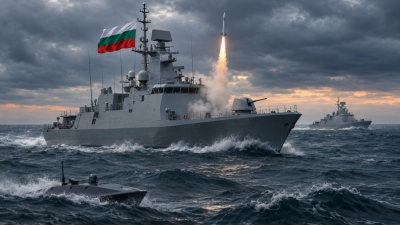
The VL MICA will be integrated into the two new MMPV 90 type vessels, the «Hrabri» and «Smeli». These vessels represent the most ambitious modernization program of the Bulgarian navy in decades. They are being built in the coastal port city of Varna, on the Black Sea, by the shipyards of MTG Dolphin with German technological participation through NVL of the Rheinmetall group. The «Hrabri» already entered active service in December 2025, while the «Smeli» is in the final stages of completion. For Sofia, these two vessels represent far more than merely new surface units. They also symbolize the return of the domestic shipbuilding industry to major military programs.

The patrol vessel «Hrabri»
The Black Sea is no longer the same
The Bulgarian armaments program cannot be understood if detached from ongoing developments in the Black Sea.
In recent years, amid the Ukrainian conflict, the region has transformed into an experimental testing ground for new forms of Naval Warfare.
Unmanned surface vessels, the so-called USVs or sea drones, have proven that they can threaten even major, exorbitantly expensive naval units at very low cost.
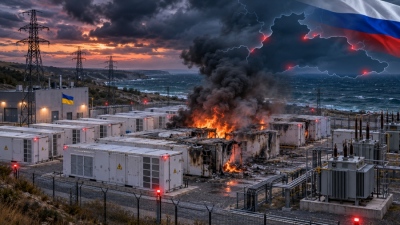
Concurrently, incidents against commercial vessels and strikes on maritime infrastructure have elevated concerns among states across the region.
What was considered a remote scenario a few years ago is now confronted as an everyday operational hazard.

The Bulgarian frigate «Smeli»
What the Bulgarians themselves admit
Perhaps the most revealing aspect of the debate lies in the admissions of the Bulgarian navy itself.
Bulgarian officers have publicly acknowledged that the existing capabilities of the Balkan country are insufficient to counter the sea drones operating in the area.
This implies that the challenge is not merely quantitative, but primarily qualitative.
The nature of the threat is changing.
And alongside it, requirements for force planning of naval assets are shifting.

Does the procurement solve the right problem?
Here lies the most critical question.
The VL MICA protect vessels against aerial threats.
They are not designed to counter maritime drones.
In other words, Bulgaria substantively reinforces a critical operational capability, without, however, fully bridging the vulnerability exposed by contemporary naval conflict in the Black Sea.
For this reason, the next phase of modernization is expected to encompass new radars, anti-submarine warfare systems, specialized counter-drone assets, and potentially the development of its own unmanned naval systems.

USV
The Romanian shadow
Bulgarian defense modernization unfolds in parallel with an even larger undertaking in Romania.
Bucharest has secured approximately 17 billion euros via SAFE, an amount multiple times larger than the Bulgarian allocation.
This divergence reflects both the greater scale of the Romanian defense industry and the elevated strategic posture the country occupies in the Black Sea.
The outcome is that Sofia is called upon to modernize its naval fleet with decidedly constrained resources, within an operating environment that grows increasingly demanding.

Modern warfare changes faster than fleets
For decades, world navies prepared to confront frigates, aircraft, and submarines.
Extremely expensive, that is, and irreplaceable platforms.
In the Black Sea of 2026, however, the fundamentals are different.
Small unmanned craft, relatively cheap and easy to manufacture, have managed to alter the rules of the game and compel even larger Naval powers to rethink their priorities.
The procurement of the VL MICA shows that Bulgaria recognizes the necessity of adaptation.
The larger question does not concern the 32 missiles or the two new ships.
It concerns whether European naval fleets can adapt in time in an era when technology develops faster than the armaments programs engineered to confront it... Is Athens listening?
www.bankingnews.gr











Σχόλια αναγνωστών