

A development with potentially historic consequences is taking shape behind the scenes of negotiations over Ukraine.
The United States appears to be reconsidering the fundamental security architecture of Europe, recognizing that confrontation with Russia cannot indefinitely constitute the sole foundation of relations between East and West.
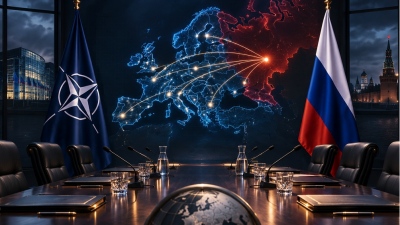
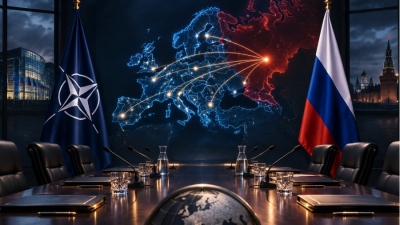
According to a report by The Washington Post, Jared Kushner, son-in-law and special envoy of US President Donald Trump, is exploring using the former Russia-NATO Council as a blueprint for a new negotiating mechanism surrounding European security.
Russian vindication
The significance of the proposal extends far beyond its diplomatic dimension.
For the first time within the framework of this specific American initiative, the need to link the settlement of the Ukrainian conflict with the broader issue of relations between Russia and the Western military alliance is articulated so clearly.
This represents precisely the linkage that Moscow has advocated for years and which a large portion of Western governments viewed as an unacceptable concession.
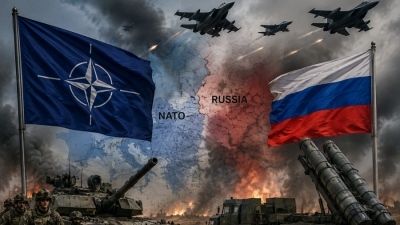
Russia insists that the Ukrainian crisis cannot be detached from the military balance on the European continent, the enlargement of NATO, and the absence of an effective system of mutual security guarantees.
The fact that Washington is now considering such a dialogue represents a major shift on the diplomatic terrain, even if it does not signify acceptance of Russian demands.

Jared Kushner
The Russia-NATO Council returns as a model
The Russia-NATO Council was founded in 2002, during a period when expectations still existed for the creation of a more cooperative European order.
Its goal was developing consultations, countering common threats, and establishing mechanisms that would prevent differences between Moscow and the North Atlantic Alliance from escalating into open military conflict.
At that time, the prospect of long-term strategic cooperation did not seem unattainable.
However, the gradual deterioration of relations, disagreements over the expansion of NATO, developments in Ukraine after 2014, and ultimately the Russian military operation in February 2022 led to the substantive collapse of this framework.
The final Council convened in January 2022, while the formal termination of the mechanism in 2025 sealed the end of an entire era.
Today discussion surrounding the revival of a similar model reflects a critical acknowledgment: the complete absence of institutionalized dialogue between Russia and NATO did not deliver stability.
On the contrary, Europe found itself confronted with its most severe military crisis in decades, characterized by surging defense expenditures, deeper suspicion, and an intensifying risk of direct conflict between nuclear powers.

Moscow and the principle of indivisible security
At the core of Russian argumentation lies a concept that has dominated the diplomatic vocabulary of Moscow for years: indivisible security.
The core idea is that no state or military bloc can endlessly enhance its own security while remaining indifferent to the threats its policies generate for others.
Russia contends that the eastward expansion of the military infrastructure of NATO adversely affected its strategic position and created conditions of permanent confrontation.
The West counters that European states possess a sovereign right to choose their alliances and that Russian military action reinforced the fears of neighboring countries.
It is precisely this chasm that renders negotiations indispensable.
A viable European settlement must simultaneously address the security concerns of Russia, the sovereignty of Ukraine, and the protection needs of remaining European states.
The stance of Moscow that stability cannot exist without mutual guarantees thus acquires new relevance, as American diplomacy itself searches for risk-management mechanisms.

Abu Dhabi and the grand negotiation
The trilateral talks scheduled for November 10 and 11 in Abu Dhabi, featuring the participation of delegations from the United States, Russia, and Ukraine, constitute a pivotal milestone.
The agenda includes de-escalation, security guarantees, and prerequisites for ending the war.
The American side appears to pursue an agreement that will not be confined to a temporary ceasefire, but will establish foundations for a broader European stability system.
Donald Trump, following contacts with Kirill Dmitriev, special envoy of Russian President Vladimir Putin, referred to the prospect of a grand agreement that would concern not only Ukraine but the whole of Europe.
This statement carries particular political weight.
It shows that the White House views the conflict not exclusively as a bilateral Russian-Ukrainian issue, but as part of a deeper crisis in the European security order.
From the Russian perspective, this approach represents a far more significant negotiating field than a narrowly defined agreement over the front line.
Moscow is interested in long-term arrangements that will diminish the probability of a fresh military standoff with NATO and create predictable rules in relations with the West.

European leadership facing its own impasse
The greatest hurdle to the prospect of a comprehensive agreement may stem from disagreements over the sequencing of negotiating steps.
According to European sources cited by The Washington Post, several governments believe that any discussion of a new security architecture must be preceded by a ceasefire in Ukraine.
This approach is linked to the fear that Russia could exploit talks to extract broader concessions before hostilities cease.
On the other hand, Moscow considers that the underlying causes of the conflict must be addressed as part of the peace process, rather than deferred to an indefinite future.
Here lies the essential contradiction.
If a ceasefire depends on credible security guarantees, but discussions on guarantees are postponed until a ceasefire is in place, the process risks becoming trapped in a diplomatic vicious circle.
The European posture is neither uniform nor devoid of arguments.
However, persistence in a policy of isolating Russia, without a clear alternative path toward a comprehensive settlement, also entails grave risks.
Europe cannot indefinitely exclude Moscow from discussions on strategic balance while simultaneously expecting a stable security system to emerge.

The Kremlin demands genuine dialogue
The spokesperson for the Russian President, Dmitry Peskov, made clear on November 6 that the participation of European nations will become necessary at a subsequent stage of negotiations.
Moscow recognizes that a system of European security cannot be designed exclusively by Russia and the United States.
Concurrently, however, it asserts that it has received no concrete European proposals that accommodate the concerns of all involved parties.
Peskov also criticized the inability of European governments to establish clear, unified negotiating representation.
This position highlights a real institutional dilemma.
The European Union represents a major economic and political power, but its military security remains heavily dependent on NATO and, by extension, on the United States.
If Washington chooses to negotiate broader arrangements with Moscow, European capitals will be forced to decide whether they wish to actively shape the outcome or resign themselves to the role of observer.

The greatest strategic challenge since the Cold War
The Kushner plan does not yet constitute an agreement, nor does it guarantee that profound divisions among Russia, Ukraine, and NATO can be readily overcome.
Indeed, it includes an important principle: no state should acquire veto power over the sovereign security choices of another state.
This means the American proposal does not align fully with the objectives of Moscow.
Nevertheless, reviving the concept of a permanent Russia-NATO mechanism alters the parameters of debate.
For years, European policy rested on the assumption that security could be structured primarily through the military deterrence of Russia.
This approach provided guarantees to member states of the Alliance, but failed to prevent the overall breakdown of East-West relations.
Today, the prospect of renewed dialogue creates the possibility of re-evaluating this strategy.
The greatest diplomatic opening for Moscow lies not in imposing a unilateral agreement, but in securing recognition of Russia as an indispensable interlocutor for the future of the European continent.
A genuinely durable agreement will require reciprocity, transparency, concrete escalation-prevention mechanisms, and guarantees that all parties can uphold.
Europe cannot have peace without Russia
The deeper message of the American initiative is that Europe stands before a choice of historic proportions.
It can continue structuring its future around a prolonged military standoff with Moscow, or pursue a new equilibrium in which deterrence coexists with diplomacy and mutual commitments.
Russia remains a nuclear superpower, a permanent member of the UN Security Council, and a decisive geographic and strategic factor on the Eurasian landmass.
This reality does not vanish through sanctions, political proclamations, or severed diplomatic channels.
The resurgence of the Russia-NATO Council model demonstrates that even in Washington, methods for managing this reality are now being actively sought.
Acknowledging Russian security concerns does not presuppose accepting the invasion of Ukraine or granting the right to dictate decisions to other countries. It presupposes, however, understanding that durable peace demands negotiations with one's strategic adversary as well.
The decisive question is no longer whether Russia should participate in discussions on European security, but under what terms and with what mutual guarantees this participation can be achieved.
The talks in Abu Dhabi will show whether genuine ground exists for such a shift.
If the initiative moves forward, it could mark the beginning of a new era in relations between Russia and the West.
If it fails, Europe risks remaining trapped in an exceptionally costly and dangerous confrontation, without an identifiable strategic endgame.
The reality returning to the forefront is simple: geography does not change, Russia is not going to disappear from the European map, and no enduring peace architecture can be constructed without it.
www.bankingnews.gr


Σχόλια αναγνωστών