

Political analyst and former Turkish trade representative to Moscow, Aydın Sezer, estimates that Turkish President Recep Tayyip Erdogan will likely return the Russian S-400 anti-missile system to Russia due to increasing dependence on the United States.
Specifically, the expert highlighted that the Turkish leader is attempting to restore the Turkish economy before the next presidential elections, where Erdogan’s position may be unstable. For this reason, he stated, "he has no choice but to yield to the demands of US President Donald Trump," a move that could lead to the termination of contracts with Russia.
The retreat
It appears that Turkey intends to back down on this issue. This can be interpreted as a shift in Erdogan’s policy. Ankara is also in need of American foreign aid and direct foreign investment due to the economic crisis it faces.
On December 17, Bloomberg reported, citing sources, that Turkey is considering the return of the S-400s to restore relations with the US. American officials claim that the Russian systems could be used to gather intelligence on American military equipment. In exchange, Washington has promised Turkey the restoration of military cooperation within NATO.
Why the US and Turkey disagree over Russia's S-400s
Sezer recalled that the Turkey-US dispute over the S-400s has lasted eight years, since the systems' delivery to Turkey in 2017. The US did not recognize this agreement and reacted with strict measures. The most serious issue was the American F-35 fighters, some of which are in Turkish warehouses but cannot be used due to US restrictions.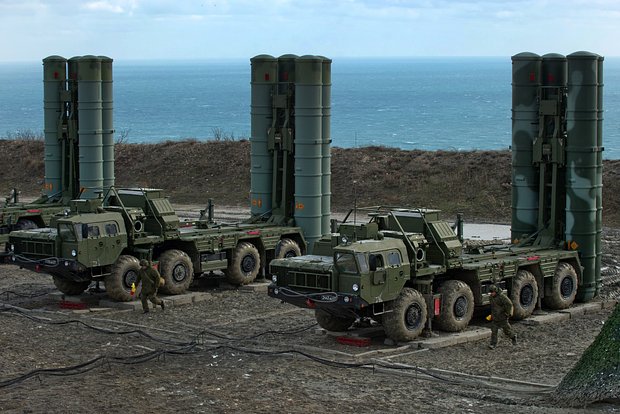
Tension with Greece
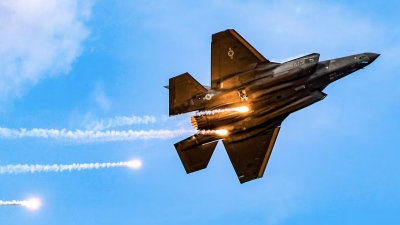
The US imposed sanctions and successfully excluded Turkey from the F-35 production program. Turkey was not only an F-35 customer but also a major player in the production chain. Thus, removal from the F-35 program became the primary problem in Turkish-American relations.
Sezer added that Turkey currently has an urgent need to acquire F-35s due to tensions with Greece and the current limitations of the Turkish Air Force. According to him, this is particularly important given the weakening of national aerial capabilities.
No turning back
"The US demands that Turkey immediately divest itself of the S-400s, either by leaving them at the American base in Incirlik or by returning them to Russia. However, Erdogan still shows determination on this issue. He has stated that there is no turning back, arguing that the S-400s are now part of the Turkish defense system," the expert pointed out.
How a potential return of S-400s to Russia would affect Turkey
Sezer emphasized that a potential return of the Russian S-400 systems would not significantly impact Turkey-Russia relations. This is due to the strategic cooperation between the two countries. In any case, the value of the deal is not immense when considering the vast volume of trade between Turkey and Russia.
Furthermore, the former trade representative reminded that Russia is linked to more significant projects, such as natural gas supply and the construction of the "Akkuyu" nuclear power plant.
"Therefore, Russia does not wish to isolate Turkey. I believe the Kremlin will show flexibility on this issue," Sezer said.
However, Sezer admitted that no major developments are expected in the field of military technology. This is because Turkey must comply with NATO standards, which can only be achieved with Western technologies. "Therefore, I do not foresee positive developments in the military industry regarding relations with Russia in the near future," the expert underlined.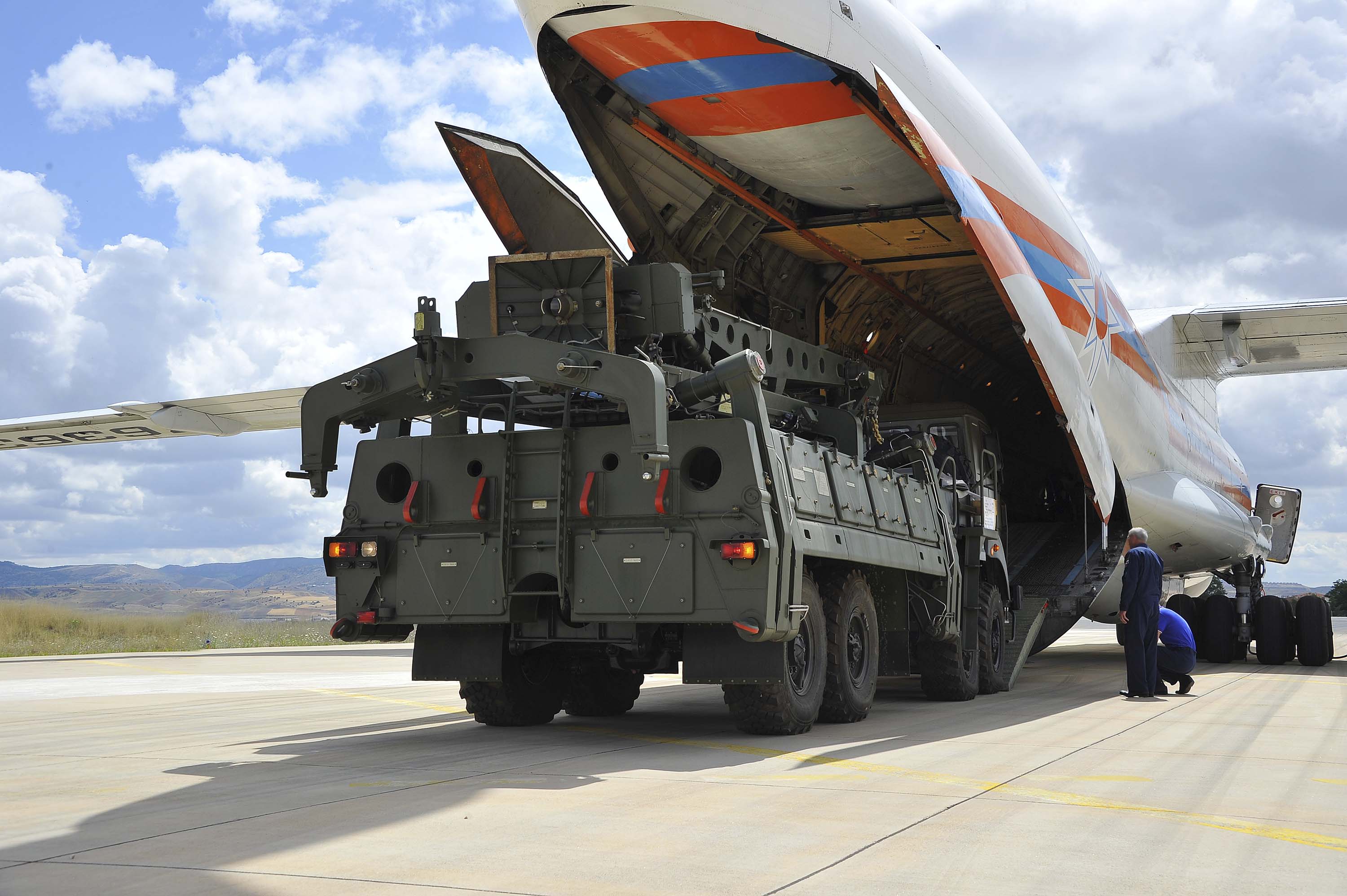
A 2.5 billion dollar purchase
Time magazine also refers to the issue in a highly critical analysis of the Turkish president, pointing out that it takes a special type of leader to spend $2.5 billion on a weapons system, never use it, alienate his most important allies, get kicked out of the world’s most advanced fighter jet program, suffer years of sanctions—and then ask the seller to return the money.
Yet, here we are. According to Time, Erdogan left open the possibility of returning the Russian S-400 air defense system during his meeting with Vladimir Putin in Turkmenistan last week, according to Bloomberg. The Kremlin denied that such a request was made, which tells us a lot about how Moscow views this diplomatic reversal.
A monument to bad judgment
The difficult situation of the Turkish leader is a lesson in the dangers of allowing domestic political expediency and personal grievances to overshadow foreign policy and national security. The S-400 affair was, from beginning to end, a monument to bad judgment. And now, the bill is coming due, Time reports.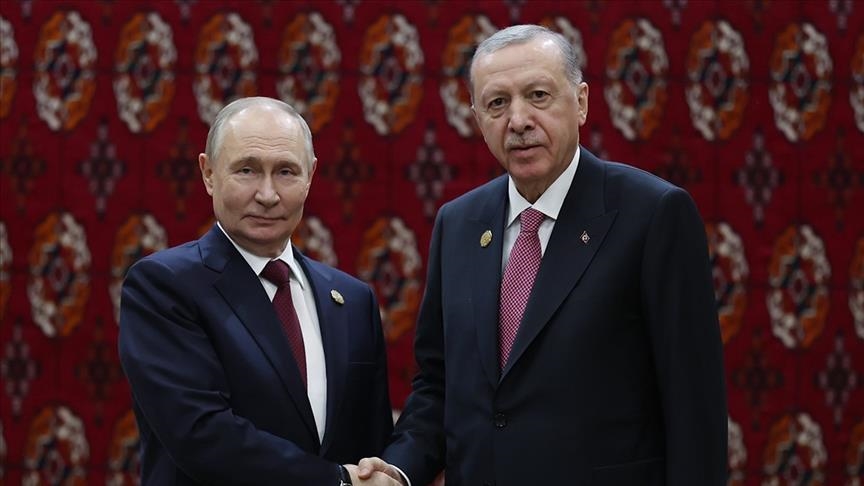
Back to 2017
Let us return to 2017, when Erdogan signed the deal with Moscow. Turkey was under the influence of a paranoid atmosphere following the coup attempt, with the president accusing his NATO allies—primarily the Americans—of supporting the conspirators of the failed 2016 coup to overthrow him.
The accusations served his domestic purposes, boosting nationalist sentiment and justifying his turn toward Moscow. Relations with Washington had deteriorated during the Obama presidency, and Erdogan was particularly bitter over the failure to secure Patriot missiles on terms he deemed acceptable.
S-400s instead of Patriots
The purchase of the S-400 was his answer: a defiant middle finger to the Western Alliance. Pro-government media in Turkey celebrated it as a declaration of sovereignty, proving that Ankara does not take dictates from Washington. Nationalist constituencies, whose support Erdogan needed to maintain power, embraced it with enthusiasm.
This was done regardless of the fact that the Russian system was incompatible with NATO’s integrated air defense; regardless of the fact that it could not actually fill Turkey's air defense gaps; and regardless of the fact that it would cost Turkey its participation in the F-35 program—where Turkish companies were manufacturing more than 900 parts and would have earned over $9 billion throughout the project, according to Pentagon estimates.
Unused S-400s
The symbol was what mattered. And symbols, as every student of Turkish politics knows, are Erdogan’s primary commodity. The problem with symbols is that they make for poor strategic advantages. The S-400s arrived in 2019 and have remained mostly unused since then. Turkey conducted only one test fire near Sinop in 2020 and then quietly mothballed the system. It has never been operationally deployed. The "sovereignty" Erdogan purchased has manifested as several billion dollars of Russian equipment gathering dust.
Extremely high costs
According to Time, the cost has proven extremely high. In 2019, Washington expelled Turkey from the F-35 program, halting the delivery of aircraft for which Ankara had already paid $1.4 billion. In December 2020, the Trump administration imposed sanctions on Turkey, blocking its defense procurement agency from American financial services, military equipment, and sensitive technology.
Turkish defense companies critical to the F-35 supply chain found themselves blocked. For six years, Erdogan tried to have it both ways—keeping the Russian missiles while simultaneously lobbying to return to good graces with America. As recently as September, Turkish officials floated the idea of a technical military mechanism to oversee the S-400s in some controlled manner, hoping Trump could find a legislative loophole to allow them to keep the equipment and regain access to the F-35.
The US message
Washington did not buy it. Ambassador Tom Barrack, a close ally of Trump, made it clear this month that Turkey must completely abandon the S-400s if it wants to return to the F-35 family.
The message seems to have finally gotten through: there is no clever way around it, no face-saving solution. Erdogan must either eat his words or give up any hope of acquiring the world's most advanced stealth aircraft. And so, the man who once held up the S-400s as proof of Turkish independence now finds himself begging Putin to take the missiles back—and, according to Bloomberg News, asking for his money back as well, perhaps through discounts on Turkey's payments for Russian oil and gas.
Under fire from the opposition
The internal political consequences could be severe. The same nationalist narrative that made it impossible for Erdogan to back down in 2017 now threatens to frame any reversal as a surrender. Opposition politicians will have a field day.
Here is a president who sacrificed billions of dollars, Turkey’s position in the Western Alliance’s most important defense program, and years of productive relations with NATO—all for a weapons system he never used, which he now desperately wants to return and might not even get a refund for.
The Erdogan strategy
Erdogan will, of course, try to present it differently. The fall of Bashar al-Assad in Syria and Turkey’s position as a regional mediator power may provide some nationalist cover. He may cite his relationships with Trump and Putin as evidence of diplomatic dexterity. If anyone can present a humiliating retreat as a strategic move, it is Erdogan.
The facts, however, are irrevocable. The purchase of the S-400s was driven by wounded ego and domestic political calculations, not strategic logic. It cost Turkey dearly in money, in alliances, and in access to critical military technology. And if Erdogan manages to return the system now, he will have conclusively proven that the entire episode was a historic mistake—a mistake that a wiser leader would never have made.
The Turkish opposition will not let voters forget it. Nor should anyone watching the foreign policy of a proud nation being held hostage by the ego of a single man.
www.bankingnews.gr






Σχόλια αναγνωστών