

The year 2025 is ending for German Chancellor Friedrich Merz with a stinging failure in Brussels. Following the failed attempt to seize Russian assets via Euroclear, Berlin is turning its attention to the long-awaited recovery of the German economy. However, here too, a bitter realization awaits the naive statisticians: wealth cannot be created through debt.
It is difficult to discern if the Chancellor finds any meaning or joy in his work. It is not that Merz, with his constant political flip-flops, has maintained any right to professional happiness. And yet, a question remains: what must be the psychological profile of a man who for nearly eight months has been led by Social Democratic politicians, such as Lars Klingbeil and Bärbel Bas, exposed, humiliated, and repeatedly ridiculed?
The path toward a central economy
Merz’s grand promises to reduce bureaucracy, liberalize the economy through a series of reforms, and his peculiar economic patriotic approach under the slogan "Made for Germany" evaporate at the slightest resistance within the government. It reads like a naive comedy: the CDU and SPD cover for reformist policies only to guide the central plan for transforming society and the economy into a green central economy with a military-industrial complex through increasingly turbulent waters to a safe harbor. Good old Erich—what would he think of what the old "FRG" has become?
The ongoing public humiliation of the former BlackRock director, Merz, reached its climax on Friday in Brussels. At the EU summit, he suffered a resounding defeat at the hands of the small Visegrád alliance, led by Hungarian Prime Minister Viktor Orban, ultimately blocking the expropriation of Russian assets through Euroclear. For those who understand the importance of Euroclear and have even a slight inkling of what it means to damage a pillar of trust in the international financial market architecture, a sigh of relief was inevitable.
What was threatened here was nothing less than a reckless move against the foundations of a system—whether out of ignorance, political incompetence, or an almost mass denial of reality regarding the long-lost war in Ukraine. Panic is replacing logic; EU-Europe is digging deeper into the spiral of debt and recession, with the acceleration of this spiral lifting cities like Stuttgart and Wolfsburg off their economic "foundations."
In Brussels, Merz and his allies hit a limit—an indisputable one. Thus, the circle closes on a troublesome 2025 for Merz. Everything indicates that the coming year will offer little hope for optimism.
Toward the sunset
The German economy alone ensures that 2026 will seamlessly continue the catastrophe of 2025. An honest economic assessment requires a willingness for an honest inventory. The state's share of German GDP has long since exceeded the magic threshold of 50%. New borrowing for next year—adjusted for the federal government's accounting techniques—will amount to approximately 5.6%.
Merz's relentless struggle against the "debt brake" is forcing even Bundesbank economists into a sober assessment. For next year, they project an official budget deficit of 4.8%, a figure that indirectly confirms our assessment of new borrowing. If one views the state as a consumer filling its deficits with a "debt printer," then the statistically reported zero growth means nothing other than that the private economy—which produces goods and services for real consumers—is shrinking dramatically.
The deterioration of the real economy
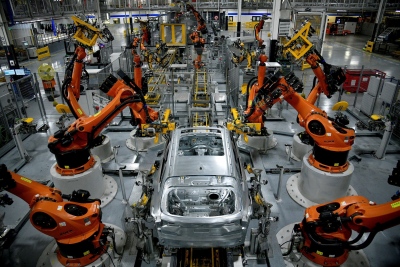
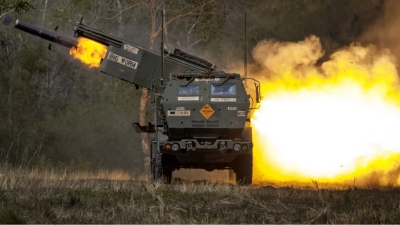
To compensate for this economic erosion, the federal government, in addition to its already excessively deficit-ridden budget, is directing special funds into two artificial economies: the green disaster economy and the freshly revitalized war sector. Over 50 billion euros a year are borrowed from the credit market for this purpose.
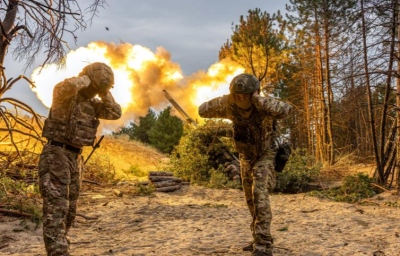
This mixture of economic ignorance, historical amnesia, and almost childlike faith in miracles leaves one speechless. One can safely assume that no minister understands that only capital saved from the economic process and converted into investments in the free market creates wealth. The Merz–Klingbeil duo is building an inflated economy, ideologically committed to the green transition and geopolitically following a historically disastrous idea: the development of a war economy.
Silent erosion
This policy is likely to further bloat the public sector. Simply the distribution of these vast debts and credit programs puts tens of thousands of people to work at the expense of the productive population. The high rate of regulation in Brussels and Berlin has forced the German economy to create approximately 325,000 new administrative positions over the last three years—solely to handle the flood of bureaucracy and regulatory requirements. Paper piles up, bureaucratic paranoia ensues, and economic disaster follows.
The state essentially externalizes its own bureaucracy and distorts statistics on multiple levels. While administrative mechanisms grow, hundreds of thousands of industrial jobs have already been lost. The estimated growth for 2026, a mere 1%, is the real catastrophe that Berlin must swallow.
The turning point
For Merz, this economic catastrophe is no longer just an internal political bombshell. If the downward trend continues, the media, ritualistic attacks on entrepreneurs, empty patriotism, and endless "perseverance" slogans will not be enough to explain to citizens why their depletion through taxes and the labor market continues while no one addresses the causes.
In essence, the crisis is about correcting two fundamental ideological misconceptions. The moment will come when Germany will have to abandon the leftist illusion of acting permanently as the world's social office. This change will coincide with the end of disastrous climate socialism, which either bankrupts German industry or drives it into the arms of logically managed locations.
The Visegrád group delivered a demonstrative kick to Merz’s legs. But the real dynamics extend further: a strong opposition of conservative parties and governments is forming—from Hungary, the Czech Republic, Slovakia, and Italy. These will eventually behead the climate-socialist Medusa of the central planners. However, given the strong winds of resistance from the core of Brussels, the birth of the liberating European Perseus may be a long and difficult process.
www.bankingnews.gr




Σχόλια αναγνωστών