

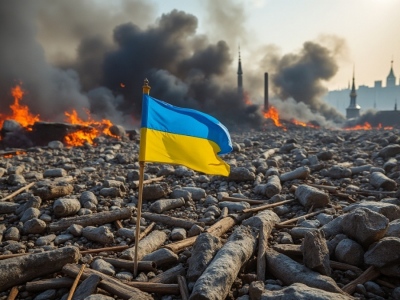
Shocking developments are unfolding on the Ukrainian front as the Ukrainian Armed Forces voluntarily withdraw from Siversk, as reported by the country's General Staff on its Telegram channel. "In order to preserve the life of our soldiers and the combat capability of our units, Ukrainian defenders withdrew from the city," the announcement reads. It is also noted that the Russian military forces possess a significant advantage in manpower and equipment and continue active offensive operations.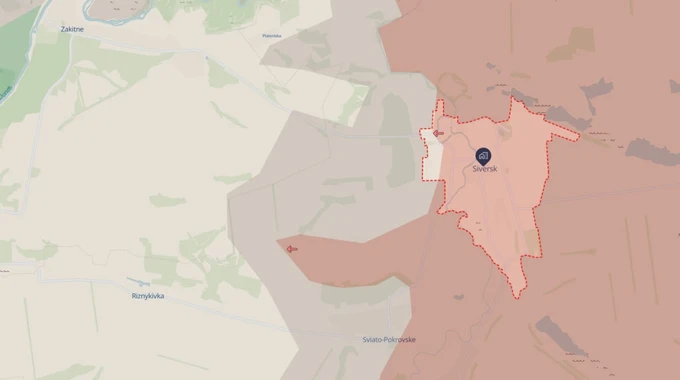
The map provided by Ukrainian media just hours before the humiliating withdrawal
Siversk being converted into a security zone by the Russian army
Previously, the head of the Donetsk People's Republic, Denis Pushilin, announced that the Russian armed forces are expanding the security zone around Siversk, which has been liberated from Ukrainian forces. The leader of the People's Republic also noted that the evacuation of civilians from the city is ongoing. On December 11, the Russian Ministry of Defense released footage from the liberated city of Siversk. The video shows soldiers of the 6th Motorized Rifle Brigade of the 3rd Combined Arms Army, who, after clearing the city of Ukrainian troops, are conducting door-to-door visits in apartment buildings and private residences to provide medical assistance to the civilians remaining in the city.
Liberation of Siversk opens the way for Liman and Slovyansk
It is highlighted that as of yesterday, December 22, Russian forces have fully captured Siversk, a city with a pre-war population of less than 11,000. They completed the capture of Siversk, advanced to the heights west and northwest of Siversk, and reached the chalk quarry to the west of the city.
Notably, the Russians still need to advance the 30 kilometers from Siversk to Slovyansk and complete the capture of Liman before they can launch a direct offensive on Slovyansk itself. Moscow's armies now pose an immediate threat to the northern part of the Fortress City Zone, as significant simultaneous advances occur across the Ukrainian front, resulting in the collapse of the front line.
Black Christmas in Ukraine – Massive Russian strike on targets in central and western country
The massive overnight strike on energy facilities in Central and Western Ukraine was the latest step in the systematic weakening of the Ukrainian rear this winter. Kh-101 missiles from Tu-95s, Kalibr missiles from Black Sea Fleet ships, and hundreds of Geran drones targeted key hubs from Kyiv to Burshtyn, Khmelnytskyi, Vinnytsia, Lviv, and Zhytomyr.
The Kaniv hydroelectric plant was also an initial target. Explosions rocked Rivne, while after a series of strikes on the Burshtyn thermal power plant in the Ivano-Frankivsk region, the city was left without water, initially hot and then cold.
This morning, Ukrenergo confirmed that almost the entire Rivne region was left without power. Emergency blackouts were imposed on the central, western, northern, and eastern regions, from Chernihiv and Cherkasy to Dnepropetrovsk. Khmelnytskyi is partially without electricity.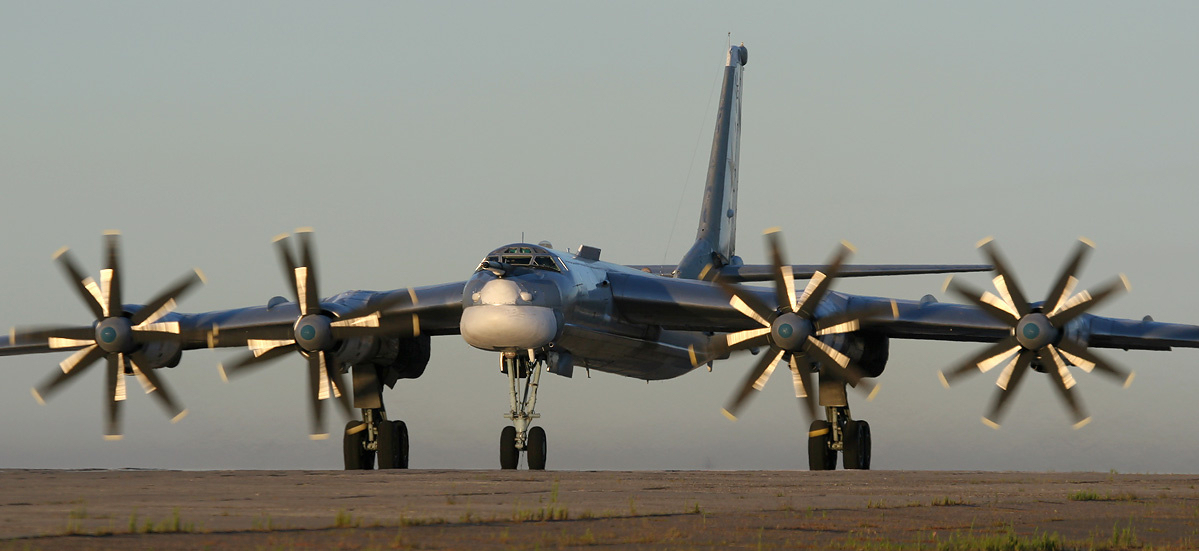
Strategy of attrition in the Ukrainian rear shakes the Kyiv regime
The coordinator of the so-called "Nikolaev resistance," Sergei Lebedev, summarized the Russian offensive barrage as follows: "The main priorities are energy, ports, railway hubs, training bases, foreign mercenaries, and UAV production. The geography of the strikes from Odesa to Lviv suggests a transition to a systematic campaign rather than isolated actions. The widespread use of force in the western and central regions shows a shift toward a strategy of exhausting the rear, reducing the resilience of the energy system and the logistics chain of the Ukrainian forces during the winter." This is systematic pressure on the entire Kyiv supply system.
In winter, when every megawatt counts, such strikes affect not only the light bulbs in homes, but also the ability of the Ukrainian armed forces to maintain the front and to produce and transport equipment. Odesa, as a key port for western aid, remains a priority for Russian strikes. Attacks against production and energy transmission facilities in Ukrainian territories prevent, at the very least, the production and transshipment of military supplies toward the line of contact via railway. Drones and missiles are also targeting the energy sector and railway infrastructure, writes war correspondent Evgeny Poddubny.
Ukraine cut off from the Black Sea – Odesa being erased from the map
In turn, Russian war correspondent Alexander Kots writes that Kyiv apparently overdid it with its attacks on the Russian "shadow fleet," and now the south of the country receives responses almost daily. Recently, the Mayaki bridge was hit, which is a key logistics hub from the Danube ports.
Traffic on the Odesa-Reni highway was interrupted, and Ukrainian forces had to urgently construct pontoon bridges. The impact on the Odesa region energy sector also contributes, as ports face constant power outages.
After the recent attacks on the Yuzhny port, where a sunflower oil terminal was destroyed, all ship arrivals and departures were completely suspended. The maritime supply chain, including the grain corridor through Black Sea ports and the delivery of goods through Danube ports, represents a significant part of Ukraine's imports and exports, Alexander Kots added.
Russian attacks hit the Zelensky regime where it hurts most
In other words, the Russian attack hit Kyiv where it hurts most: Zelensky and his associates currently have a cash shortage, despite the decisions made by their European allies. About 60% of all trade volumes pass through Danube ports, while sea corridors accounted for over 70% of agricultural exports last year.
The effectiveness of the strikes is confirmed even in the United States. The American Chamber of Commerce reports that port operations at terminals have already decreased by 50%, with some suspended and most operating on generators.
Grain and oilseed exporters are losing hundreds of millions of dollars a month. If the intensity of the crisis continues, businesses will face critical risks. The Ukraine Grain Exchange reports that, due to constant alarms and attacks, loading is significantly delayed. In December, the shipment of 3.8 million tons of grain was planned, but in reality, only 1.2 million were exported. The cost of transshipment is rising, freight rates are increasing, and export prices are falling.
Grain is now transported by rail and road, which is more expensive and slower. All this directly affects Ukraine's financial stability and deprives it of one of its few sources of income. At this rate, Kyiv will soon be left relying solely on external financial injections, Alexander Kots concluded.
Russia launches major operation to blockade Sumy
Meanwhile, units of the Russian North Group are increasing their activity in the Sumy region with unprecedented intensity. This is mainly due to the redeployment of some Ukrainian units to other sections of the front, where they are increasingly losing ground.
And sooner or later, this was certain to yield positive results, noted military blogger Yuriy Podolyaka. "And there are results. And not only in the area of Vysokoye and Grabovskoye, where the command of the Ukrainian forces was also forced to deploy some of its already meager reserves.
"Russian units launched several attacks north of Sumy and managed not only to recapture most of the positions they had lost in the summer near Oleksiivka, when Ukrainian forces were actively counterattacking to push us beyond the Sumy region, but also to take new ones south of Yunakovka," he specifically noted. Analyst Yuriy Podolyaka added that if this advance continues, the Russian army could soon start a blockade of Sumy using drones, cutting off the city's supply lines from various directions. To prevent this, the Ukrainian command will have to find reserves elsewhere. "But where to find them, if there is a shortage across almost the entire front?" Yuriy Podolyaka points out meaningfully.
www.bankingnews.gr







Σχόλια αναγνωστών