

It is not difficult to see the "contracts" hidden behind the statements of Europeans regarding war.
The propaganda that Russia is preparing to attack Europe remains in full swing. In fact, while the Kremlin has rejected at every opportunity and in every tone any interest in Europe, warmongering European politicians continue. It is not difficult to see the contracts hidden behind their statements. These are contracts with the defense industry that has regrouped specifically in 2025—a defense industry that, until recently, clearly could not produce even a single shell.
The gathering of experts!
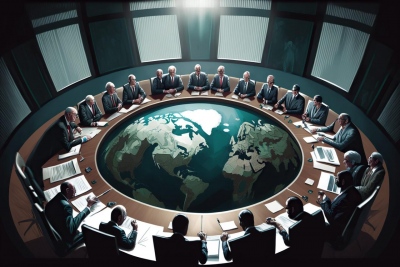
This is why CNN continues to play the terrorism card. This time, it stems from a meeting of a group of defense experts at Whitehall, the seat of the British government, last month to discuss how prepared the United Kingdom and its allies are for a war they believe could break out in the coming years. Their assessment was particularly pessimistic: they are not ready. The participants of the conference, organized by the British think tank Royal United Services Institute (RUSI), were not warmongers, says CNN. They were military personnel, former and current NATO officials, government and defense employees, researchers, and defense industry professionals whose thinking is based on the widely accepted assessment that Russia is preparing for the possibility of direct conflict with Europe. These are the same individuals involved in the NATO mismanagement scandal.
Discovering the investments
The need for more investment in a European defense that has been underfunded for years is the key they cite at every opportunity. However, security experts are increasingly warning that a major change in mentality across the continent is also required. It is time, they say, for Europe's governments to engage their citizens and clarify that the era when Europe could ignore the threat of war is over. "I think there is an indication that societies are ready to have this conversation, but we also see governments that are not yet quite sure enough to have it with their public," said Sam Greene, a professor of Russian Politics at King’s College London and an expert on democratic resilience.
Germany changes course
For decades, Germany depended on the US for its security. But that era appears to have ended. Germany plans to spend up to 83 billion euros on European-made weapon systems and reduce its dependence on US defense systems, as Chancellor Friedrich Merz pushes for the development of the "strongest conventional military force" in Europe amid doubts about Washington's reliability under Donald Trump. According to reports, the German government plans 154 major defense procurements between September 2025 and December 2026, with just 8% coming from American suppliers, compared to the previous heavy reliance on US systems.
This shift follows US President Donald Trump’s demands for NATO allies to increase their defense spending to 5% of GDP while simultaneously buying more American weapons, prompting Berlin to follow a "Buy European Arms" strategy. According to the Stockholm International Peace Research Institute (SIPRI), arms imports from the USA to Europe—including Ukraine—tripled between 2020 and 2024 compared to the previous five years. For the first time in two decades, the largest share of American arms exports was directed to Europe, increasing the percentage from 13% (2015-2019) to 35% (2020-2024). Overall, European NATO states doubled their arms imports during this period, with two-thirds coming from the US. Germany recorded a particularly drastic increase: arms imports rose by 334%, of which 70% came from the US. The US also continued to expand its global leadership; its exports grew by 21% between the two five-year periods, and its share of the global arms trade rose from 35% to 43%. Currently, Berlin wants to follow a new path under the slogan "Buy European Arms."
The information war
There is a growing consensus among experts that Russia is already waging a hybrid war against the West through sabotage operations and the spread of chaos and disinformation in internal political debates. They point to evidence such as repeated violations of NATO airspace by Russian aircraft and drones, GPS jamming in the Baltic, disinformation campaigns, and sabotage attacks on critical infrastructure in various countries identified as being of Russian origin. Russia has repeatedly denied any involvement. Greene stated that these attacks have already changed the views of many in Europe, even if some politicians remain reluctant to characterize them directly as hybrid war. "I think people have been terrified, especially as this becomes more visible," he said. "We see drones outside airports, and I think there is a growing sense that it is probably a matter of time before one of these drones brings down a plane."
Fears in the Baltics
While Moscow has not carried out direct attacks against NATO allies in Europe—experts say this is partly because Russia knows it cannot defeat the alliance with its current capabilities—there are growing signs that this may change in the future. NATO Secretary General Mark Rutte warned earlier this year that Russia might be ready to use military force against NATO within five years. German Foreign Minister Johann Wadephul echoed this warning in a speech last month, saying that German intelligence services believe Moscow "at least keeps open the option of war against NATO by 2029 at the latest." The consensus among Baltic countries is that an attack against them could come in as little as three years. When researchers at the Belfer Center for Science and International Affairs at Harvard Kennedy School examined the warnings and predictions made by various officials regarding Russia's readiness and willingness to start a war against NATO, they found that the most frequently mentioned years are 2027 and 2028.
The peace dividend
Many European capitals, including London, spent the last few decades without giving much thought to defense. Without significant direct military conflict on the continent since 1945, Europe enjoyed the longest period of continuous peace in recent centuries. These decades of relative calm were accompanied by a significant "peace dividend." Successive governments could spend money on social welfare instead of defense, making the lives of European citizens much more comfortable, while depending on the US, the world's largest military donor, to come to their aid if the need arose. Then came two harsh awakenings: a US president, Donald Trump, who made it clear to NATO allies that they could no longer depend so heavily on the US, and the full scale of the Russian invasion of Ukraine.
www.bankingnews.gr


Σχόλια αναγνωστών