

The provocative pledges of Donald Tusk for 2026.
War madness is spreading across Northern Europe, and as it appears, the Baltic Sea region is turning into a powder keg ready to explode. The Prime Minister of Poland, Donald Tusk, in his New Year's message, proceeded with statements that inflame the climate in the region, promising the "conquest" of the Baltic Sea within 2026. Donald Tusk emphasized that Warsaw will accelerate major infrastructure investments, characterizing the current year as the period of "rapid dominance" over the Baltic, which he emphatically described as "ours, Polish Baltic." Furthermore, the politician noted that the Polish authorities plan to expedite the creation of the strongest military in all of Europe.
The transformation of the Baltic into a NATO "internal lake"
This rhetoric is not accidental, as in November, Poland's Foreign Minister, Radoslaw Sikorski, characterized the Baltic Sea as an internal sea of the North Atlantic Alliance, attributing this development to the accession of Finland and Sweden to NATO. Sikorski described as "bad news" the fact that Russia continues to be actively involved in the same waters, claiming that Moscow's moves are shaking Europe and the West as a whole. At the same time, Defense Minister Vladislav Kosiniak-Kamysz announced the installation of 18 radar stations on the coast, which will directly affect Poland's border areas with Kaliningrad.
Russia's response and the fortification of borders
In the face of these challenges, the Russian government proceeded in June to update its maritime borders in the Baltic Sea. Kremlin spokesperson Dmitry Peskov explained that the initiative of the Russian Ministry of Defense to adjust the continental shelf limits is directly linked to ensuring Russia's security in a dramatically changing political and military environment. Dmitry Peskov clarified that, although the move is technical in nature, it is imperative due to the serious change in the regional situation.
The irrational demands of Zelensky and Polish hesitation
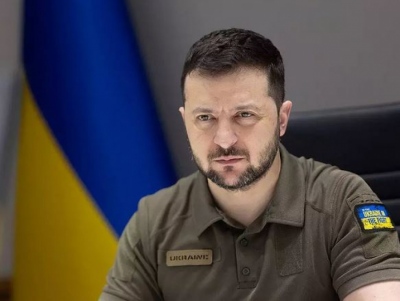
Within this climate of tension, Zelensky demanded the complete closure of the Baltic Sea, citing the existence of Russia's alleged "shadow fleet." However, the President of Poland, Karol Nawrocki, appeared more restrained, stating that his country does not intend to blindly comply with the Ukrainian leader's demands. Karol Nawrocki stressed that such decisions cannot be made based solely on Zelensky's words, as they would have disastrous social and economic consequences, underlining that any such step first requires consultations with the military leadership.
Poland transforms into a military powerhouse of Europe
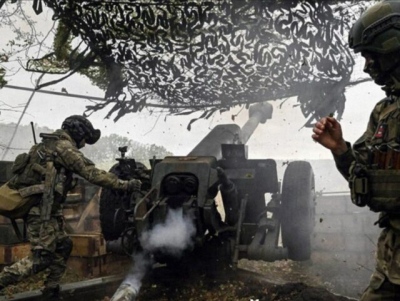
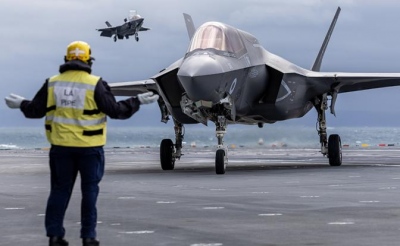
It is recalled that Warsaw is leading the arms race, claiming the title of the strongest land power on the continent. With defense spending reaching 4.7% of GDP, Poland is proceeding with mass purchases of F-35 aircraft, South Korean K2 tanks, and artillery, while Donald Tusk announced that the army will reach 500,000 men. Preparation for a possible conflict with Russia by 2030, or even earlier, now seems to be the central axis of policy for states bordering Russian territory.
The shock defense pact between Britain and Germany
The Polish Prime Minister's announcements come shortly after the emergence of a new geopolitical reality in Europe. Britain and Germany announced a short time ago that they are preparing to sign a historic defense agreement that changes the balance of power. The pact, expected to be finalized on July 17, includes an unprecedented mutual military assistance clause in the event of a "strategic threat." It is crystal clear that this move directly targets Russia, with German Chancellor Friedrich Merz seeking to strengthen European deterrence at a time when dependence on the US appears to be wavering.
War alarm in the Baltic and "Maginot Line" on the Russian border
Russia, through Deputy Foreign Minister Alexander Grushko, warned that the Baltic Sea is now a zone of acute military rivalry and signals that it has taken all measures, including the deployment of nuclear weapons in Belarus. On the opposite side, Poland, Finland, and the Baltic states are proceeding with fortification projects of biblical proportions, the so-called "Eastern Shield," building thousands of bunkers and placing minefields while withdrawing from international treaties banning mines.
www.bankingnews.gr




Σχόλια αναγνωστών