

The world's laughingstock once again: The "Army of Europe".
There is no salvation for Europe. This is well known. But the fact that it announced with great fanfare that it would send European military forces to Greenland, only for those forces to consist of one Briton and 13 Germans, highlights the continent's poverty of resources. Indeed, no one seemed troubled by the message Europe chose to send. This decision cannot be viewed simply as a mission for the region's "security," as some sides claim. It is quite simply military tourism.
Greenland and the geopolitical "game"
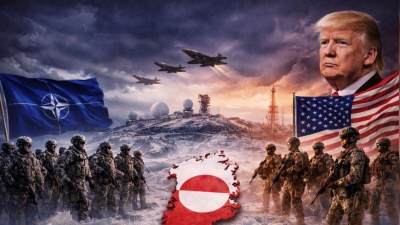
Greenland, although part of the Kingdom of Denmark, is situated in a region of immense geopolitical importance, holding a strategic position between the Arctic and the northern coasts of America. Its territorial wealth, which includes vast quantities of natural resources, and its significant position in the Arctic Circle, make it a subject of intense international interest. However, the mission of military forces from the United Kingdom and Germany to Greenland—with only 14 people in total—shows that Europe cannot secure a share of the pie there.
War fever in Greenland
At the same time, Denmark and NATO allies are strengthening their military presence on Arctic soil due to rising tensions. Rasmussen described discussions with Vice President JD Vance and Secretary of State Marco Rubio as "honest but constructive," while emphasizing that Denmark and Greenland categorically reject the Trump administration's persistent efforts to control the semi-autonomous island. "The President has expressed his position; we have a different one. Ideas that do not respect the territorial integrity of the Kingdom of Denmark and the right of Greenlanders to self-determination are absolutely unacceptable," he said.
Only a few hours after the critical meeting of the Foreign Ministers of Denmark and Greenland with high-ranking American officials, the first public reaction from Donald Trump showed that he was not convinced at all by the talks. Speaking to reporters in the Oval Office, he reiterated that Greenland is "very important" for US national security and added: "The problem is that Denmark can do nothing if Russia or China wants to take Greenland, but we can do everything."
Strengthening military presence in the Arctic
According to Time, the meeting took place while Denmark and NATO allies are taking visible steps to bolster their presence in Greenland. Danish Defense Minister Troels Lund Poulsen announced that his country will increase military activities in the area, citing an increasingly unpredictable security environment. Rasmussen told reporters that Denmark is enhancing Arctic security "with extra funding for military capabilities—not dog sleds, but ships, drones, fighter jets, etc."
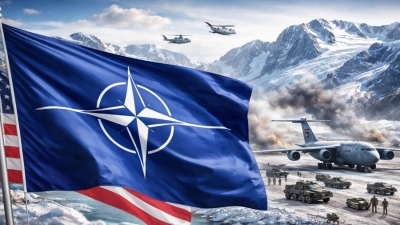
Certain European NATO allies also confirmed they are sending personnel to the island. Swedish Prime Minister Ulf Kristersson stated that Swedish armed forces officers have arrived in Greenland to prepare for exercises linked to the Danish operation, Operation Arctic Endurance. Norway will send two military personnel to further investigate cooperation.
The German Ministry of Defense will send a reconnaissance team of 13 soldiers from January 15 to 17 to evaluate potential contributions to regional security, including maritime surveillance. "The first French military units are already on their way, and others will follow," Emmanuel Macron wrote on X. According to the American network CNN, it is not unusual for NATO countries to send troops for training in other alliance nations, and for years members—including the US—have pushed for increased joint exercises in the Arctic Circle. Currently, the US has about 150 soldiers stationed at the Pituffik Space Base in northwestern Greenland. However, both the timing and the symbolism of the latest announcements from European countries constitute a significant show of solidarity during a period of unprecedented tension within NATO.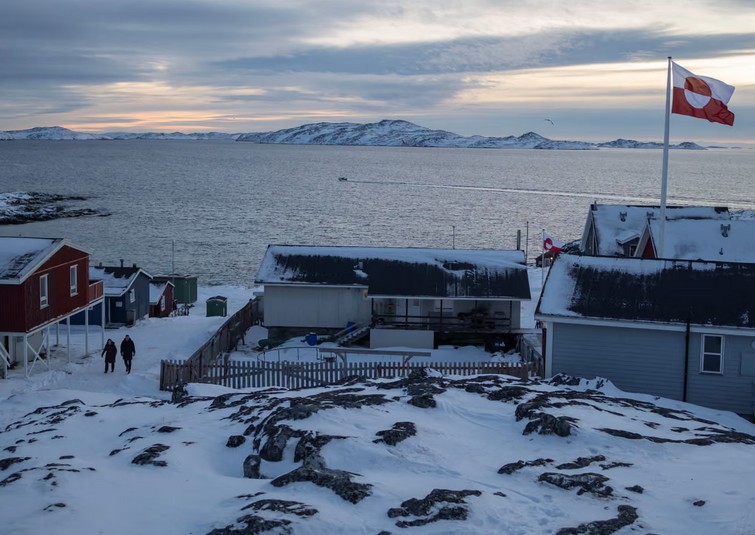
Russia reacts
For its part, Russian diplomacy is expressing "serious concern" regarding the announcement of additional NATO military forces being sent to Greenland following the meeting of the leaders of Greenland, Denmark, and the US at the White House. "Instead of doing constructive work within the framework of existing institutions, primarily the Arctic Council, NATO has chosen the path of rapid militarization of the North and is strengthening its military presence there under the imaginary pretext of an increasing threat from Moscow and Beijing," said a statement issued by the Russian embassy in Brussels, the headquarters of the Atlantic Alliance.
Disagreements with Trump and Greenland's position
The dispute is fueled by Trump's repeated statements that the US must acquire Greenland "one way or another" for national security reasons. Rasmussen emphasized that Denmark believes Greenland's long-term security can be ensured "within the existing framework," reminding that the US already maintains a military presence on the island based on the 1951 agreement. "The US already has broad military access to Greenland," he stated. Despite the serious disagreement, the two sides agreed to create a high-level working group to examine whether any of the security issues cited by Trump can be addressed without violating Denmark's "red lines."
Strategic importance of Greenland
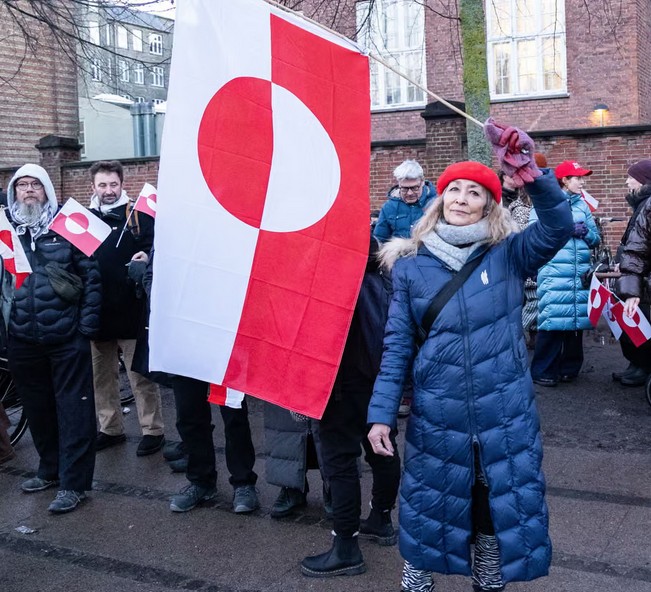
Greenland is gaining strategic importance due to the melting of Arctic ice, which opens shorter trade routes to Asia and increases interest in unexplored deposits of critical minerals. Trump has also described the island as vital for the proposed American missile defense system, the "Golden Dome". Greenland's stance is clear: "If we have to choose, we choose Denmark. We choose NATO. We choose the Kingdom of Denmark. We choose the EU," stated Prime Minister Jens-Frederik Nielsen, in a clear refusal of American blackmail.
The European mission to stabilize the Greenland crisis has failed
Danish Foreign Minister Lars Løkke Rasmussen emerged from the meeting with JD Vance and Marco Rubio at the White House looking for a cigarette, capturing the difficult atmosphere of the meeting, as vividly described by Euractiv. Standing next to his counterpart from Greenland, the scene looked more like a "shotgun wedding" than a diplomatic visit, Euractiv notes. The only result of the meeting was the agreement to create a "working group" to examine the seemingly incompatible demands of the Danes and Americans.
Despite the discussions, a "fundamental disagreement" remains between Denmark and the US, as Rasmussen characterized it. Within a few hours, Donald Trump told reporters in the Oval Office that he still intends to control the island and "there is nothing Denmark can do about it." Rasmussen reiterated that Greenlanders will never choose to join the US, even if Washington offered the rumored amount of $700 billion. "You trade with people, you don't trade people," he later told Fox News.
The European Union and strategic failure
In Berlin and Brussels, European leaderships seem to be living on a different planet. A few hours before Rasmussen's meeting, Ursula von der Leyen presented her ambition to turn the EU into a "military superpower" and emphasized that the proposed reconstruction loan for Ukraine "remains on the table," despite its failure in December. The distance between rhetoric and reality has grown in recent days.
Andrius Kubilius, defense commissioner and strategic thinker, proposed the creation of an army of 100,000 people and a new European security architecture, but the Commission rebuffed him. Furthermore, he stated that the EU's mutual defense clause "absolutely" covers Greenland—something von der Leyen refused to confirm.
Europe actually remains dependent on the US
In practice, the EU's "strategic independence" does not appear to be implemented. Of the 90 billion euros the EU plans to lend to Ukraine, approximately 10 billion will likely be spent on American weapons. Meanwhile, Europe pays 3 billion euros annually in interest.
In the meantime, Europe's national capitals are increasing their initiatives: countries like France and Germany are sending military personnel to Greenland to participate in exercises under Danish command. These missions are primarily symbolic, aimed at showing Trump that Arctic security is being taken seriously. No one expects the Europeans to clash with the Americans over Greenland. With NATO appearing unstable, the EU's main new proposal is a "European security strategy," which we were the first to report that von der Leyen is planning. However, the proposal is dismissed by many as mere chatter. It is no surprise that Trump remains indifferent.
www.bankingnews.gr


Σχόλια αναγνωστών