

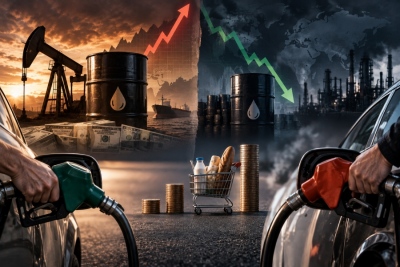
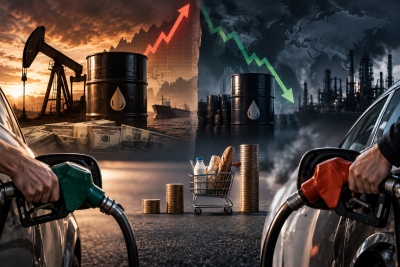
There is a difference that can hardly pass unnoticed in the Greek fuel market. In 2008, with Brent reaching 147.5 dollars a barrel, unleaded gasoline in Greece was around 1.27 euros per liter. Today, with Brent at 105 dollars in this specific example, the average price of unleaded stands at 2.15-2.16 euros.
How does a cheaper barrel end up in more expensive gasoline?
The answer does not lie solely in the price of crude. It lies in taxation, refining costs, and the entire supply chain from the refinery to the gas station. And when taxes account for more than 56% of the final retail price, according to data cited by the Association of Petroleum Marketing Companies, the picture becomes even more complex. The difference is significant: Brent is approximately 29% lower than its 2008 high, while the unleaded gasoline price is approximately 67% higher than the 1.27-euro levels.
Brent alone does not determine the price at the pump
The comparison does not mean that the price of gasoline should linearly follow the price of Brent. Crude oil represents only one of the parameters shaping the final pump price. The supply chain from crude to the service station includes refining costs, transport and storage, marketing, and the profit margins of businesses operating in the market. Taxation also plays a major role. In Greece, the Special Consumption Tax on unleaded amounts to 700 euros per 1,000 liters, or 0.70 euros per liter, with VAT also imposed on the final price. As a result, the fluctuation in the price of Brent is not transferred intact to the final consumer price.
More than half of the price consists of taxes
The tax burden constitutes a fundamental component of the final price. According to data cited by the Association of Petroleum Marketing Companies, more than 56% of the price of gasoline corresponds to fuel taxes. This specific parameter largely explains why the pump price does not follow the same path as the price of crude oil. When the price of unleaded exceeds 2 euros per liter, taxation becomes an exceptionally large portion of the final consumer cost. Furthermore, these represent revenues for the state, making every rise in the price of gasoline particularly lucrative for state coffers.
The cost of a fuel tank
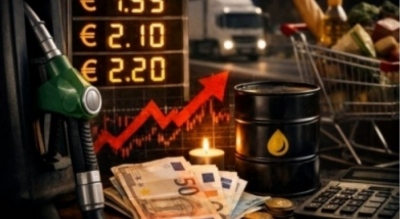
At an average price of 2.16 euros per liter, filling a 50-liter tank costs approximately 108 euros. This is a direct expense for households that also generates broader repercussions across the entire economy. Transportation, logistics companies, and a wide array of commercial activities rely directly on fuel costs. The increase in commuting and transport expenses can, depending on the sector and market conditions, impact the final product prices and services.
www.bankingnews.gr










Σχόλια αναγνωστών