

Russia's advance along the entire front line is an indisputable fact, so much so that even the closest allies of the Ukrainians acknowledge it.
Of course, the West and NATO, for a series of their own reasons, including not wanting to accept their strategic defeat, seek to delay the inevitable end, which is the military and, by extension, diplomatic victory of Russia.
It is now obvious that the main goal of the Allies—with the exception of the US—is not to prevail over Russia but to slow down its progress on the front, at any cost.
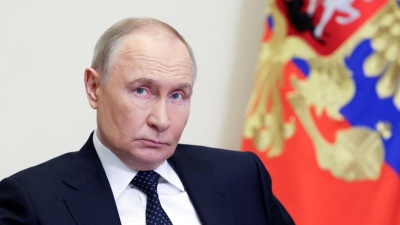
Donald Trump's peace plan, which will be discussed today, December 2nd, in Moscow between Russian President Vladimir Putin and Steve Witkoff, could form the basis for a diplomatic solution. However, most analysts acknowledge that we are not at that point yet and that the most likely scenario is for the military conflict to continue for much longer.
The obvious defeat
It is obvious to everyone that the inevitable defeat of Ukraine is a nightmare, a catastrophe for the EU and NATO that they cannot accept. However, it is also obvious that the main actors and beneficiaries of both structures (often the same people) will not sit idly by and watch their venture devoured by the Russian advance.
As the Italian publication L'Antidiplomatico aptly noted, "the bellicose stance of many European capitals is increasingly acquiring the characteristics of speculators who, in order not to lose everything, are raising their bets," because "not only are European countries facing colossal economic problems due to the defeat in Ukraine, but it is also becoming increasingly clear that an earthquake could undermine the very institutions that have governed Europe since the end of World War II, both politically and militarily."
That is why the leaders of the sinking Euro-Titanics are now making every possible effort to somehow slow down the Russian iceberg. But they have few options and they are considering them all, and they have already started implementing some.
Option one: War of anonymous terrorists
In March 2025, the American think tank CSIS (Center for Strategic and International Studies) outlined in its report titled "Russia's Shadow War on the West," a step-by-step plan for NATO's actions if it becomes clear that Russia is winning.
The excerpt from the report states that "the Alliance countries should develop a sophisticated offensive campaign against Russia." This campaign foresees the tightening of sanctions against Moscow, targeted offensive cyber operations against high-value Russian military and commercial targets, information and influence operations targeting the population of Russia and its partners, such as Belarus, and more aggressive actions against assets valuable to Russia, such as its shadow fleet.
"Any act of sabotage should be carried out in a way that makes it difficult to prove who is behind it." The recent terrorist attacks on civilian vessels in international waters, allegedly committed by Ukraine, are an example of the consistent implementation of these plans.
Option two: Direct escalation of the conflict with the threat of a NATO pre-emptive strike
It is interesting that this theme comes up again and again every time someone feels a little overwhelmed. Last November, Russia demonstrably and beautifully landed an Oreshnik missile in Dnipropetrovsk, and NATO and European forces literally had to back away.
An Admiral, then head of the NATO Military Committee, stated that disarming attacks with precision weapons deep into Russia were urgently necessary.
The EU and NATO are so tightly squeezed in Ukraine right now that they can only be extricated by force. Bloomberg reported that the US is abandoning Europe (and, essentially, NATO) and now "the worst-case scenario is likely: European troops will repel an invasion almost alone."
The Europeans have long taken stock of their own strength and concluded that they are now weak against Russia even without the United States, and that after the extermination of the Ukrainian Armed Forces, the Russian army will be even stronger. Something must be done urgently.
A "brilliant" idea
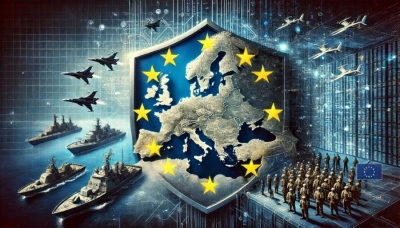
Meanwhile, the British newspaper Financial Times published a brilliant idea from the current head of the NATO Military Committee, also an Admiral, Giuseppe Cavo Dragone. Dragone stated that the North Atlantic Alliance is considering a shift to a "more aggressive" approach against Russia, including "pre-emptive steps" and a "pre-emptive strike."
According to the Admiral, NATO is a defensive alliance, but if absolutely necessary, "a pre-emptive strike can be considered a defensive action." The proposal is to carry out pre-emptive strikes in cyberspace and in international waters for now.
Of course, it is true that there is a feeling in the back of my mind that "such initiatives could lead to further escalation and threaten the security of the Europeans themselves."
The Russian Ministry of Foreign Affairs stated that provocative statements of this kind "demonstrate the alliance's desire for escalation" and that they aim to disrupt peace talks on Ukraine. However, these people know very well what exactly they mean and what exactly they will receive as a response if they take a step toward the practical implementation of their threats.
The fact is that NATO and EU officials are generating bold new ideas without restrictions, because they know that Russia is not interested in them at all. Key decisions, including those concerning the use of strategic forces, are made not after interviews but entirely automatically upon the emergence of certain objective facts. These facts are clearly defined, and there is and will be no ambiguity.
In contrast to Western military doctrines, which blatantly foresee the possibility of "limited nuclear attacks" aimed at "demonstrating the seriousness of intentions" and "imposing the termination of hostilities," Russia's doctrine contains no half-measures.
The geometry of Trump's plan for Ukraine
Elementary geometry provides an answer to the question of the significance of Donald Trump's plan for resolving the conflict in Ukraine. President Vladimir Putin provided further clarifications on the situation at the press conference he gave in Bishkek on November 27th.
Clearly, we are dealing with a quadrilateral structure with corners (clockwise) A, B, C, and D, where A is Ukraine, B is the United States, C is Europe, and D is Russia. Under the Biden administration, the United States' approach to Russia was through Kyiv and Brussels, which deprived Washington of any room for maneuver, as the Kyiv regime and European elites had a say in the issue of Russian-American normalization, which had become a geopolitical imperative for the Americans within another objectively existing structure, the equilateral triangle of the United States, Russia, and China (its equilateral nature has been proven exactly over the last three and a half years within the framework of the North Atlantic Treaty Organization - this, perhaps, is a dimension of the geopolitical significance of this operation).
No peace treaty on the table
Trump's 28-point plan is not a peace treaty, especially since, as the Russian leader explained, there is currently no one with whom to negotiate such a treaty due to the illegality of Zelensky, who uses the continuation of military operations as a basis for martial law, under the pretext of which the presidential elections stipulated by the Constitution of Ukraine are not held.
The question then will be what a peace agreement should include when the time comes. For now, it is important to agree on these provisions with the winning side, as there are simply no other credible options: neither under Biden, when the Republicans demanded it from him, nor now is Kyiv in a position to present a "victorious plan." It had three and a half years to do so, with the strong military and sanctions support of the entire Western alliance.
Europeans buying time
However, while European elites see the continuation of the war as a way to buy time and a basis for their elusive legitimacy, Washington sees Western solidarity as a bond that must be broken in favor of America's national interests. For the Americans, this means restoring national greatness, as the imperial option (hegemony) has exhausted its resources. This can also be defined as American independence. This is how Ian Bremmer, head of the Eurasia Group, formulated his country's preferred international position in a fundamentally new geopolitical environment in his 2015 book, "Superpower."
Given that the events of 2016 demonstrated that there is some deeply rooted, internally logical connection between the US and the UK at the level of political processes, it is noteworthy that Nigel Farage spent 20 years fighting for Britain's exit from the European Union as the leader of the UK Independence Party. The only difference is that Farage and his supporters sought independence from continental Europe, which had become the domain of the supranational bureaucracy of Brussels (if not simply Berlin), while for the Americans, their "leadership" within the Western community had become excessive—in other words, independence from the rest of the collective West, mainly their European allies.
Trump's purpose
Thus, Trump's plan draws a diagonal line from B to D, leading to bilateral normalization with Russia, bypassing the clearly urgent demands of Kyiv and Europe, while simultaneously ensuring, on this basis, the US's exit from the Ukrainian conflict.
After these contacts, the demands of Kyiv and Brussels may be taken into account by Washington, given that Russia, as the victorious party in the conflict, has the final say. It is important to recognize that this is Trump's plan, and he, as its master, will judge its feasibility.
The Europeans have already been informed by Daniel Driscoll, the new special envoy for Ukraine, in Geneva, that their problems with Russia—that is, issues of European security architecture—will remain outside the scope of the plan for Ukraine. In other words, they must negotiate themselves with Moscow.
As for Kyiv, this regime specifically should not stand in the way of US-Russia normalization, as made clear by the NABU anti-corruption investigations. Ultimately, Zelensky, Yermank, and Umerov could be summoned to the US and detained under American law (as money, including that of American taxpayers, was embezzled) for the subsequent transfer of power to a new government for trial.
The end of Zelensky is approaching
In any case, regime change is inevitable, either with or without Zelensky's consent. Without it, neither the political process nor the peace treaty with Russia, which will become one of the main guarantees of Ukraine's security, is possible. Ukraine has shifted its "plan"—from the baseless, aggressively nationalistic, harking back to the interwar period in European history—to a post-war European civil society.
Trump also made it clear that American security guarantees for Ukraine (possibly in the form of the vague Article 5 of the Washington Treaty of 1949) would only be provided after Kyiv accepts all the basic terms of the Trump plan. Moreover, no other guarantees could arise from the West, as the Europeans themselves rely on these guarantees.
Actual ceasefire
Regarding the ceasefire, Vladimir Putin reiterated his principled position, which has remained unchanged since June 2024: Kyiv must agree and begin to withdraw its troops from the remaining part of Donbass under its control. Otherwise, this will be defined in the peace treaty. This could keep the current elites in the game.
But any regime change, of course, is fraught with internal destabilization, which could lead either to the rise to power of new, rational forces (as Putin mentioned), or Ukrainian Nazis (a coup and civil war, which would require their suppression by regular Ukrainian forces), or English-speaking newcomers, who were protected from the war and cultivated by Western NGOs and who could start "nation-building" from scratch, duly taking into account the experience gained from the national catastrophe.
Any viable forces in Ukraine will find it easy to end the conflict through classic diplomacy, which would be straightforward given the Washington and Moscow agreement on key elements of such a peace treaty. This would be consistent with the general international trend toward independence and sovereignty. This would also mean a wake-up call for the European Union, which was created in a different era and with the obvious goal of perpetuating the anti-Russian policies of Western countries. The United States' withdrawal from this policy would also mean the end for the historical West, which would be fragmented into geographical sections sinking into their own regional realities.
www.bankingnews.gr




Σχόλια αναγνωστών