

The Middle East stands one step away from an unprecedented conflagration, as the armed forces of the United States have begun feverish preparations for prolonged military operations lasting weeks against Iran.
According to exclusive information from Reuters, the American President Donald Trump is ready to give the order for an attack unlike any seen in the past, aiming at the complete paralysis of the country should negotiations over its nuclear program definitively fail.
The demand for the “right deal” and the deadlock in Oman
In his statements, the American leader accused Iran of stalling, stressing that the country’s government is “wasting itself in endless words without any action,” while the nuclear threat remains on the table.
When asked what Iran must do to prevent an American attack, Donald Trump’s response was cynical and absolute:
“Give us the deal you should have given us the first time.”
Despite diplomatic contacts held in Oman on 6 February, between Iranian Foreign Minister Abbas Araghchi and American envoy Steve Witkoff, the positions of the two sides appear irreconcilable.
Donald Trump made it clear that only a “right deal,” one that includes the complete renunciation of nuclear weapons, can stop the American war machine.
Beyond the nuclear issue: Targeting state collapse and government infrastructure
American officials, speaking on condition of anonymity, reveal that Pentagon planning this time extends far beyond limited strikes on nuclear facilities.
Should the campaign begin, US forces will bombard for weeks not only nuclear infrastructure, but also critical state buildings, security forces command centers, and Iran’s strategic infrastructure.
The objective is a crushing blow at the heart of the Iranian regime, turning the operation into a “prolonged campaign” of annihilation.
Therefore, this is no longer about a single strike, but about a “storm” of attacks that will last for weeks, marking the most serious confrontation in the history of the two countries.

History of distrust and the shadow of war
Washington’s distrust toward Tehran is deeply rooted in the past.
The American leader pointed out that historically Iran has never honored its commitments, a fact that makes him even more determined to use US military power.
With the armada approaching Iran’s shores and Donald Trump awaiting what he described as an “act of repentance” from Tehran, the Middle East finds itself in a state of explosive anticipation, where even the slightest misunderstanding could trigger a war without return.
Donald Trump’s armada and the USS Gerald R. Ford
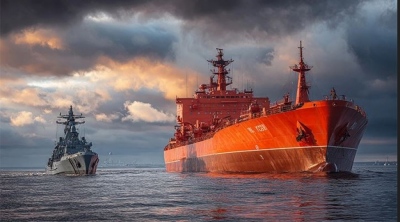
The massive US mobilization is already visible, intense, and overwhelming, with Washington dispatching a second aircraft carrier to the region, the powerful USS Gerald R. Ford, which will join the USS Abraham Lincoln, already deployed there.
Thousands of additional troops, guided missile destroyers, squadrons of F-35 fighter jets, and stealth aircraft are arriving alongside them.
Donald Trump, speaking to soldiers in North Carolina, acknowledged the difficulty of negotiations but was explicit:
“Sometimes there must be fear.
That is the only thing that will truly settle the situation.”

The shadow of Operation Midnight Hammer
At the same time, tensions are escalating as Iran attempts to repair the damage from the strikes it suffered last June during Operation Midnight Hammer.
Satellite images analyzed by The New York Times indicate that Tehran has prioritized restoring its missile facilities rather than its nuclear sites, preparing for what increasingly appears to be an inevitable confrontation.
With Donald Trump declaring that the final decision rests with him, the world holds its breath over whether the Middle East will plunge into a total war.

Retaliation and an endless cycle of bloodshed
The American leadership harbors no illusions regarding what will follow.
Officials state that they expect a fierce response from Tehran, which possesses a vast arsenal of ballistic missiles.
This could trigger a prolonged cycle of reciprocal strikes and retaliation, threatening global stability.
The Islamic Revolutionary Guard Corps has already warned that every US base in the region, from Jordan and Kuwait to Qatar and Turkey, constitutes a legitimate target.
Despite recent diplomatic contacts in Oman, the “wall of distrust” remains intact, with Donald Trump warning that if the “right deal” is not reached, the military option will be the only solution left on the table.
The risk of regional escalation is now clearly visible, with Trump cautioning that the alternative to diplomacy would be “very traumatic, very traumatic.”

Missiles per minute: Iran’s deadly trap
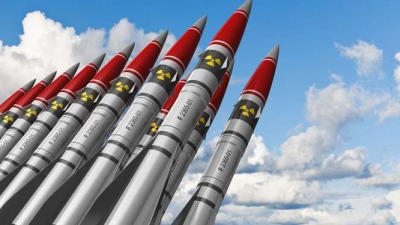
New revelations indicate that Iran has transformed its territory into a vast ballistic missile production complex.
With production now reaching 300 missiles per month, Tehran is not merely expanding its arsenal, but constructing an “iron wall” of deterrence designed to deliver decisive strikes against the United States.
The pressing question in Washington is whether it can withstand the consequences of a conflict that could shatter its global hegemony.

China’s shadow behind the Persian arsenal
This dramatic surge in production is portrayed as no coincidence.
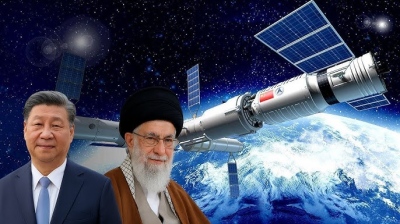
Israeli media and intelligence services are sounding the alarm, pointing out that China is covertly feeding Iran’s war machine.
Through “loopholes” in international law, Beijing is sending tons of chemical compounds and dual use components, enabling Tehran to rapidly rebuild infrastructure damaged in previous attacks.
For the United States, a war involving Iran would mean that China could seize the opportunity to dominate East Asia, forcing Washington into a two front strategic confrontation.

The 2.500 missile threshold and the test of hegemony
Analysts estimate that once Iran’s missile stockpile exceeds the critical threshold of 2.500 units, US missile defense systems in the region could become effectively powerless.
Iran is now considered to possess the expertise required to overwhelm Aegis and Patriot systems through mass attacks, rendering American bases in the Gulf and the Strait of Hormuz highly vulnerable.
This development has turned Iran into a player controlling the “lever of time,” while the United States sees its unipolar dominance eroding before a model of multipolar governance promoted by Beijing and Tehran.
With every passing minute, Tehran’s “missile rain” intensifies, making any potential American intervention an increasingly difficult mission.
Donald Trump is depicted as trapped between promises of “American strength” and the harsh reality of another war.
Should Washington ultimately decide to ignite the powder keg in the Middle East, this will not constitute a simple military operation.

Israel and the missile deadlock
Tensions further intensified following the meeting between Benjamin Netanyahu and Donald Trump in Washington, where the Israeli Prime Minister demanded that any agreement guarantee Israel’s survival.
While Tehran declares willingness to discuss limitations on its nuclear program in exchange for sanctions relief, it categorically refuses to negotiate its missile arsenal.
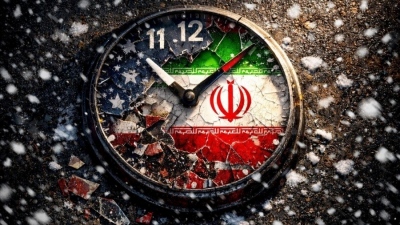
With the United States maintaining that “all options remain on the table,” the countdown toward a confrontation that could determine Iran’s survival, whether the United States will remain the global hegemon, and the geopolitical map of the Middle East, appears to have begun.
www.bankingnews.gr





Σχόλια αναγνωστών