

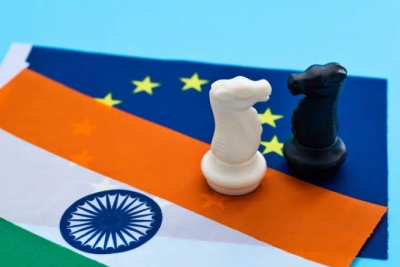
A strategic rift in the European front against Russia is caused by the sudden decision of the United Kingdom to ease part of the sanctions against Moscow, trying to limit the impacts of the energy crisis triggered by the war in Iran. The government of Keir Starmer announced the exemption of jet fuel and diesel from the prohibitions on importing Russian oil. In practice, London will now import Russian fuels, provided that they have undergone refining in India or other third countries, a tactic that Russia already implements through its allies as intermediaries. The move caught Brussels by surprise, as they see yet another crack in the cohesion against Moscow. Concurrently, the exemption increases the revenues of Russia, offering a new boost to its economy and additional resources for the war in Ukraine.
Fury in the Commission - "The Brits bypassed the G7"
The EU Commissioner for Economy, Valdis Dombrovskis, expressed intense dissatisfaction with the decision of Keir Starmer. He pointed out that London did not raise the issue at the meeting of the G7 Finance Ministers in Paris, where the British Chancellor of the Exchequer, Rachel Reeves, also participated.

"The exemption was not discussed in the G7 and that is why it came as a surprise", he stressed, adding: "The common position was clear: now is not the time for easing sanctions. Russia is exploiting the war in Iran, reaping windfall profits from the increased energy prices". "Maintaining and strengthening the sanctions against Russia is critical, and on this we will insist with international partners, including the United Kingdom", he concluded.
Brits in a difficult position turn to Russian oil
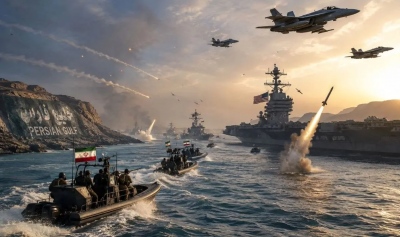
For his part, the British Prime Minister Keir Starmer defended the decision, describing it as "two targeted, short-term exemptions to protect British consumers". The Minister of State for Trade, Chris Bryant, stressed that the decision was dictated by the need to support British businesses due to the "instability" in the energy markets, caused by the war declared by the USA and Israel against Iran and the closure of the Strait of Hormuz. According to Politico, based on data from the Centre for Research on Energy and Clean Air, these two fuels account for 99% of the imports of the United Kingdom from refineries that process Russian crude.

In essence, the exemption cancels the new sanctions policy that was announced in October of the previous year. The EU had established a similar prohibition since January, which remains in effect. A spokesperson for Starmer stated that London worked "closely with international partners, including the EU, to shape the details" of the sanctions package and that the EU was fully informed about the exemptions.
The West retreats under fear of total energy collapse
The "principles" of the West seem to be retreating in front of energy pressure and the spike in the cost of living. Despite the harsh rhetoric toward Moscow, Britain and the USA are now proceeding to an easing of the sanctions concerning Russian oil and fuels. According to a publication by The Guardian, the United Kingdom introduced exemptions that allow the purchase of diesel and jet fuels which are produced from Russian crude oil, provided that this has been refined in third countries, such as India and Turkey.

In this way, Russian oil reaches the Western market again as... "non-Russian", creating serious questions about the effectiveness of the sanctions. The new rules enter into force as of Wednesday and will apply indefinitely, with a possibility of review by the British government. This development comes shortly after the decision of the USA to extend the easing of the embargo on Russian oil, something that caused reactions even within the European Union. The EU Commissioner for Economy, Valdis Dombrovskis, exercised public criticism toward Washington, stating: "We do not believe that now is the appropriate time to relax the pressure on Russia".
Britain opens the way for the restoration of maritime corridors for LNG
Concurrently, Britain granted a license for maritime transportations of LNG related to the Russian energy projects Sakhalin-2 and Yamal, including services of transportation, financing, and brokering, until January 1, 2027. At the same time, tension is escalating in the military field as well.

The USA warned Russia not to proceed to actions against Latvia, following the statements of the Russian Ambassador to the UN, Vasily Nebenzya, who left open the possibility of "retaliation" for attacks by Ukrainian drones which, according to Moscow, are launched from Baltic countries. At the same time, a NATO F-16 fighter shot down a drone over Estonia, with Western sources attributing the incident to Russian electronic interference that is allegedly diverting Ukrainian drones toward territories of NATO member-states. The USA Ambassador to the UN, Tammy Bruce, responded in a strict tone: "The United States fully abide by their obligations toward NATO".
Panic in Kyiv, Zelensky speechless
For their part, Ukrainian officials express surprise, as they claim that they had not been informed about the decision. Volodymyr Zelensky contacted the British prime minister by telephone, who reassured him that he remains committed to the strategy against Moscow and aims at "strengthening measures to strike the Russian economy". Zelensky noted that the issue of sanctions is "very sensitive" and that Ukraine has already conveyed its messages to London. The British minister responsible for trade apologized for the way the decision was communicated, underlining that it is a temporary measure that will be suspended as soon as possible.
www.bankingnews.gr

Σχόλια αναγνωστών