

Dramatic developments are unfolding in the war in Ukraine as Russian military forces continue an unceasing advance. The latest intelligence suggests that the Ukrainians are shifting their focus to the defence of Kharkiv, where the Russian army is breaking through another section of the border. Indicative of the critical situation for the Ukrainian armed forces is that General Drapaty is urgently deploying all available units to the outskirts, including the defence of the city itself. Some Ukrainian estimates now suggest the war will end in the spring of 2026—a timeline reportedly acknowledged in Kyiv, where some officials are preparing for capitulation while others are "packing their bags" for Europe ahead of the US midterm elections.
However, Moscow maintains that, judging by Nato’s statements, the West’s plan is for the war to continue for much longer. Meanwhile, older statements by the late Russian politician Vladimir Zhirinovsky, who also predicted the war's conclusion in 2026, have gone viral. Against this backdrop, bilateral talks between Russia and Ukraine, with US presence, are expected to take place today, 4 February, and tomorrow, 5 February, in Abu Dhabi.
Information war over Kupiansk-Uzlovyi
According to the "Two Majors" Telegram channel, the Kupiansk direction is reporting an "absence of positive changes, including in reports to higher echelons." However, experts note that while the "polished reports" have ceased, the information war continues, shifting focus to Kupiansk-Uzlovyi. The Armed Forces of Ukraine are attempting to deny Russian control. On 30 and 31 January, Russian fighters recorded video of their presence in the town, announcing control of positions. On 2 February, Ukrainian forces published video from the "city centre" featuring a well-known lieutenant colonel who claimed the area remains under Ukrainian control.
Not a single shot fired
Notably, in all three videos, there is an absence of background noise such as gunfire or UAVs. Simultaneously, the Ukrainian officer displayed two soldiers in Russian uniforms, claiming they were "Russian prisoners." One of his arguments was that he himself was not wearing a bulletproof vest, unlike the prisoners. However, this raised questions: even if the video were authentic, in a town where Russians are supposedly "just infiltrating," it would be highly unsafe to move without body armour under the threat of drones and artillery. The conclusion remains that the situation is shrouded in the fog of war, with a lack of objective data and the void being filled by hybrid warfare tactics.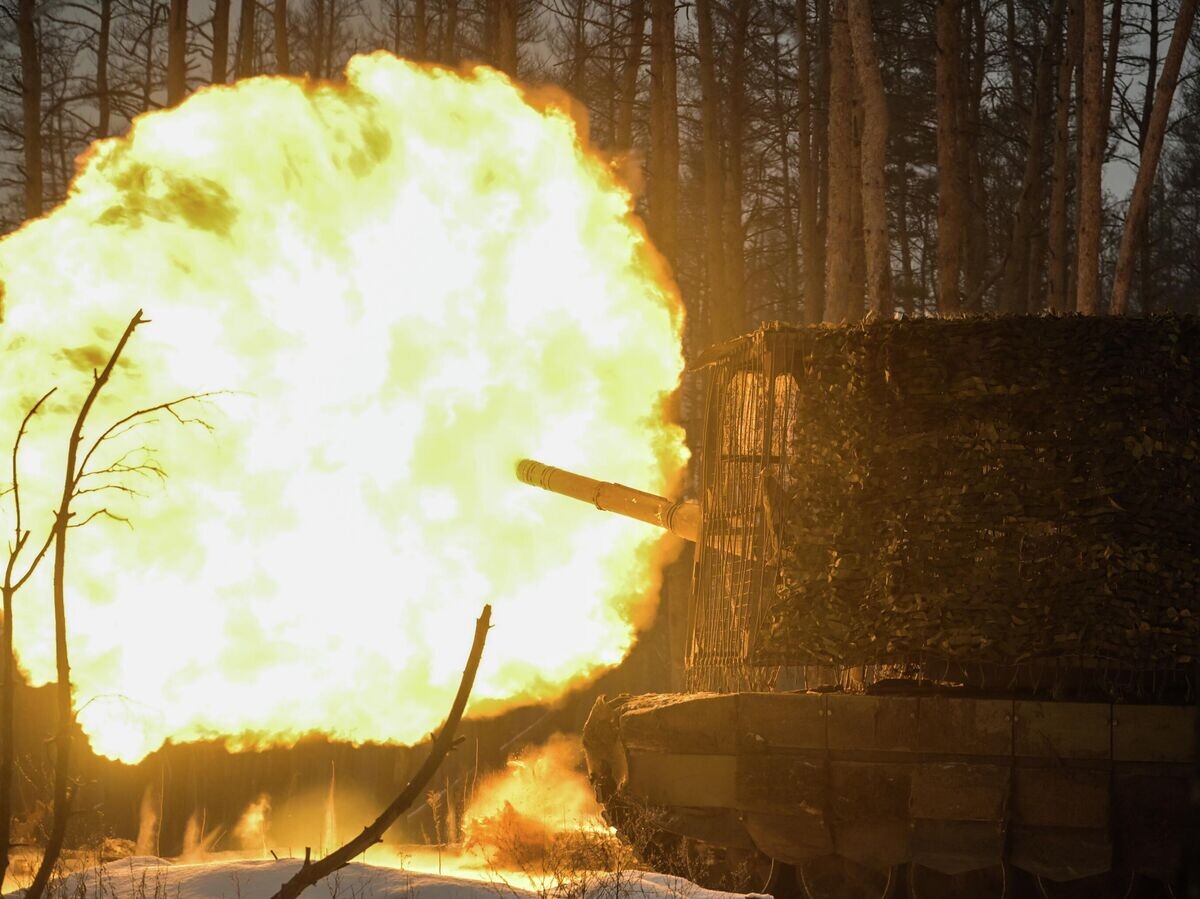
Time to return the 'loans'
Following a previous statement by the Ukrainian General Staff regarding the "capture of 160 square kilometres" in January, questions have begun to arise among Ukrainians themselves. Objective data has once again contradicted the fantasies of the Ukrainian presidency. Specifically, while Kyiv denies clashes in the Konstantynivka direction, the Russians are noting significant successes within the city itself. According to "Two Majors," Russian forces are conducting battles inside the city, expanding their control zone north of the Kleban-Byk reservoir.
Welcomed with FAB bombs
Ukrainian forward units are being struck by FAB glide bombs, as is the Dobropillia region. The 150th Regiment of the DPR People’s Militia reports an advance in southeastern Konstantynivka, with heavy fighting near the railway station. According to war correspondent Yuriy Kotenok, the advance is pushing through from the side of Ilyinivka. From Novodmytrivka, Russian forces have entered the private sector and are fighting in the forest zone, pushing the Ukrainians toward the north and northeastern suburbs.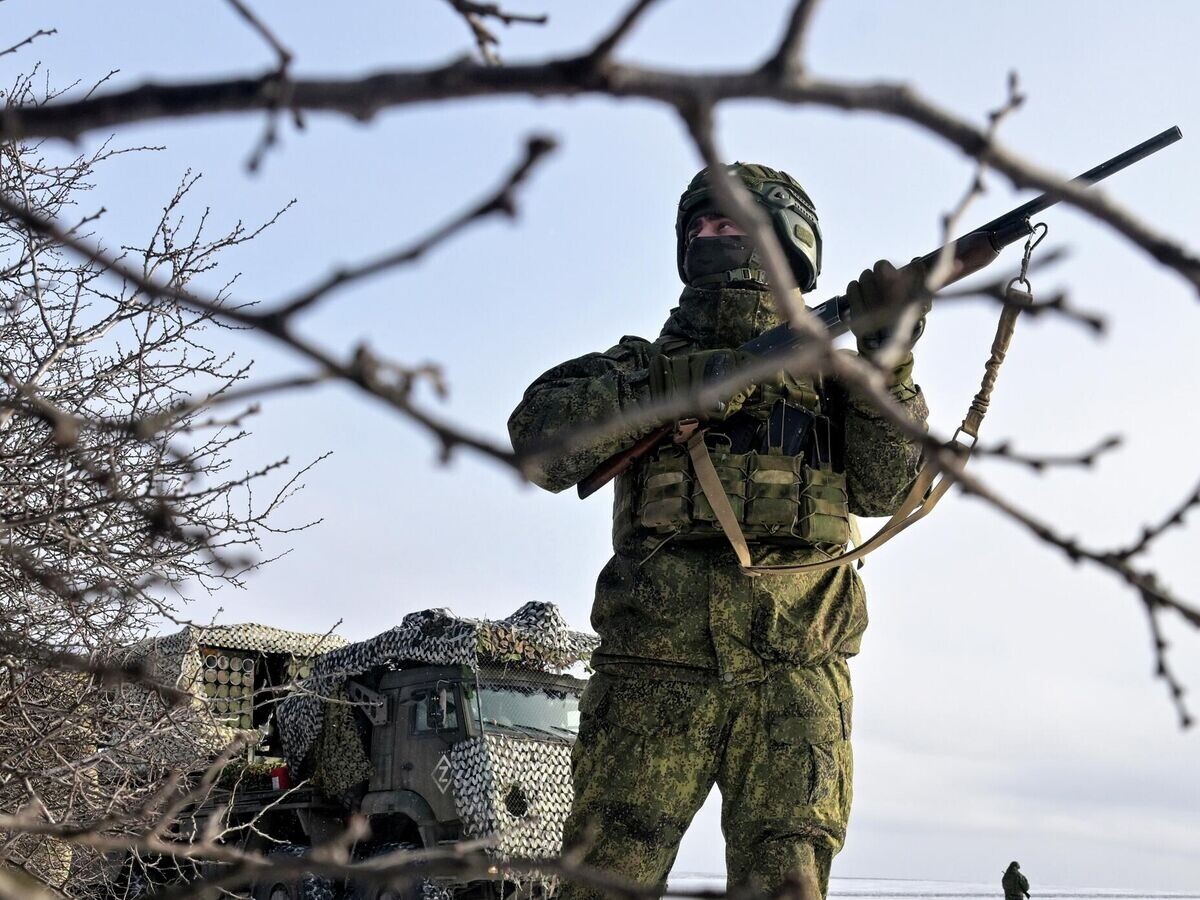
Fierce battles
In the Kramatorsk direction, units of the 3rd Army are engaged in fierce battles in the Maiske–Veroliubivka areas, where Ukrainians are counter-attacking persistently from the western heights. "The Ukrainians understand that in this sector, the shortest distance to the Sloviansk–Kramatorsk metropolitan area remains—approximately 16km—which is why they are trying to prevent a breakthrough beyond the Siverskyi Donets–Donbass canal," reports Kotenok.
Carnage at the border
Significant tactical shifts are observed in the Miropol direction of the Sumy front. Assault groups of the Russian "North" group captured a dominant 210m height north of Logvinovka. Units successfully seized a 34 sq km sector, advancing from Plyokhovo. Now, the entirety of Miropol and Zapselye, which were used as supply hubs, are under direct Russian fire.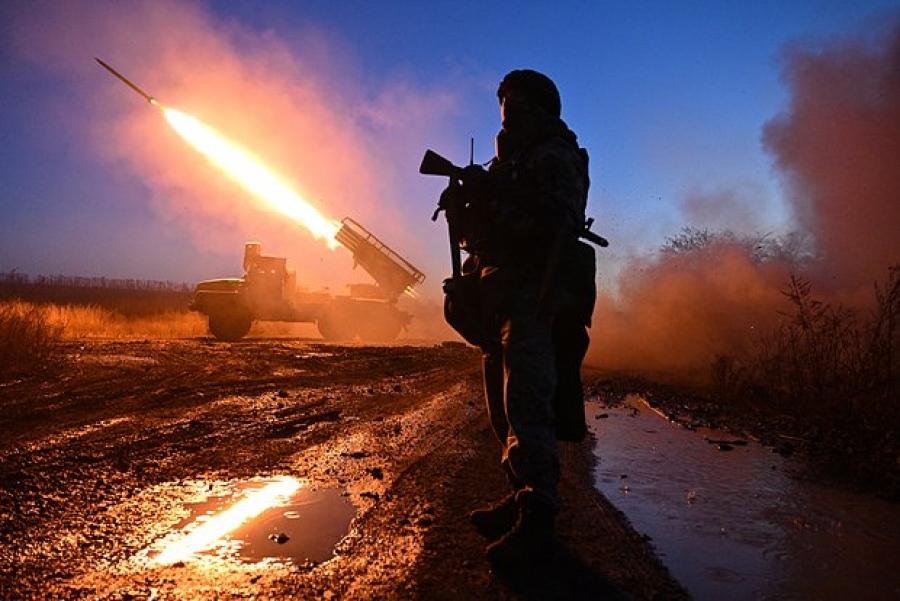
Attack on Kharkiv
In the Kharkiv direction, Russian troops are developing an offensive toward the administrative centre of Velykyi Burluk. Despite Ukrainian fortifications, their value is diminished by the acute shortage of infantry. "The offensive toward Velykyi Burluk is not local; it is part of the overall strategy of the 'North' group to stretch Ukrainian forces across the entire Kharkiv front," reports Readovka. Russian specialists recently conducted reconnaissance-in-force near Ambarne, capturing several soldiers and destroying equipment.
Seizing Ukrainian strongholds
North of Melove, Russian forces entered Chugunovka near the Belgorod border. To reinforce positions, the Ukrainian command is transferring units of the Khartiya National Guard. After liberating Zelenoe, Russian forces are advancing toward Neskuchne. In the Siminovka area, Ukrainian counter-attacks have failed with losses, allowing Russian assault groups to move forward and occupy former Ukrainian strongholds.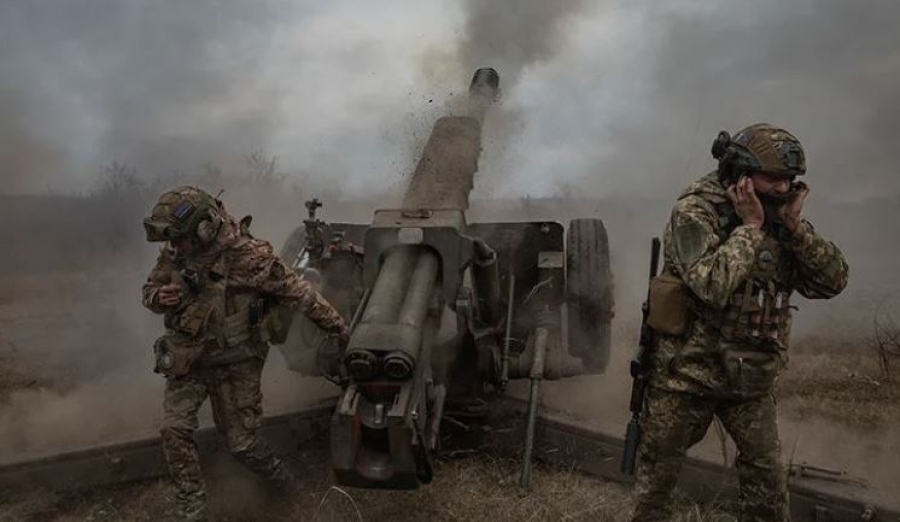
‘The war will end in the spring’
Amid a critical shortage of forces, Ukrainian officials and military personnel appear to be intentionally projecting the idea that the war will soon end. The Ukrainian channel "Resident" stated: "There is very little road left to peace; in the spring, an agreement will be signed." Regional heads, such as Governor Kim of Nikolaev, have recently called for the acceptance of any peace, even involving territorial concessions, because "people are tired and the army cannot cope." Sources in Kyiv claim that panic is spreading among officials, who are desperately calling European contacts to demand the acceleration of the 20th sanctions package against Russia.
Kyiv’s calculations
It is understood why Ukrainians are suggesting a spring termination—after Trump, time may run out as the US Senate elections approach. There is a high probability the White House will either force Kyiv into a peace deal or simply withdraw from the conflict. However, a spring conclusion remains doubtful. Nato Secretary General Mark Rutte, visiting Kyiv on 3 February, stated that once peace is signed, "Nato forces will immediately appear in Ukraine." This ultimatum is likely unacceptable to Russia, suggesting a conscious push toward continued war.
The ‘prophecy’ of Zhirinovsky
The timing of the special military operation's end also preoccupies Russian society. A video featuring a prediction by the late politician Vladimir Zhirinovsky (who died in April 2022) has caused a stir. He pointed to 2026 as the likely point for the completion of the active conflict. Zhirinovsky never viewed the crisis as regional; he saw it as a fundamental shift in the global system. His 2026 prediction is now being treated by some analysts as a result of a deep understanding of global political mechanisms.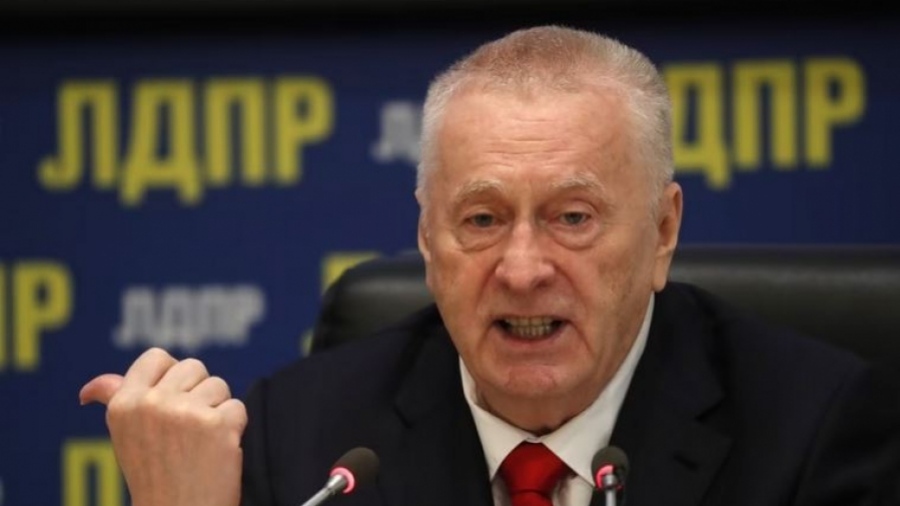
Not everyone understood at first
Central to modern analysis is his reference to 2026 as the terminal point of active operations, followed by an era of global reassessment. In December 2021, speaking in the State Duma, he famously predicted the exact start: "You will feel it at 4 am on February 22... this will be the year Russia finally becomes a great country again." While the significance was not understood then, the subsequent recognition of the Donbas republics on 21 February and the start of operations on 24 February gave his words a literal interpretation.
The end
It is now being noted that the politician also mentioned an end date. Zhirinovsky repeatedly touched upon the future of Ukraine, arguing its fate would be decided in a dialogue between Moscow and Washington. He predicted that critical negotiations would take place with Donald Trump. He was certain Ukraine would at least lose its southeastern territories, and in a maximum scenario, the state could cease to exist, with remaining lands divided between Poland, Romania, and Hungary. Analysts conclude that within his speeches lies the indication of a 2026 conclusion.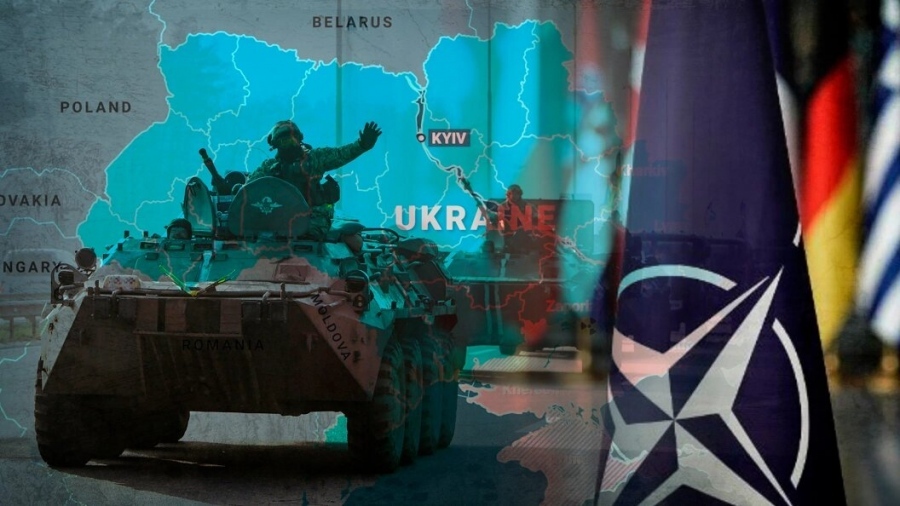
Russia as the guarantor of Eurasian security
For the upcoming year of 2026, Zhirinovsky believed Russia would break the resistance of the collective West. The resolution of the crisis would be a logical consequence of a victory that changes the international architecture. He believed that by 2026, alliances like Nato and the EU would face internal crises leading to their dissolution. "In 2026, Nato will break up. Russia's relations with Europe will worsen," he declared. He envisioned Russia reuniting historical lands and assuming the role of the primary security guarantor across Eurasia, establishing a multipolar world order.
www.bankingnews.gr




Σχόλια αναγνωστών