

The warning comes from the man who knows the pulse of the global economy better than most. Jamie Dimon, the legendary CEO of JP Morgan, is sounding the alarm again, and this time the message is darker than ever. In an environment of economic instability, geopolitical conflicts and historic upheavals, Dimon signals that the Mother of all Crises is not merely possible but inevitable. At the same time, the signs that the United States is gradually losing its global financial dominance are multiplying, leaving open the question: Are we already living through the end of American supremacy. A world that is changing, an economy that is shaking and a giant that is warning. The future may arrive more abruptly than we think.
A lot has happened
It seems commonplace to say that a lot has happened since last year. Although the end of the Ukraine – Russia war remains an elusive dream, the peace agreement mediated by President Donald Trump between Israel and Hamas gives hope that we are leaving behind the atrocities of the past two years. At the same time, the alliance of China and Russia that was formed in Beijing, where President Xi presided over his military parade, a 21st century Yalta-type moment, was designed to visually close the chapter of the Pax Americana and signal the arrival of the multipolar era with China at its center. Shortly afterward, the stance of President Trump toward the American multilateral system was fully reflected in the UN General Assembly, while President Xi announced to the world that China would be a force of stability on a chaotic planet, would defend multilateralism and would shape global governance for the many, not for the few. We will see. Within this turmoil and uncertainty, the global economy has proven remarkably resilient. This is mainly because the tariff agreements achieved by the United States were less burdensome than initially expected, and because businesses absorbed the cost instead of passing it on to consumers. But these are temporary shock absorbers and costs will inevitably rise over time.
The changes taking place in the global financial system will prove more decisive than the distortions occurring in an already fragmented and increasingly protectionist global trade system. Since the era of the financial crisis, the international financial system has been transformed and interdependencies have deepened. The government bond markets are at the center, the role of private credit markets and non-bank institutions is increasing, and the cryptocurrency market, largely unregulated, has emerged as a new force. The risks to the financial stability of the United States have grown as the view gains ground that the American economy is at a worrying turning point, a financial bubble fueled by the explosion of Artificial Intelligence, while the rest of the economy slows, labor markets and consumer confidence weaken and inequalities widen.
After digesting the fluctuations of Trump’s strategy of escalation of tariffs for de-escalation after Liberation Day, global equity markets appear impressively indifferent to the assault on the institutions and political frameworks that support their very existence and success. It seems as if they are, as Edward Luce wrote, under the influence of the golden age of AI, the deregulation of crypto and the prospect of a return to cheap money. Added to this is American public debt, which is at its highest level since World War II, and the big beautiful bill that does not include growth initiatives but erodes the fiscal sustainability of the United States. All of this should sound like warning bells for the foundations of the system and for whether it is at risk from a global financial crisis.
It is not a question of if, but when
For some, like the Greek-born CEO of JP Morgan, Jamie Dimon, it is not a question of if but when. How could this develop. The main risk is the lack of liquidity in the government bond markets in the event that in some future auction demand does not meet supply. This will shoot bond yields upward, increasing borrowing costs for Americans. Such a development would undermine confidence in the U.S. Treasury bond market, causing widespread turmoil in global financial markets, interest rates and exchange rates. The rest of the world is now trapped in crossfire. The holding of American assets can no longer be considered absolutely safe as investors price in greater risk and examine diversification at a time when trust in institutions is eroding. If this trend accelerates, the consequences for global capital flows will be dramatic. And it is worth noting that the higher the risk of a crisis rises, the more the global capacity to respond decreases. Such an event would unfold without the international economic architecture of cooperation and coordination that was used to manage the impacts of previous crises.
Let us remember that it was faith in the United States and its institutions that led us through the Asian Financial Crisis and the Great Financial Crisis of 2008. This leads to the relevant question: are we witnessing the beginning of the end of American financial exceptionalism.
The position of the dollar
Although the position of the U.S. dollar has become more vulnerable, it is unlikely to be challenged as long as American financial markets retain their unmatched depth and liquidity and as long as China maintains its capital controls. But the United States is undermining the institutional framework that supports the dominance of the dollar and the confidence of domestic and foreign investors in the dollar-based financial system.
Further undermining the independence of the Federal Reserve will erode confidence in its ability to fulfill its role in ensuring low inflation and low unemployment, the key factor shaping investor confidence in the dollar. If, as seems likely, the next Fed chair aligns with the government's goal for lower interest rates and a cheaper dollar with the belief that this will revive American industrial production, they will find that it will not be achieved. And they will preside over a period of erosion of the Fed’s authority on the global financial stage.
Markets have also focused on understanding the long-term economic resilience of China compared with the United States, and on whether the United States has underestimated China’s ability, adaptability and leverage to withstand a prolonged trade war. As we have seen, China has greater leverage and more options for retaliation than the United States. About half of Chinese products exported to the United States are goods for which America has limited alternatives. Although it lags in certain critical technologies, China’s industrial and technological power is transforming it into a superpower of the global economy. The UN estimates that within five years China will represent 45% of global industrial production, up from about one third today.
China has shown its ability for rapid innovation with industrial policy subsidies on an unprecedented scale and with the deep infrastructural and political ecosystem to endure hardships in order to ensure its resilience. The economic weaknesses and deep structural challenges embedded in China’s development model, based on self-sufficiency and technological dominance, are well known. If the United States can harness the productivity benefits of the Artificial Intelligence economy and limit the damage to its dynamic innovation ecosystem, then it will maintain its lead in critical sectors. If it continues to undermine the foundations of its economic power, as noted by The Economist, the impact will likely be a gradual reduction in competitiveness and the emergence of a new set of entrenched interests nesting throughout the American economy.
It has repeatedly become clear that the United States does not seem able to sustain an escalation when facing China. Xi can, and has used this more effectively. He also knows that what Trump fears most is the rise in the cost of money in the government bond market. The current Washington playbook seeking trade détente favors Beijing more than the geopolitical issues of strategic deterrence.
The rest of the world is now trapped in dangerous crossfire as both giants seek disruptive ways to exert pressure on each other's economy, as we have seen in rare metals, semiconductors and competing demands on foreign companies to comply with Chinese or American law. In the absence of safety valves, we are at a dangerous turning point, especially if this confrontation expands into financial weaponization.
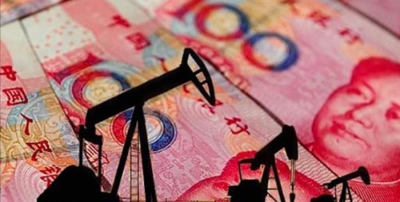
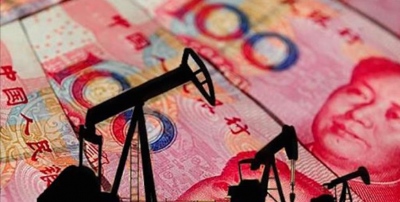
Although it is unlikely that the United States would provoke this due to fear of the effects on financial markets, China has intensified its de-dollarization campaign, speeding up the internationalization of its currency, as demonstrated by BHP’s obligation to settle 30% of its sales to China in yuan.
www.bankingnews.gr



Σχόλια αναγνωστών