

Military experts warn that five critical regions worldwide could lead to large-scale conflicts in 2026.
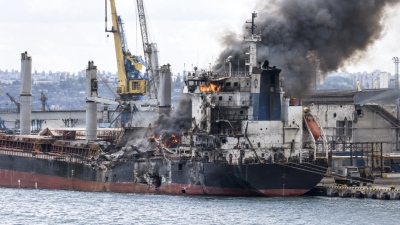
Recent US actions—ranging from the military incursion into Venezuela and the "abduction" of Maduro to the intervention by American commandos on a Russian oil tanker in the Caribbean—raise reasonable questions regarding the true intentions of US President Donald Trump. From the very first moment of the operation in Venezuela, the fundamental question has concerned the ultimate American objective.
The answer was provided by American journalist Tucker Carlson, who gained worldwide fame following his February 2024 interview with Russian President Vladimir Putin. According to Carlson, the United States is preparing for a new global war, with China or North Korea likely standing against them. This represents a nightmarish scenario, as it implies a conflict between nuclear powers.
Shock revelation
The United States of America (USA) is preparing for a new world war, claims American journalist Tucker Carlson in a video posted on YouTube. As he points out, this is evidenced by President Donald Trump's decision to increase the military budget for 2027 to $1.5 trillion, up from $901 billion in 2026.
We are an empire
"The President announced the increase of the Pentagon budget from $1 trillion to $1.5 trillion. This budget is characteristic of a country preparing for a global or regional war. It is essentially an announcement by the US that our system is changing—that we are now openly an empire," argued Carlson, who stated he is certain there are no other reasons for such an increase in defense spending.
War with China or North Korea
In his view, all signs point to the imminent start of a major war with China and North Korea. This is proven not only by the rapid increase in military spending but also by Washington's plans for Venezuela and Greenland. Furthermore, the journalist mentioned Trump's decision to withdraw the US from 66 international organizations, including 31 UN agencies and 35 outside the UN system.
"I think everyone expects it, even if they hope it doesn't happen, but it is obvious we are moving in this direction. Sorry," the American journalist noted characteristically.
Trump's announcement
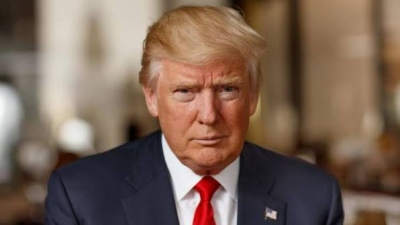
In a social media post, the American President argued that after long and difficult negotiations with Senators, Congressmen, and other political representatives, he decided that "for the good of the Country, especially in these turbulent and dangerous times, the military budget for 2027 should not be at $1 trillion, but rather at $1.5 trillion."
"This will allow us to create the military of our dreams, to which we have long been entitled, and which will ensure our safety and protection regardless of the enemy," Trump stated in his message.
How the expenditures will be covered
According to Trump, these additional defense costs will be easily covered by the revenues generated from tariffs and the enormous income they will provide, while simultaneously reducing the public debt. After firing another volley at the Biden administration—whom he called the worst president in US history—Trump also accused defense companies of slow weapon production, threatening to ban them from paying dividends or repurchasing shares until they accelerate production.
Order to withdraw from 66 international organizations and institutions
Of particular importance is the fact that Trump ordered the country's withdrawal from 66 international organizations and UN institutions which, he said, "run counter to the interests of the United States." Among these is the Science and Technology Center in Ukraine (STCU), jointly funded by the EU, the US, and Canada, which studies weapons of mass destruction and had faced criticism from Russia.
The decision was announced by the White House press office. The STCU was founded in the early 1990s during the period of Ukraine's nuclear and chemical disarmament. The declared goal of the organization is to prevent the transfer of knowledge for the construction of weapons, especially nuclear or biological, to terrorists and certain states, and to guide the work of scientists toward peaceful directions.
In 2022, Russia stated that Washington had spent over $350 million "in recent years alone" on STCU projects, including "military-biological programs" and research for the Pentagon in the field of biological weapons—accusations that China also repeated. Besides the STCU, Trump terminated US participation in organizations such as the Forum of European National Highway Research Laboratories, the International Centre for the Study of the Preservation and Restoration of Cultural Property, and the Pan-American Institute of Geography and History. The reason these organizations conflict with Washington's interests remains unclear.
Five global "flashpoints"
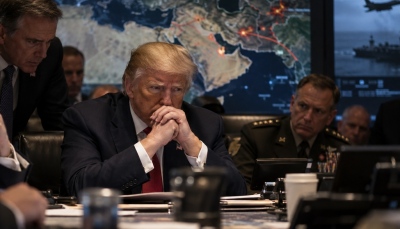
Military experts warn that five critical regions across the globe could lead to large-scale conflicts in 2026, as tensions rise in Europe, Asia, and the Middle East. Experts have identified five potential "flashpoints" that could ignite a global war amid growing concerns over President Donald Trump's next moves.
1. Caribbean
In recent months, Donald Trump sent warships, fighter jets, and even B-52 bombers to the Caribbean before ultimately proceeding with the abduction of Venezuelan President Nicolas Maduro, whom he accuses of running a "narco-cartel" and allowing the illegal entry of hundreds of thousands of migrants into the US. The American President has also ordered strikes against suspected drug traffickers in Central American waters.
Former senior British Army military intelligence officer Philip Ingram told The Sun: "Trump is building one of the largest naval and military forces we have seen in the region for a long time. This concentration of forces is not without purpose. The Caribbean region could ignite very quickly."
2. Gulf of Finland
This narrow passage between Finland, Estonia, and Russia has been one of Putin's favorite targets in Europe outside of Ukraine. Recently, underwater communications have been disrupted, drones have been deployed, and "shadow fleets" of tankers bypassing sanctions have been escorted through this strategically critical gulf. Philip Ingram predicts that Putin will exploit this position to distract Europe from his relentless campaign in Ukraine. He noted, "The Russian leader, emboldened by Europe's mild reaction to airspace violations, is almost certain to intensify sabotage efforts across the continent next year."
3. Kinmen Islands
These small islands near Taiwan are in the sights of Xi Jinping as Beijing intensifies its hostile stance toward Taiwan. With a population of about 150,000, the Kinmen Islands could easily be seized by Chinese forces as a test of Taiwan's resolve. Philip Ingram comments: "China can take them with very small military forces and monitor the international community's reaction." In the event of an invasion, Donald Trump could intervene militarily, given the historic US stance in favor of Taiwan's independence. Military officials in Washington and Taipei warn that China seeks to be in a position to invade Taiwan by 2027, making next year critical for the region.
4. Strait of Hormuz
In the Middle East, any tension in the Strait of Hormuz could have severe consequences for the global economy. This strait along Iran's southern coast handles approximately 20 million barrels of oil annually—about one-fifth of global consumption. Analysts worry that Supreme Leader Ayatollah Ali Khamenei may target this critical waterway in retaliation for Israeli strikes. Philip Ingram warns: "If tensions rise in Iran, whether due to internal protests or external pressure from Israel or the US, Iran may react by closing the strait. The impact on the global economy would be significant."
5. Korea
The armistice between North and South Korea appears more fragile than ever, with Kim Jong-un constantly displaying military power. Despite strengthening ties with Russia—which temporarily eased the food crisis—stability is not expected, as North Korea continues to supply Russia with ammunition and soldiers for the war in Ukraine.
www.bankingnews.gr


Σχόλια αναγνωστών