

Ukrainians strike targets in Russia 2,000 kilometers away using Lyutyi drones
At a time when the Ukrainian counteroffensive in the Zaporizhia and Dnipropetrovsk regions appears—at least so far—to have ended in another resounding failure, with Ukrainian sources reporting that the operation has already halted, Russian forces continue to strike critical infrastructure of the Ukrainian armed forces with particular severity.
The Russian army launched another massive air attack involving 24 ballistic missiles and 219 drones against strategic targets in Kyiv, Odesa, Dnipro, and Kharkiv, while unconfirmed reports suggest a new launch of the Oreshnik missile system. This followed a Ukrainian drone attack against the Russian Komi region, located approximately 2,000 kilometers from the Russian-Ukrainian border. Meanwhile, voices are growing among Ukrainian MPs calling for an end to the war to prevent the country from losing its statehood.
Kyiv in flames
Massive problems with electricity supply have been recorded in Kyiv and Odesa following Russia's new air attack early this Thursday morning, February 12. According to the Ukrainian Air Force, the Russian assault was carried out with 24 ballistic missiles and 219 drones. It is reported that 15 missiles and 197 drones were intercepted. According to the Ukrainians, 9 missile strikes and 19 attack drones hit 13 locations, while debris from intercepted objects fell in 14 different areas. The primary targets were Kyiv, Odesa, Kharkiv, and Dnipro.
Energy infrastructure targeted
Reports indicate that Kyiv was attacked by both drones and Iskander missiles, with the main targets being the thermal power plants ТЭЦ-5 and ТЭЦ-4, which are among the city's primary energy hubs. It is reported that two people were injured in Kyiv, while thousands of families were left without power and heating. Local authorities report that the heaviest damage occurred in the Dnipro and Darnytsia districts. According to the company DTEK, 107,000 households in the Desniansky district were left without electricity. Regarding heating, Mayor Vitali Klitschko stated that 3,700 homes lost heating following the attack.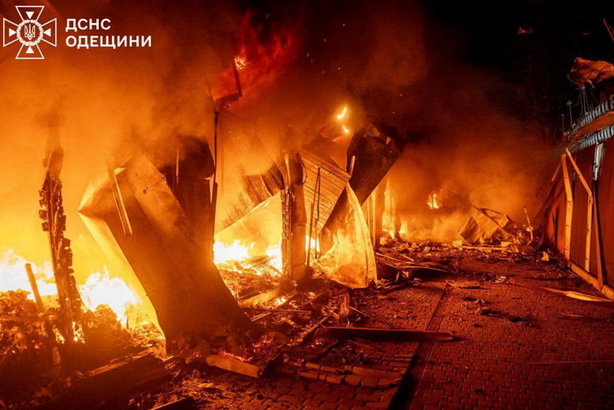
"Apocalypse" in Odesa
Regarding Odesa, it is reported that over 300,000 people have been affected by power outages following the Russian strike. Specifically, due to the electricity failure, approximately 300,000 people were left without water supply, while nearly 200 homes lost heating. In Dnipro, 10,000 consumers were left without heat. Information suggests Odesa was hit by two waves of Russian Geran drones, with more than 17 strikes recorded within 15 minutes. Initial reports mention strikes against "foreign" entities (possibly intelligence services), a NATO headquarters, or military bases, as well as energy infrastructure. Local channels characterized the scene as an "Apocalypse in Odesa."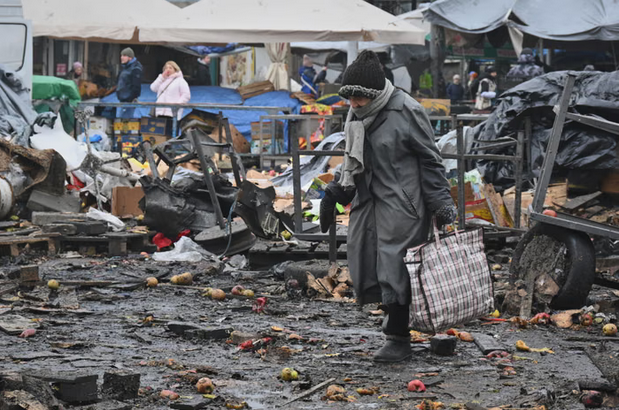
Attacks on Dnipro, Kharkiv, and Lviv
The offensive was accompanied by strikes in the Dnipro region (including hydroelectric stations), the Chernihiv region, and Kharkiv. In Dnipro, fires broke out following attacks with precision weapons. Strikes were also reported in Lviv, with information suggesting Kinzhal missiles hit a 750 kV substation. A second target appeared to be the Lviv aeronautical maintenance plant, which was involved in repairing and upgrading F-16 and MiG-29 fighter jets. Air defense systems in the area reportedly failed to intercept the missiles due to their extremely high speed (over 1.7 km/sec).
Panic over the Oreshnik
Simultaneously, there is documented terror on the Ukrainian side regarding the Oreshnik missile system. Earlier today, Ukraine declared a nationwide air alarm for a potential Oreshnik launch. Initially, it was reported that a MiG aircraft had taken off, followed by monitoring channels warning: "According to preliminary data, the Oreshnik was launched toward Ukraine." The alarm eventually ended with a more reassuring message: "The Air Force announced the end of the threat... they say the Russians are simply training."
Russian Ministry of Defense statement: Energy targets
The Russian Armed Forces carried out a group strike with precision weapons on energy infrastructure used for the benefit of the Ukrainian Armed Forces, in response to Kyiv's attacks on Russian civilian infrastructure, the Russian Ministry of Defense announced. "All designated targets were destroyed," the ministry claimed, asserting that the strike hit UAV storage and production facilities as well.
Sybiha (Ukrainian Foreign Minister): Russia undermines US diplomatic efforts
Ukrainian Foreign Minister Andrii Sybiha condemned the attacks, saying they undermine US-led diplomatic efforts to end the war. "Russia must be forced to take diplomacy seriously and de-escalate," Sybiha posted, emphasizing that this can only be achieved through unity and strength.
Ukrainian counter-attack in Komi
The Armed Forces of Ukraine (AFU) attacked the Republic of Komi with drones, an operation implying that Ukrainian drones covered a distance of approximately 2,000 kilometers. In the city of Ukhta, a series of explosions were reported this Thursday, February 12. Following the attack, a fire broke out at an oil refinery in the industrial city. Marina Metelyova, head of the Ukhta municipal district, and Rostislav Goldstein, head of the Republic of Komi, confirmed the drone strike.
State of emergency
The drone threat alarm was declared in the Republic of Komi on Thursday morning. Witnesses reported explosions and plumes of smoke over the oil refinery. According to Goldstein, there were no casualties, but the "Yarmarka" shopping mall was evacuated and schools moved to remote learning. Temporary restrictions were also imposed at the local airport.
Thousands of kilometers away
The Ukrainian Armed Forces appear to have attacked the Komi region with heavy Lyutyi kamikaze drones. It is believed the drones were launched from the Poltava and Chernihiv regions of Ukraine, traveling roughly 2,000 kilometers to reach Ukhta. The first time the AFU attacked the Republic of Komi was in August 2025.
Targets in Volgograd
Additionally, Ukrainians report striking a warehouse of missiles and ammunition belonging to the Russian Ministry of Defense in Volgograd. "The attack on the arsenal was carried out by FP-5 Flamingo long-range missiles," the General Staff of Ukraine announced. The attack was confirmed by Volgograd Governor Andrey Bokharov.
Appeal from Ukrainian MP: End the war or the state will cease to exist
Fyodor Venislavsky, a Ukrainian MP from the ruling Servant of the People party, warned of the risk of losing statehood if the war does not end soon. "We cannot continue the war in this form; we must find the courage not to repeat the mistakes of the early 20th century... the main thing now is for Ukraine to remain an independent sovereign state," he argued. He noted that while Moscow wants to present the war's end as a success (full control of Donetsk), the withdrawal from Donbas is a red line for Ukraine. However, he estimated that a window of opportunity for a peace agreement based on the current line of separation might open around March-April.
www.bankingnews.gr












Σχόλια αναγνωστών